Portuguese
  Spanish


In the early years of the space race, 11 deaf volunteers helped scientists investigate motion sickness in extreme environments, participating in tests involving rotation, reduced gravity, and rough seas before more complex crewed missions.
Before expanding crewed missions, NASA needed to investigate a recurring physical problem in extreme motion environments: disorientation and motion sickness caused by the loss of normal balance references.
To study this reaction, the United States space agency relied on 11 deaf men associated with the then Gallaudet College, now Gallaudet University, in Washington, an institution dedicated to the education of deaf people.
The group became known as the Gallaudet Eleven.
-
Seven-Year-Old Nicknamed Hulk Wins Gold in Brazilian Jiu-Jitsu After Defeating South American Competitors

-
Once Burdened by $90,000 in Debt and a Divorce, Now Leads a Beauty Group Targeting $150 Million by 2026
-
Ice Cream Shop Grows from 39 Square Meters to $19 Million Revenue with Popsicles Sold at 20 Cents in Brazil
-
Rural Worker Spotted “Flying” on a Drone in Brazil





Between 1958 and 1968, these volunteers participated in research associated with NASA and the U.S. Navy School of Aviation Medicine.
The focus of the studies was not deafness in isolation, but a specific condition observed in most participants: damage to the vestibular system, an inner ear structure related to balance and motion perception.
According to NASA, ten of the 11 men had lost their hearing at a young age due to spinal meningitis.
The disease also compromised the vestibular system, which reduced or eliminated the motion sickness response that usually occurs when the body is subjected to displacements, rotations, or sudden changes in orientation.
This characteristic made the group an unusual sample for research on motion sickness and adaptation to space flight.
How the inner ear influences space sickness
Motion sickness, also called kinetosis, occurs when the brain receives conflicting information about the body’s position.
In a car, ship, or airplane, the eyes may indicate relative stability, while the inner ear detects accelerations, turns, swings, or changes in direction.
This divergence between vision and balance can cause nausea, dizziness, cold sweats, and disorientation.
In space, the challenge takes on another dimension, because gravity ceases to function as a constant reference for the body.
Without this parameter, the body needs to reorganize how it interprets position, movement, and balance.
For aerospace medicine, understanding this process was a necessary step.
Astronauts needed to operate equipment, respond to commands, and perform tasks during flight.
If space sickness was intense or persistent, there would be a risk of performance degradation at important moments of the mission.
NASA tests with centrifuge, rotating room, and reduced gravity
The Gallaudet Eleven underwent experiments designed to measure physical and perceptual responses in situations of acceleration, rotation, and altered balance.
According to NASA, the volunteers were evaluated in centrifuges, rotating rooms, parabolic flights, and ship tests.
In one of the best-known experiments, four participants remained for 12 days in a circular room approximately 6 meters in diameter, which rotated continuously at ten revolutions per minute.
The objective was to observe how the body reacted to prolonged exposure to stimuli capable of causing disorientation in people with a preserved vestibular system.
Another set of tests occurred in aircraft used to simulate brief periods of reduced gravity.
In this type of flight, the plane climbs in a steep trajectory and then enters a parabolic curve, creating a sensation of floating for a few seconds.
The maneuver became known by the nickname “Vomit Comet,” an expression associated with the motion sickness frequently reported by participants in these flights.
There was also an experiment in rough waters near Nova Scotia, Canada.
The proposal was to analyze the volunteers’ reaction in a vessel subjected to intense and unpredictable movements.
According to a report released by NASA, researchers felt severe motion sickness during the test, while the deaf participants remained without relevant symptoms and played cards during the trip.

What the Gallaudet Eleven showed about motion sickness
Research with the Gallaudet Eleven helped demonstrate the relationship between the vestibular system and motion sickness.
Since the volunteers did not react in the same way as people with a preserved vestibular system, scientists were able to compare physiological and perceptual responses to extreme motion stimuli.
According to NASA, the experiments contributed to broadening the understanding of how the body’s sensory systems function when usual gravitational references are not available.
This information was relevant both for astronaut training and for the development of adaptation protocols to the space environment.
The results did not eliminate space sickness, but they helped treat it as a physiological response linked to identifiable mechanisms.
With this, researchers were able to study methods of preparation, monitoring, and adaptation for crews exposed to microgravity, acceleration, and rapid changes in orientation.
The volunteers’ participation was broader than a single centrifuge test.
Over approximately a decade, they integrated studies on balance, movement, body perception, and resistance to unusual environments.
Gallaudet University also records the group’s contribution to research on motion sickness and adaptation to conditions associated with space flight.

Why this research still appears in the history of space exploration
None of the 11 men ever traveled to space.
Still, the data obtained from the experiments helped researchers better understand how the body responds when it loses some of the references used to maintain balance.
In an initial phase of space exploration, this type of information was necessary to reduce uncertainties about human permanence outside Earth.
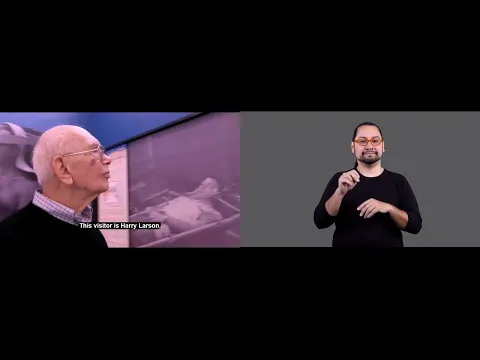
The story of the Gallaudet Eleven has once again received attention in archives, exhibitions, and institutional materials from NASA and Gallaudet University.
In 2017, the university presented the exhibition “Deaf Difference + Space Survival,” dedicated to the volunteers’ participation in studies related to human adaptation to space flight.
The topic also began to circulate again amidst the advancement of crewed missions beyond low Earth orbit.
Artemis II, launched on April 1, 2026, took Reid Wiseman, Victor Glover, Christina Koch, and Jeremy Hansen on a nearly ten-day journey around the Moon.
The Orion capsule returned on April 10, with a splashdown in the Pacific Ocean, near San Diego, according to NASA.
Even with technological changes in rockets, capsules, and navigation systems, the human body continues to be an object of study in space missions.
Adaptation to microgravity, prevention of nausea, and maintenance of physical and cognitive performance remain research topics in crewed programs.
In the case of the Gallaudet Eleven, a specific bodily condition allowed for observing motion sickness from a different perspective.
The absence of a typical vestibular response helped scientists compare reactions and separate factors involved in motion sickness.
The episode remains an example of how research with volunteers outside the commonly considered profile contributed to astronaut preparation.