






 Portuguese
  Spanish


NASA plans to ignite fire on the Moon in a controlled manner to study a still poorly understood risk before the construction of permanent bases: the behavior of flames under lunar gravity. The mission aims to burn solid fuel samples to assess whether materials safe on Earth could become dangerous in extraterrestrial habitats.
The experiment occurs as the agency prepares to advance with the Artemis III and Artemis IV missions, focused on returning humans to the lunar surface. Although the recent Artemis II flight demonstrated safety in the vicinity of the Moon, there is still a gap regarding fires in partial gravity environments.
Fire on the Moon may behave differently
On Earth, a flame acts like a small heat pump. Hot gases rise, cold air enters to take its place, and this continuous flow provides fresh oxygen to the burning fuel.
In space, where there isn’t enough gravity to maintain this cycle, the behavior changes. Flames slowly expand into spherical bubbles and depend on the existing airflow within the spacecraft cabin.
-
Chile’s Plan for a 20,000 km Undersea Cable to Hong Kong Halted by U.S. Pressure, Highlighting the Silent Data Control Battle in Latin America

-
In Somaliland’s Desert, Greenhouse Uses Sun and Seawater to Grow Lettuce, Cucumbers, and Tomatoes Without Rain: 1-Hectare Project Cools Crops, Desalinates Water, and Converts Brine into Commercial Salt
-
Trump Unveils $400 Million Boeing 747 Donated by Qatar as Temporary Air Force One Amid Boeing Delays, Sparking Debate on National Security, Costs, and Foreign Influence
-
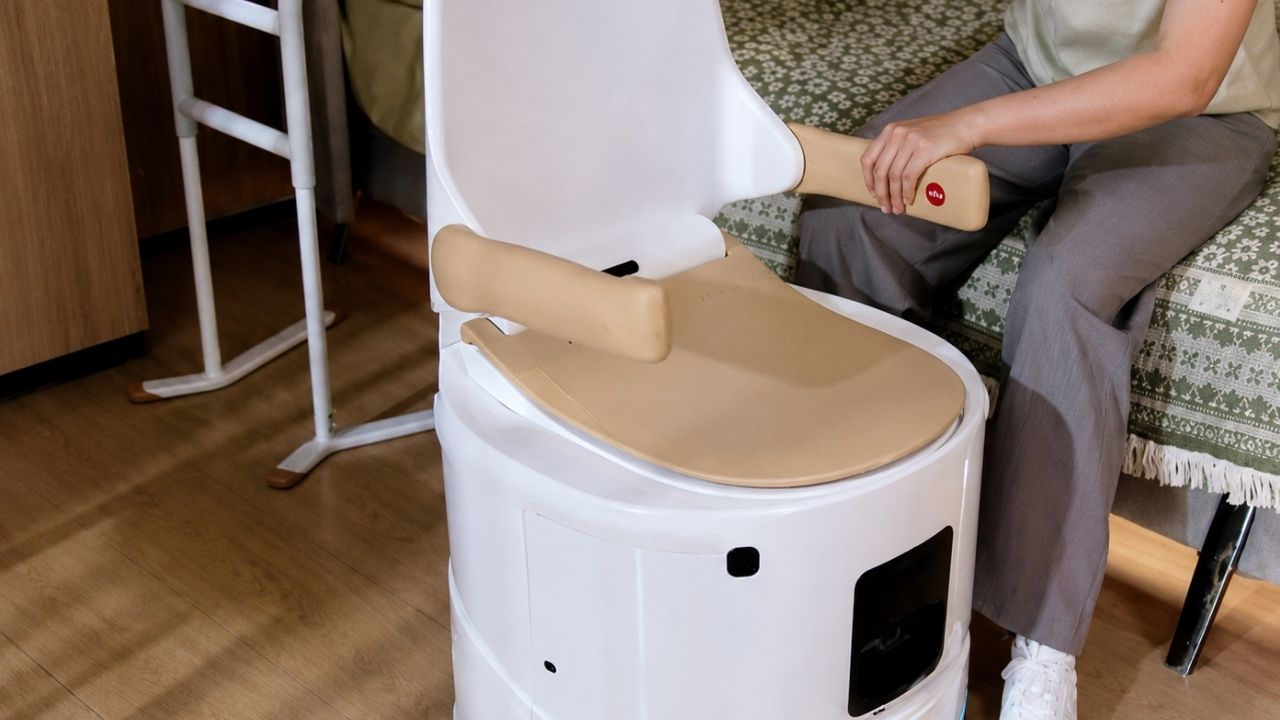
Chinese Company Unveils Robotic Toilet That Comes to You, Featuring Lidar Sensors, Voice Command, Bidet, Hot Air Drying, UV Light, and Self-Cleaning Waste Disposal



NASA has studied combustion in microgravity for decades, using drop towers and detached cargo capsules near the International Space Station. These tests helped understand nearly weightless environments but do not fully explain what might occur on the Moon.
Lunar gravity creates a risk zone
The Moon exerts about one-sixth of the gravity felt on Earth, an intermediate condition between the terrestrial environment and the near-weightlessness of the International Space Station. This partial gravity can create an unpredictable scenario, with enough airflow to fuel flames, but insufficient for certain natural extinguishing mechanisms.
On Earth, fire can extinguish when fresh oxygen displaces too quickly for chemical reactions to sustain the flame. On the Moon, this slower flow might allow reactions to better keep pace with the available oxygen in the artificial habitat.
Researchers at NASA assess that a material only marginally non-flammable on Earth could become flammable in lower gravity. Therefore, fire on the Moon could reveal hidden risks in fabrics, plastics, and other items used by astronauts.
Currently, engineers use the NASA-STD-6001B protocol to test spaceflight materials. The procedure brings a 15-centimeter flame close to fabric or plastic and fails the material if it burns more than 15 centimeters upwards or releases flaming debris.
FM2 mission to ignite samples in late 2026
To investigate this threat, engineers developed the Materials Flammability on the Moon mission, known as FM2. The launch is planned for late 2026, with the deployment of a sealed robotic chamber to the lunar surface.
Inside the automated system, four solid fuel samples will be systematically ignited. Cameras, radiometers, and oxygen sensors will monitor the behavior of the fires for extended periods.
The mission will allow overcoming experiments that last only a few seconds, such as parabolic flights or free-fall towers. With more observation time, scientists will be able to record how the flame ignites, spreads, and reacts in lunar gravity.
The data should also help understand how oxygen-enriched atmospheres interfere with future habitats. This mixture can simplify life support needs but also favor the spread of fires.
Test seeks to protect future lunar habitats
There is not yet a practical way to conduct large-scale material qualification tests on the Moon. Broader evaluations will have to wait until humans have a long-term presence on the lunar surface.
Even so, an initial set of experiments can answer an essential question for the next stages of exploration. NASA wants to know if materials used with confidence on Earth remain safe in the reduced gravity of the Moon.
The fire on the Moon will be ignited within a controlled system to understand the actual behavior of flames before astronauts occupy habitats. The goal is to prevent a small fire from turning into a serious threat to human missions beyond Earth.
With information from Zme Science


-

1 person reacted to this.