






 Portuguese
  Spanish
  4 min of reading
  13 comments


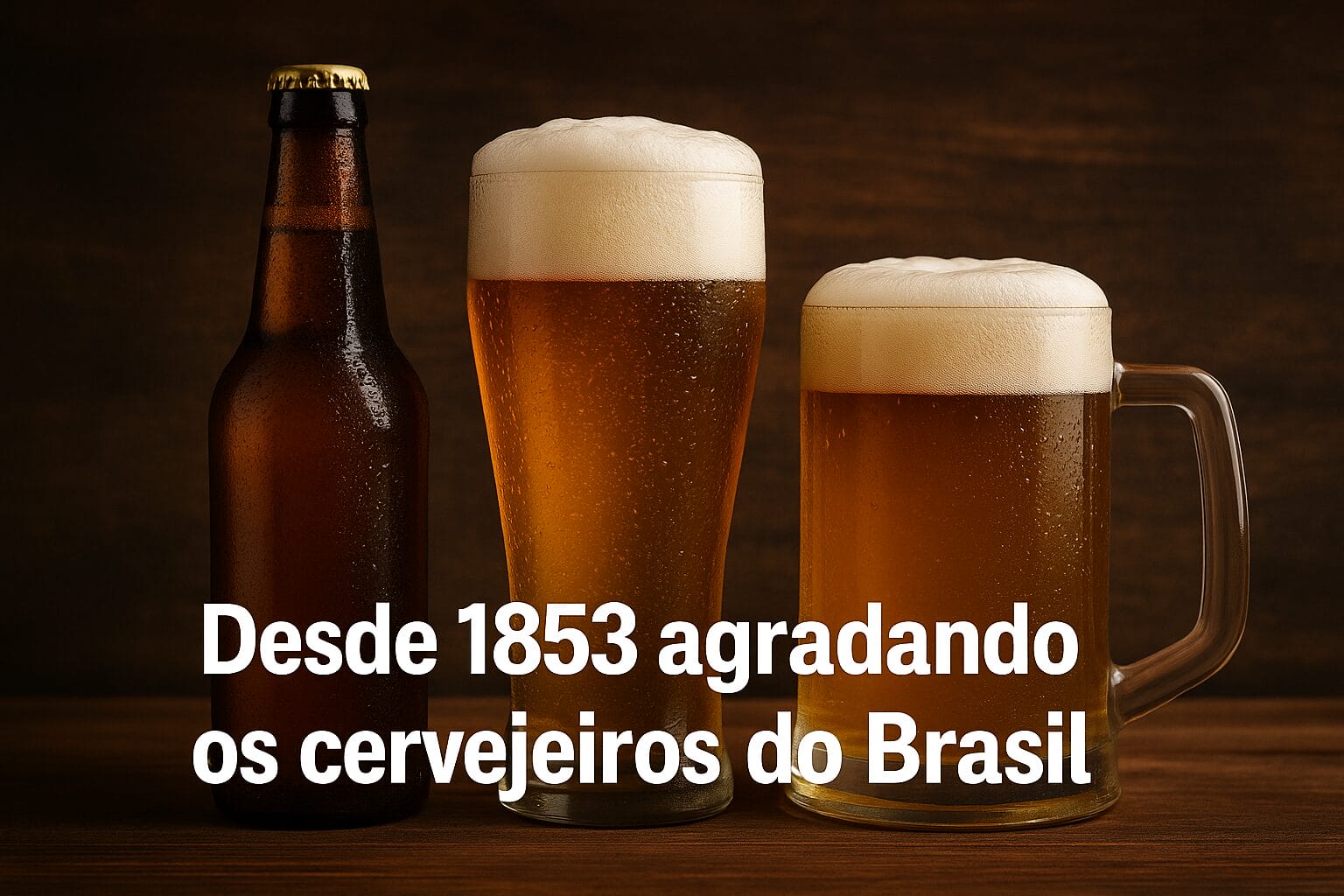

The History Of Brazilian Beer Began In 1853 With Bohemia And Has Seen Mergers, Disputes And Changes That Shaped The Current Market
It is not new that Brazilians have a strong relationship with beer. It is present at parties, gatherings with friends, and Sunday lunches. But few know which were the first brands that initiated the beer tradition in the country.
The oldest of all is Bohemia, which began production in 1853 in Rio de Janeiro. Since then, others have emerged, changed ownership or disappeared. This article retrieves the history of these brands and shows how they helped to build the national market.
Bohemia: The First Brazilian Beer Was Born In 1853
The first brewery in Brazil was opened in Petrópolis, in the state of Rio de Janeiro. Its founder was the German Henrique Leiden, and later, the factory came under the command of his heir, Henrique Kremer.
-
Two billionaires spend $67 million just to avoid having a neighbor and block a $285 million mega mansion, with 4,645 m², bowling alley, car museum, and waterfront area in Florida.

-
David Camacho, the 10-year-old Mexican child prodigy with an IQ of 162, higher than Einstein’s, underwent astronaut training at NASA, speaks four languages, and created an app to help children deal with emotions after the bullying he experienced.

-
London waited more than 360 years for this scene: four pelican chicks are born in St James’s Park, surprising experts, resembling little dinosaurs, and turning an isolation caused by avian flu into a historic chapter for the birds that have lived alongside British royalty since 1664.

-
NASA captured by satellite an underwater volcano erupting in the Bismarck Sea, in the Pacific, and now scientists are waiting to see if a new island will be born there in front of the cameras, a very rare phenomenon to witness live from space.


In the beginning, production followed the traditional standards of the German brewing school, with fuller and more bitter beverages.
Over time, Bohemia adapted to the Brazilian palate. It became lighter and less bitter, keeping up with market changes and the entry of new competitors.
In 1960, it was purchased by Antarctica. The old factory in Petrópolis continued to operate until 1998 when it was shut down due to lack of space.
Despite the end of production at the original site, the brewery’s history has not been forgotten. The space has been transformed into an interactive museum, open to the public, featuring a beer tour that presents the production process and offers special tastings.
Today, the Bohemia brand belongs to the Ambev group, the same company that also controls other traditional brands.
Antarctica And Brahma: The Fight For Second Place
After Bohemia, other brands also gained prominence in the country. Antarctica and Brahma are competing for the title of the second oldest beer in Brazil.
Antarctica was founded in 1885. However, according to historical records, it was still functioning as a pig slaughterhouse at that time. It only began producing beer in 1888. The first advertisement for the brand appeared in 1889 in the newspaper “A Província de São Paulo.”
Brahma also started in 1888, under the name Manufactura de Cerveja Brahma Villiger & Companhia. It was founded in Rio de Janeiro by Joseph Villiger, a Swiss entrepreneur. Later, the factory was renamed Companhia Cervejaria Brahma.
The two brands were competitors for many years until, in 1999, Brahma and Antarctica merged, creating Ambev. The new company rapidly grew, becoming one of the largest in the industry worldwide.
Ambev: The Brazilian Beer Empire
With the merger, Ambev came to control a large share of the market. Today, it operates over 30 breweries and soft drink factories.
It also owns malt houses and other units linked to beverage production. In total, there are more than 50 labels in the company’s portfolio, which also operates outside Brazil, with a presence in over 15 countries.
Among the brands controlled by Ambev, besides Bohemia, Brahma, and Antarctica, are popular names like Skol and Budweiser.
Other Brands That Marked An Era
In addition to the three giants, other beers also made history in Brazil. Some still exist but with less prominence. Others have disappeared from the market.
An example is Bavária. Although still found in some cities, it no longer has the prestige of decades past. In the 90s, it was sponsored by famous artists, like the singers from the Amigos group.
Kaiser was also very popular, especially in the 90s. Today, it is still sold but has lost ground. Schincariol has gone through various transformations. It changed names, packaging, and even formulas. Today it is known as Schin and belongs to another group.
These three brands—Bavária, Kaiser, and Schin—are now controlled by the giant Heineken, a direct competitor of Ambev. The company also owns labels like Eisenbahn, Baden Baden, Devassa, and Amstel.
Beers That Disappeared From The Market
While some brands remain alive or have reinvented themselves, others have ceased to exist. Malt 90 and Pérola are examples of beers that have completely disappeared from Brazilian shelves. The Bock versions of Kaiser and Antarctica, which were darker and fuller, have also vanished.
These changes show how consumer tastes shift over time. They also reveal how the market adjusts, with large groups buying and relaunching brands according to demand.
Closing With A Taste Of Tradition
The history of beer in Brazil began in 1853 with Bohemia. Since then, brands have emerged, changed, grown, or disappeared. Brahma and Antarctica merged to form Ambev, which dominates the sector. Others, like Bavária, Kaiser, and Schin, are now in the hands of Heineken.
Even with all these transformations, one thing remains the same: the presence of beer in the daily life of Brazilians. Regardless of the brand, it continues to be one of the country’s favorite beverages. And this concludes our journey through the memory of our beer market. Enjoy responsibly.
With information from Montar Negócio.


Restaurante na Rua das Laranjeiras, bem no Início, só vendia Bohemia…
Fui funcionário de uma Distribuidora do Grupo Antarctica de 1981 até 2001..fui, assistente de Vendas,Aux.de Expedição, Vendedor e Supervisora de Vendas..
Atendendo Centro do Rio e Zona Sul.. até Rio Sul e Urca…FORTE PRESENÇA DA BOHEMIA…
Eu gosto de cerveja Brahma a 45 anos, gosto de cerveja Antarctica, original, mas a número um é Brahma 🍺🍺🍺🍺🍺🍺