Portuguese
  Spanish


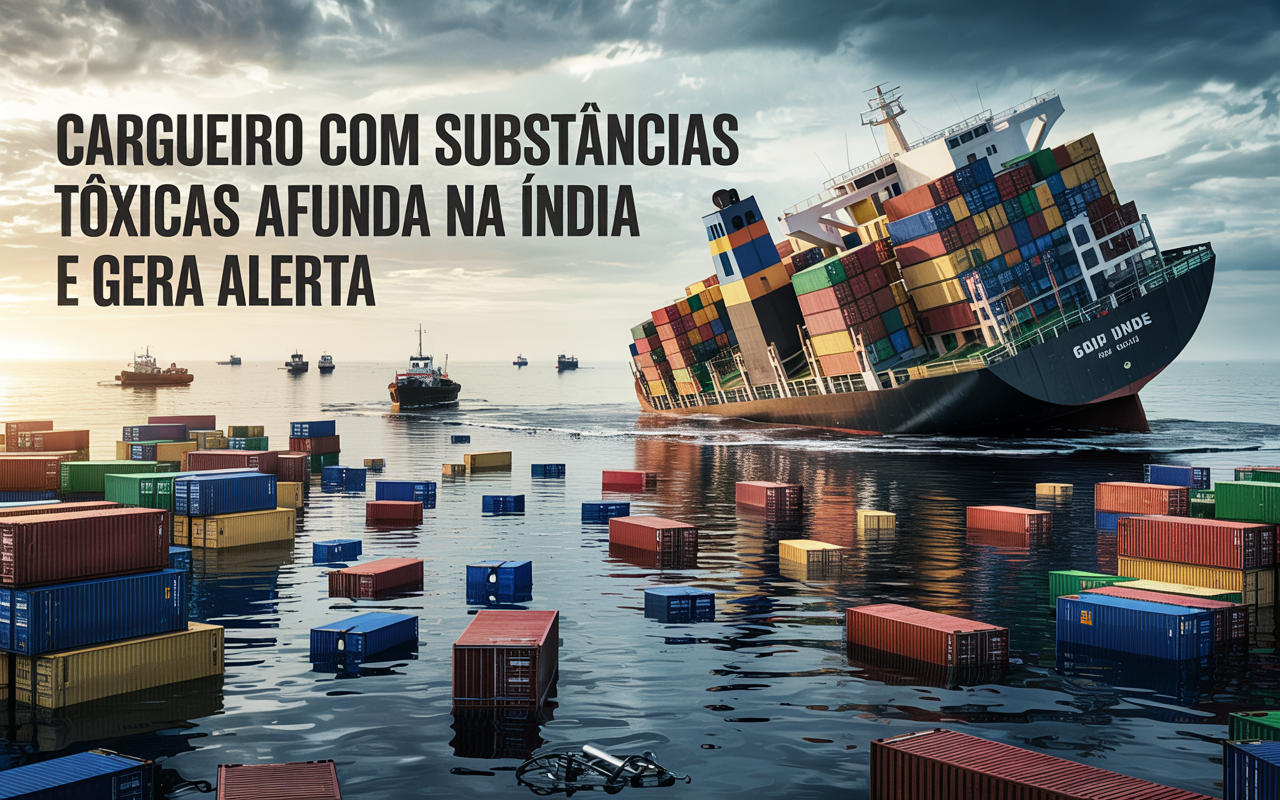

The MSC ELSA 3, Flying the Liberian Flag, Sank with 640 Containers Onboard, Including 13 with Hazardous Goods and 12 with Calcium Carbide; Authorities Monitor Environmental Risk.
A cargo ship flying the Liberian flag sank on Sunday (25) off the coast of Kerala, in southern India, while carrying a load that included “hazardous goods” and industrial chemicals. Identified as MSC ELSA 3, the ship was 184 meters long and had departed from Vizhinjam port, headed for Kochi, when it issued an emergency call on Saturday (24).
According to the Indian Ministry of Defense, the cargo ship was carrying 640 containers, of which 13 contained materials classified as hazardous and another 12 contained calcium carbide, a chemical compound that is highly reactive with water and used in the fertilizer industry and steel production.
The vessel also carried approximately 370 tons of fuel and oil, raising immediate concerns regarding the potential for environmental contamination. Despite this, Indian authorities stated that, so far, there have been no reports of visible leaks in the wreck area.
-
The U.S. Navy Conducts Submarine Tests in Idaho Lake to Detect Underwater Noises Hidden by the Ocean

-
Nuclear Submarine USS Alexandria Retired After 35 Years, Having Completed Over 1 Million Miles in Missions

-
MODEC Introduces New Hull Design for FPSO Gato do Mato to Produce Up to 120,000 Barrels of Oil Per Day in Brazil’s Pre-Salt Region
-
This Massive 12-Meter, 21-Ton Underwater Drone Can Operate Autonomously for Up to Five Days


Crew Rescued Alive from Cargo Ship
The sinking of the cargo ship MSC ELSA 3 mobilized teams from the Coast Guard and the Indian Navy, who managed to rescue all 24 crew members on board. The sailors were of various nationalities: Georgia, Russia, Ukraine, and the Philippines. All were taken to shore and are doing well, according to official reports.
The initial alert was issued when the ship was about 70 kilometers off the coast of Kochi, an important port and logistical center in southern India. The cause of the sinking is still under investigation, but the ship may have encountered technical or structural issues that led to rapid submersion.
Environmental and Chemical Concerns
The presence of hazardous goods and industrial compounds such as calcium carbide raises alarms for Indian and international environmental authorities. Contact of this compound with water generates acetylene gas, which is flammable and toxic, posing a risk if the containers break on the seabed or are swept away by ocean currents.
Furthermore, the cargo of fuel oil and diesel stored in the ship’s tanks represents a potential threat to the region’s marine biodiversity, known for its reefs and economic importance for fishing.
So far, emergency teams have not identified oil slicks or signs of leakage, but a contingency plan has been activated that includes continuous monitoring of the area, with aerial surveys, underwater inspections, and possible containment, if necessary.
History and International Flag of the Cargo Ship
The MSC ELSA 3 operated under the Liberian flag, a country that holds one of the largest ship registries in the world due to flexible laws and low registration costs — a practice known as “flag of convenience.” Although legal, this model may raise questions about technical oversight and the safety maintenance of vessels.
This incident raises discussions about the risks associated with international maritime transport of hazardous cargo, especially when involving strategic gateways of the global economy, such as the Indian Ocean, which connects Asia’s routes to the Middle East, Africa, and Europe.
Investigation and Next Steps
The Indian Navy has initiated an investigation to determine the reasons for the sinking and the conditions under which hazardous goods were transported. The origin of the containers, their final destination, and the protocols followed by the crew during the emergency will be analyzed by maritime authorities.
In parallel, the necessity of recovering the containers, especially those carrying products with chemical or toxic risks, will be evaluated. According to experts, maritime transport of hazardous substances requires specific routes and regulations, as well as detailed documentation — which, so far, has not been disclosed by the Indian Ministry of Defense.
Logistical Context and International Alert
Cases like the sinking of the cargo ship MSC ELSA 3 illustrate the growing risks in global logistics chains. With the increase in the transport of hazardous goods on international routes, concerns about maritime, environmental, and human safety are also rising.
India, due to its geographical and strategic position, has intensified its naval monitoring actions and established rapid response plans for maritime emergencies, such as sinkings, spills, and chemical accidents. The case of MSC ELSA 3 is expected to reinforce discussions on improving cargo traceability and the demand for stricter international regulations for the transport of hazardous materials.