Portuguese
  Spanish


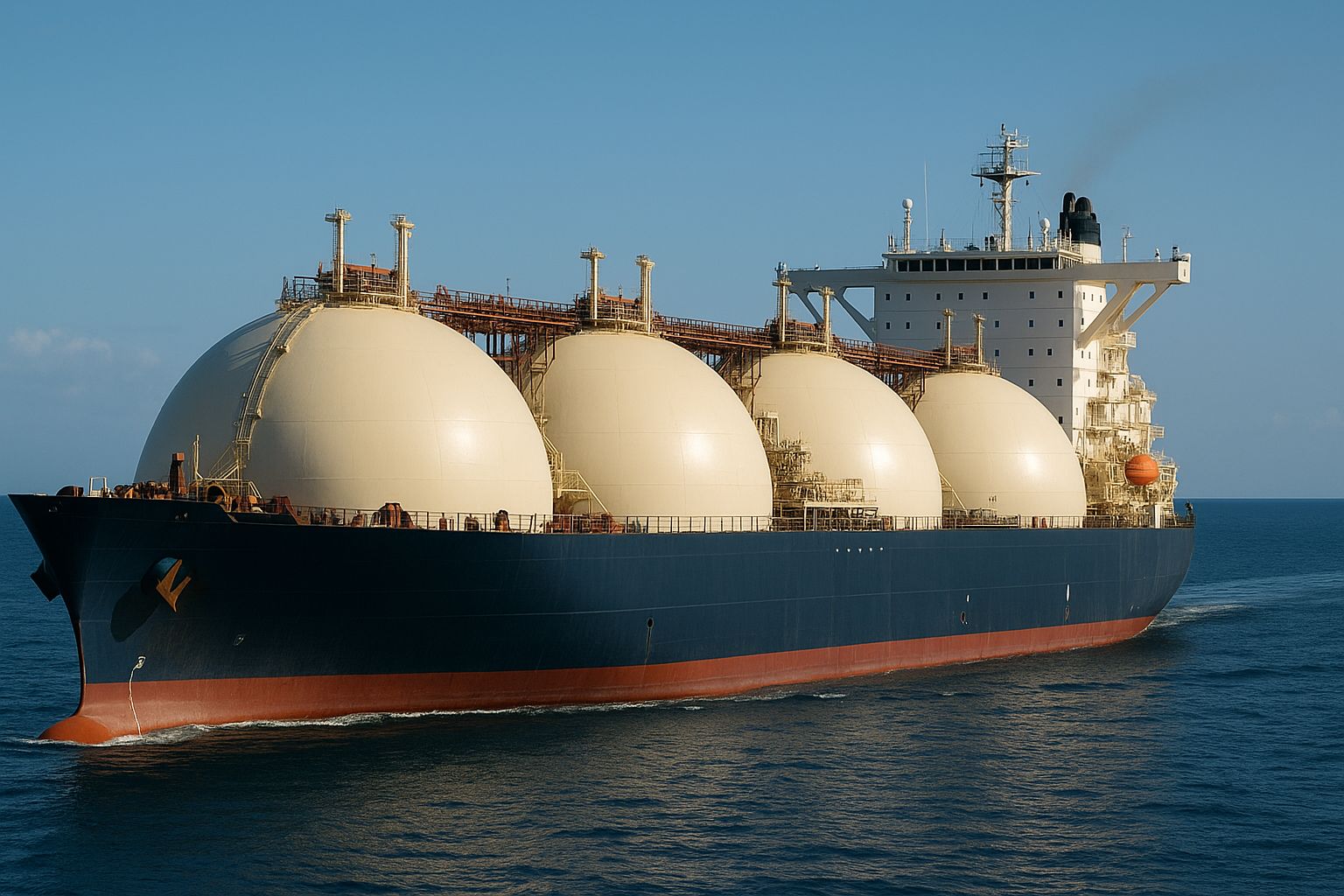


Discover How Gas Carriers Revolutionized Maritime Transportation of Gas and Became Essential in Global Energy Logistics with Safety and Efficiency.
Gas carriers are vessels specially designed to transport liquefied gases in bulk, such as liquefied natural gas (LNG) and liquefied petroleum gas (LPG).
They have become key components of the global energy matrix, especially in recent decades, due to the growing demand for cleaner and more efficient energy sources.
To understand the importance of gas carriers, we must go back to the 20th century and observe the evolution of maritime transport and the gas industry.
-
The U.S. Navy Conducts Submarine Tests in Idaho Lake to Detect Underwater Noises Hidden by the Ocean

-
Nuclear Submarine USS Alexandria Retired After 35 Years, Having Completed Over 1 Million Miles in Missions

-
MODEC Introduces New Hull Design for FPSO Gato do Mato to Produce Up to 120,000 Barrels of Oil Per Day in Brazil’s Pre-Salt Region
-
This Massive 12-Meter, 21-Ton Underwater Drone Can Operate Autonomously for Up to Five Days


For centuries, maritime transportation has proven to be the most economical way to move large volumes over long distances. However, transporting gas seemed unviable due to its volatile nature and compressibility.
It was only in the 1950s that technological advances began to change this scenario.
As reported by the International Maritime Organization (IMO), it was during this period that the first designs for storing and transporting liquefied natural gas in ships with special tanks emerged. This advancement was crucial for the gas industry and naval engineering.
The International Energy Agency (IEA) highlights that, in 1959, the ship “Methane Pioneer” made the first commercial voyage transporting LNG from Texas, United States, to the United Kingdom.
This voyage inaugurated the global LNG supply chain and spurred the development of new vessels for this purpose.
Since then, according to data from the International Gas Union (GIIGNL), the global fleet of gas carriers has grown exponentially, keeping pace with the increase in global demand for natural gas and LPG. This growth reinforces the strategic importance of these vessels in international trade.
Types of Gas Carriers and Their Technical Characteristics
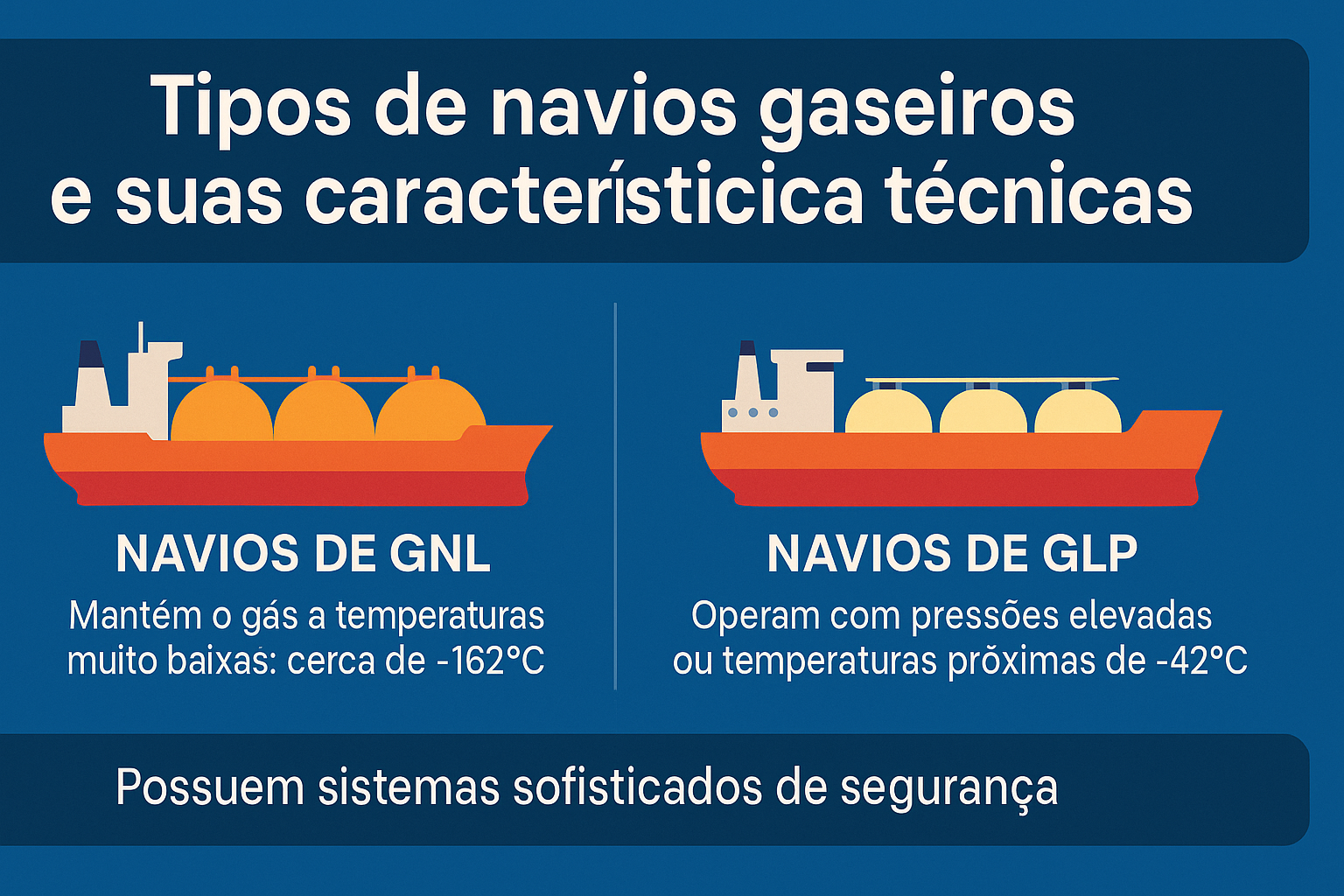
Today, we distinguish two main types of gas carriers: those designed for the transportation of LNG and those that transport LPG.
Each type has specific characteristics related to the physical properties of the gas being transported.
LNG carriers maintain the gas at very low temperatures, around -162°C.
On the other hand, LPG carriers operate at high pressures or controlled temperatures close to -42°C, as highlighted by the technical report from the European Shipbuilders Association (SEA Europe).
Additionally, these vessels feature advanced safety systems, including special valves, efficient thermal insulation, and constant monitoring of the cargo.
The crew receives specific training to ensure the safe handling of these gases, which require strict protocols.
According to the International Gas Union (GIIGNL), the global fleet of gas carriers doubled between 2000 and 2024, reflecting market expansion and the increase in global demand for natural gas.
Consumer countries, such as Japan, South Korea, China, and European Union members, have driven this growth by seeking cleaner energy sources compared to coal and oil.
Therefore, gas carriers are a fundamental part of trade routes that connect producers and consumers on a global scale.
Construction, Design, and Technological Innovation
The construction of gas carriers requires advanced technology and significant investments.
According to the European Shipbuilders Association (SEA Europe), shipyards in countries such as South Korea and Japan lead the production of these vessels, which can transport up to 170,000 cubic meters of liquefied gas.
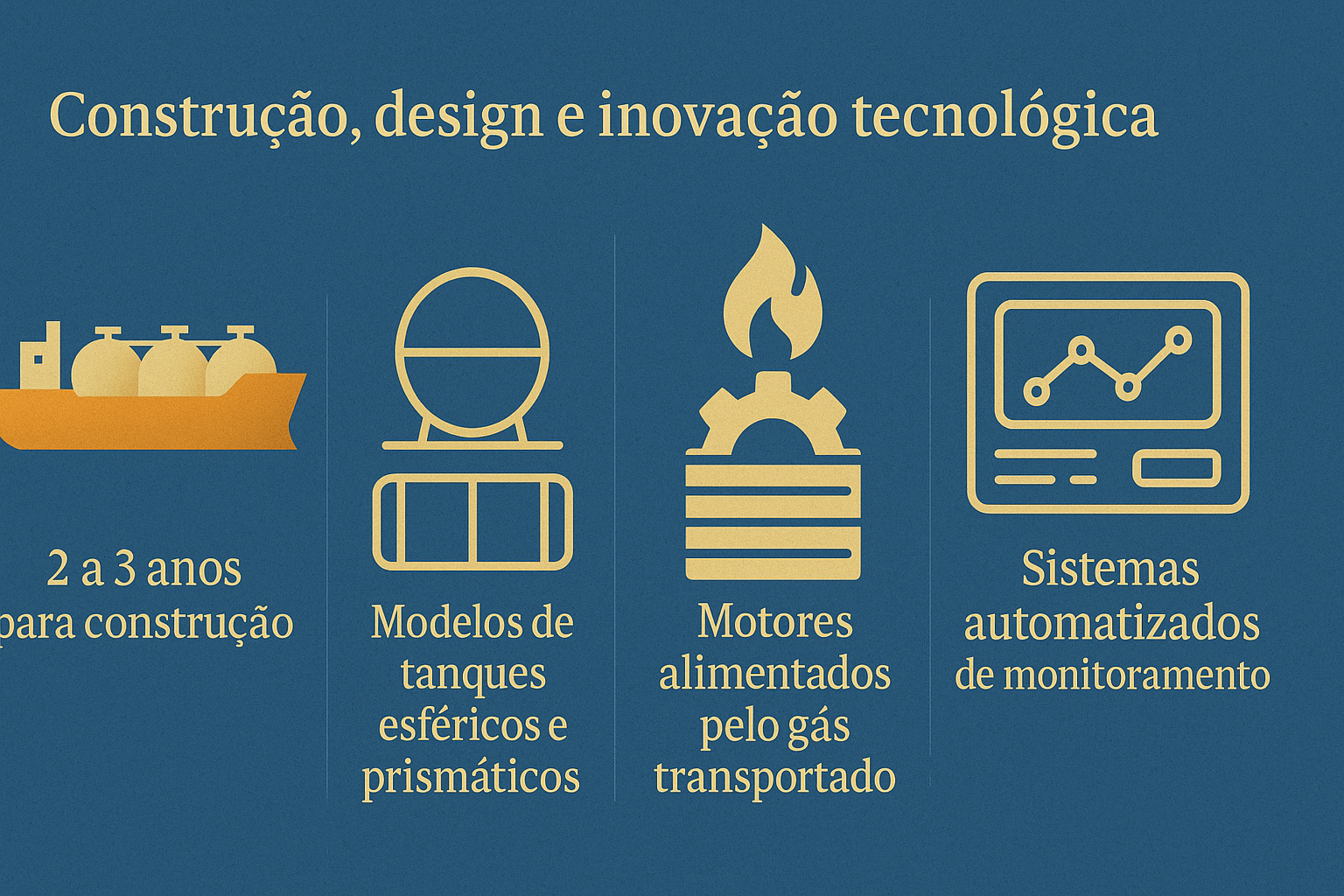
The average construction time for these ships varies from two to three years, depending on the project and the technological complexity involved.
The design of the tanks is crucial for the performance and safety of gas carriers. The two main models are spherical tanks, known as Moss-type, and prismatic membrane tanks, which offer different advantages in strength and utilization of internal space.
Moreover, many gas carriers use part of the transported gas to power their engines, a practice that increases energy efficiency and reduces emissions, according to information from the IMO report.
The naval industry is also adopting automated systems that monitor temperature, pressure, and tank integrity in real-time, enhancing operational safety.
Another important technological advancement, according to the IMO, is the adaptation of some gas carriers to operate in polar regions, allowing for the exploration and transportation of natural gas from new reserves.
Environmental Impact and Future Challenges

Gas carriers play an important role in the current environmental landscape. Natural gas, especially LNG, is considered a cleaner energy source compared to other fossil fuels.
The European Environment Agency (EEA) points out that using LNG reduces carbon dioxide emissions and air pollutants.
However, expanding the global fleet requires investments in specialized port infrastructure for receiving and regasifying liquefied gas.
Furthermore, the IMO has reinforced its environmental and safety regulations, aiming to minimize risks associated with the maritime transport of gases.
Although accidents involving gas carriers are rare, they can cause severe environmental and economic impacts. Therefore, the industry maintains strict safety standards and promotes ongoing crew training.
The future of navigation with gas carriers is directly related to the global energy transition.
According to studies by the IEA, many countries are adopting natural gas as a “bridge” to renewable sources, which elevates the importance of maritime gas transportation.
Research is also advancing to develop gas carriers with greater efficiency and lower environmental impact.
The use of artificial intelligence and digitalization for monitoring and operation promises to enhance safety and reduce costs.
Additionally, the transport of new clean fuels, such as liquefied hydrogen, is beginning to gain traction, expanding the possibilities for gas carriers in the future.