Portuguese
  Spanish


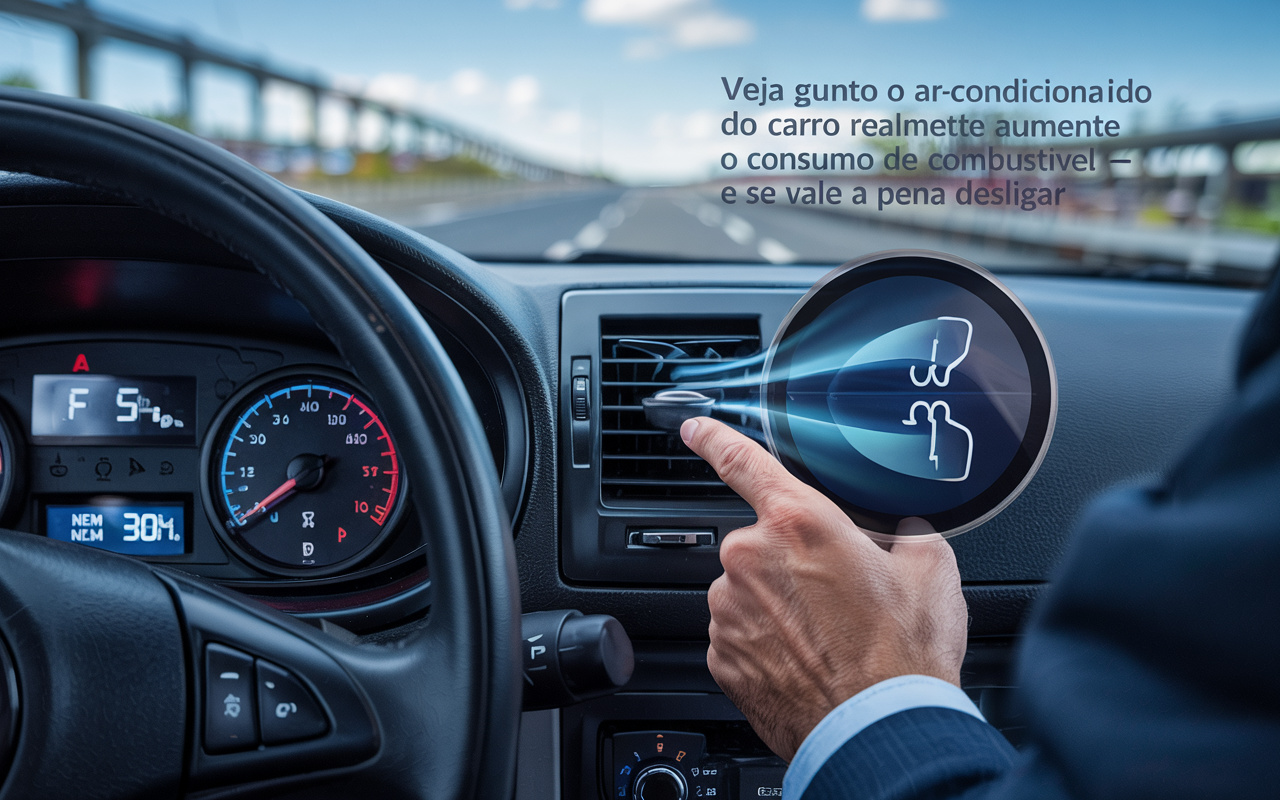


Check Updated Data On The Actual Consumption Of The Air Conditioning In The Car. Understand Why The Car With Air On Spends More Fuel, Discover How Much The Car Air Conditioning Spends And How To Save Gasoline In Your Daily Life.
The use of the car’s air conditioning is one of the most discussed factors when it comes to fuel consumption. Some say it consumes little, while others believe that having the air on can significantly increase gasoline expenses. But how much does the car’s air conditioning really increase fuel consumption? Recent studies clarify this topic and show that the answer is far from the popular extremes of “5%” or “30%”.
Today, you will discover concrete data on the actual consumption of air conditioning, understand if the car with the air on spends more significantly, and learn how to save gasoline in your daily life.
How Much Does The Car Air Conditioning Increase Fuel Consumption?
Several practical tests conducted by specialized agencies indicate that car air conditioning increases consumption by an average of 8% to 15%, depending on variables such as the vehicle model, type of trip (urban or highway), and the intensity of use of the system.
-
Hilux’s little sister: Toyota relaunches the Land Cruiser 70 in the 2027 lineup with over 40 years of production, a 2.8 turbo diesel engine with 201 hp and 51 kgfm, a six-speed automatic transmission, and a renewed retro look.

-
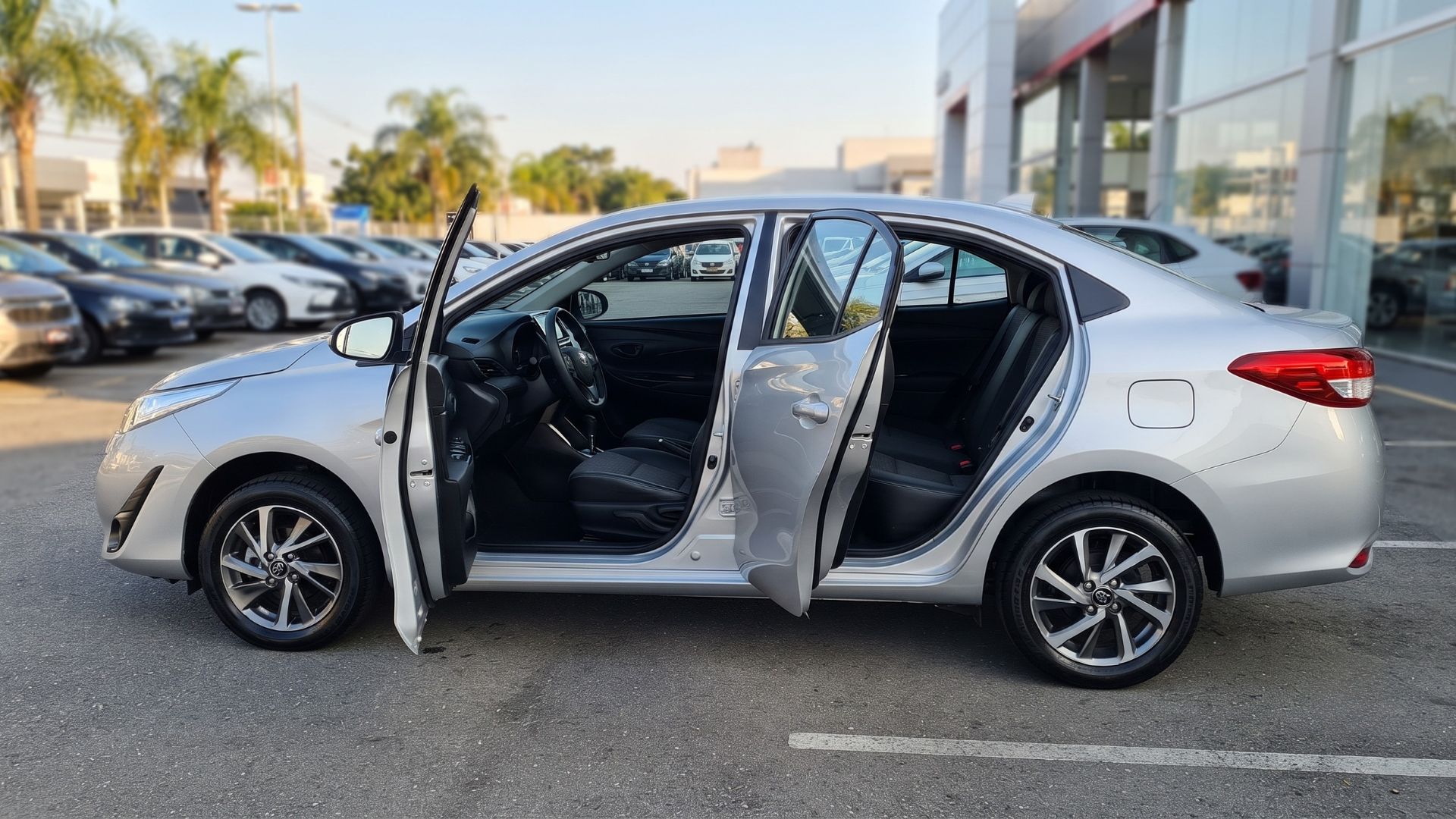
Automatic, economical, and known for reliability: with a 1.5 engine of up to 110 hp, CVT transmission, seven airbags, and fuel consumption of up to 15.9 km/l, this used hatchback appears as a rational alternative to Polo, HB20, and Onix; meet the Toyota Yaris XLS 2020.
-
He surpassed the Tera, Creta, and Tracker: With a TSI engine of up to 150 hp, 6-speed automatic transmission, and a 373-liter trunk, the Volkswagen T-Cross was the best-selling SUV in June, with 11,753 registrations.

-
It looks factory-made, but it came out of a workshop: a mechanic from Pernambuco builds a handcrafted “mini Toyota,” drives it through the streets, and the video goes viral on social media, leaving residents astonished.



According to a study by the Brazilian Vehicle Labeling Program (PBEV), coordinated by Inmetro, small and medium vehicles have an average increase of 10% in consumption with the air on. Larger vehicles, such as SUVs, can present an increase of up to 15%.
This demonstrates that, although the actual consumption of air conditioning is significant, it does not reach the 30% often quoted in myths.


Quatro Rodas Magazine, in practical tests conducted in the laboratory, also found increases ranging from 9% to 12% in real urban driving situations.
In Which Situations Does The Car With Air On Spend More Fuel?
The impact on consumption is greater under certain conditions. In urban routes, where there are many stops and restarts, the engine works harder to keep the air conditioning running. In these situations, the car with the air on spends more fuel, especially in heavy traffic.
In contrast, on highways, the percentage increase tends to be lower. This happens because the engine already operates at higher revs and can keep the air conditioning compressor active without requiring as much extra effort. Thus, the difference in consumption is reduced to something around 8% to 10%.
Another relevant factor is the external heat. The higher the ambient temperature, the more effort the air conditioning system makes to keep the car interior cool, which contributes to the increase in consumption.
Actual Consumption Of The Air Conditioning: How Much Does It Spend In Numbers?
To exemplify, consider a car that travels 10 km/liter of gasoline. With the air conditioning off, it maintains this average. However, with the air constantly on, the average can drop to 9 km/liter in urban conditions — which represents a difference of approximately 11% in consumption.

In a scenario of 500 km traveled in a month, the additional expense would be approximately 5.5 liters of fuel, equivalent to about R$ 40 to R$ 50, considering the average price of gasoline in Brazil in 2025.
This calculation shows that, even though the car’s air conditioning increases consumption, the additional monthly cost is not significant enough to justify giving up thermal comfort on hot days, depending on the driver’s needs.
Gasoline Economy With Air Conditioning: How To Reduce The Impact?
Yes, there are strategies to minimize fuel consumption without necessarily getting hot inside the vehicle. Here are some practical tips that help improve gasoline economy with air conditioning:
- Use The Air Conditioning Wisely: Upon entering the car, open the windows for a few minutes to expel the hot air accumulated before turning on the air conditioning. This reduces the initial load on the system.
- Keep The System In Good Condition: Dirty cabin filters or system failures make the compressor work harder, increasing consumption. Regular maintenance is essential.
- Adjust The Temperature Appropriately: It is not necessary to keep the air conditioning at maximum level all the time. Temperatures around 22°C provide comfort without overloading the engine.
- Prefer The Recirculation Mode: This function prevents hot air from outside from constantly entering the car, helping the system to cool down faster and use less fuel.
With these good practices, it is possible to reduce the impact of using air conditioning without sacrificing comfort.
Does It Spend More Fuel With Air On Or With Windows Open?
Another common debate is whether opening the windows is more economical than using the air conditioning. The answer depends on the vehicle’s speed. At low speeds (up to 60 km/h), driving with the windows open does not significantly impact consumption.
However, on highways, the aerodynamic effect caused by open windows creates drag that can increase consumption by up to 5%. In this case, the actual consumption of air conditioning is comparable to the effect of aerodynamic drag, making the use of air a more comfortable choice without a major difference in expense.
In general, experts indicate that on the road, it is more efficient to keep the windows closed and use the air conditioning moderately.
Is It Worth Turning Off The Car Air Conditioning To Save Fuel?
Considering the actual consumption data and the difference that air conditioning causes in fuel spending, the answer is: it depends on your priority.
If the goal is to maximize savings in situations of high gasoline prices, short trips, and heavy traffic, reducing the use of air conditioning helps save.
On the other hand, the average increase of 10% in consumption is relatively small compared to the thermal comfort and safety provided—after all, very hot environments inside the car can increase driver fatigue, reduce attention, and even raise the risk of accidents.
The balance lies in conscious use, with proper maintenance and simple techniques to avoid waste.
Air Conditioning Consumes, But Comfort Also Matters
The myth that the car’s air conditioning increases consumption by 30% does not hold up against more recent tests. The real impact is around 8% to 15%, depending on usage conditions. Although the car with the air on consumes more, the difference is usually acceptable when compared to the comfort benefit, especially on intensely hot days.
The main recommendation is the rational use of the system, keeping maintenance up to date and seeking efficiency in daily life. This way, you can combine comfort and gasoline savings with air conditioning without harming your wallet or well-being while driving.