






 Portuguese
  Spanish



Discover Which Scenes of Titanic Were Inspired by True Events and What Was Created Just to Touch the Audience in the Theater
The sinking of the Titanic is one of the most significant episodes of the 20th century. Even more than 100 years after the accident, the topic still generates great interest. The film directed by James Cameron, released in 1997, is one of the main reasons for keeping this memory alive by portraying the tragedy in rich detail.
However, not everything shown on screen corresponds exactly to what happened in 1912. Some scenes are inspired by true events, while others were created to enrich the plot. Below, see what the film depicts accurately and what was fiction.
The Musicians Really Played Until The End
One of the most emblematic scenes of the film is that of the musicians continuing to play while the ship sinks. This really happened. The Titanic had eight musicians hired to entertain the passengers during the crossing.
-
Award-Winning Japanese Restaurant Reveals It Has Preserved Part of the Same Frying Oil for 66 Years

-
American Youth Transforms from Severe Obesity to U.S. Air Force Enlistment, Losing 90 Kilograms in Two Years
-
11-Year-Old Entrepreneur Sells 60 Homemade Sweets Daily, Mastering Cost Calculation, Social Media Promotion, and Client Negotiation Since Age 7

-
Peruvian Mountain’s 5,200 Aligned Holes May Unveil Ancient Indigenous Market for Corn and Cotton


It is unknown how long they played, but there are indications that they remained until just before the vessel disappeared beneath the waves. The final song is also uncertain, but it is speculated that it might have been “Songe d’automne” or “Nearer, My God, to Thee.”
Molly Brown Was Based on a Real Woman
The character Molly Brown, portrayed by Kathy Bates, was inspired by American socialite Margaret Brown. She was in Europe with her daughter and decided to return to New York upon learning that her grandson was ill.
During the sinking, she helped to embark passengers onto the lifeboats and, after entering one of them, insisted that the crew member return to rescue more people. After being rescued by the Carpathia, she organized a committee to support survivors from second and third class.
Jack and Rose Did Not Exist
Although the romance between Jack and Rose touches thousands of people, they are fictional characters. James Cameron created them to drive the narrative of the film.
However, Rose was inspired by the ceramic artist Beatrice Wood, who had a difficult relationship with her mother and sought independence in her work—elements present in the character’s profile.
William Murdoch Portrayed as a Villain Faced Criticism
Officer William Murdoch appears in the film shooting at passengers and then taking his own life. In reality, he is remembered as a hero for launching ten lifeboats and assisting in the rescue of many.
His family felt offended by the negative portrayal, and 20th Century Fox issued an official statement saying he was a “decent, responsible, and very human hero.”
Real References Shape The Narrative
Director James Cameron used the fictional romance as a way to show real historical facts. The collision with the iceberg, the sinking during the early morning, and the death of over 1,500 people are depicted accurately.
In one scene, the clock shows 2:15 a.m., almost the exact time of the sinking, which occurred around 2:20 a.m.
The Couple That Decided to Stay on The Titanic
In the film, there is a touching scene of a couple staying together in bed as the room fills with water. They are based on Isidor Straus, owner of Macy’s, and his wife, Ida.
Both had guaranteed spots on lifeboat 8, but Isidor refused to board until all the women were saved. Ida, in turn, would not leave him behind. Witnesses say they were last seen on the ship’s deck.
The Way The Ship Sank
James Cameron sought maximum realism in showing the Titanic breaking in half. After the film, he conducted tests with engineers and scientists to verify if the representation was correct. In the film, the ship breaks when it is almost vertical.
Studies indicate that, in reality, the rupture could occur with just a 23-degree incline. Even so, the director opted for a more impactful dramatization.
Details Of The Installations Were Inspired By The Original
The film also accurately portrays the difference between classes on board. First class offered extreme luxury: suites, squash courts, restaurants, and even a gym.
Third class was simpler, with bunk beds and shared rooms for up to eight people. Even so, these accommodations were better than those on other ships of the time.
Titanic: A Lasting And Awarded Success
Besides the historical fidelity in many aspects, the film Titanic stood out for its production quality. The film won several awards and became a global phenomenon.
Even with creative liberties at certain moments, the director managed to balance real facts with dramatic elements to tell an engaging story. Even today, the work is remembered as one of the most impactful in cinema.
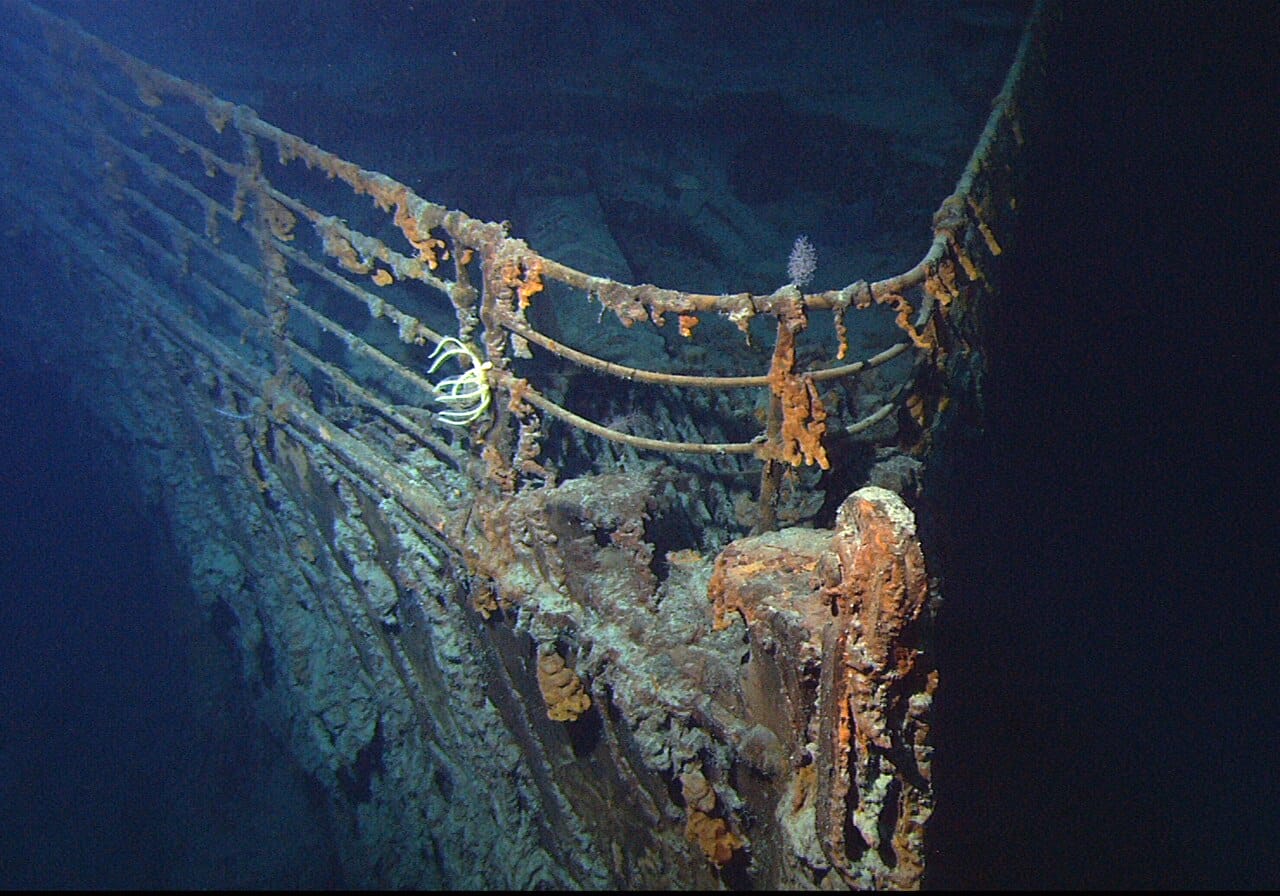
The Vessel Remains At Almost 4 Thousand Meters Deep
For the more curious, the wreck of the Titanic is about 3,800 meters deep, around 600 km from the coast of Newfoundland, Canada.
Some people invest large sums to visit the site. For those who prefer something more accessible, the 1997 film remains the closest way to relive the story of the vessel that moved the world.
With information from Olhar Digital.


