






 Portuguese
  Spanish


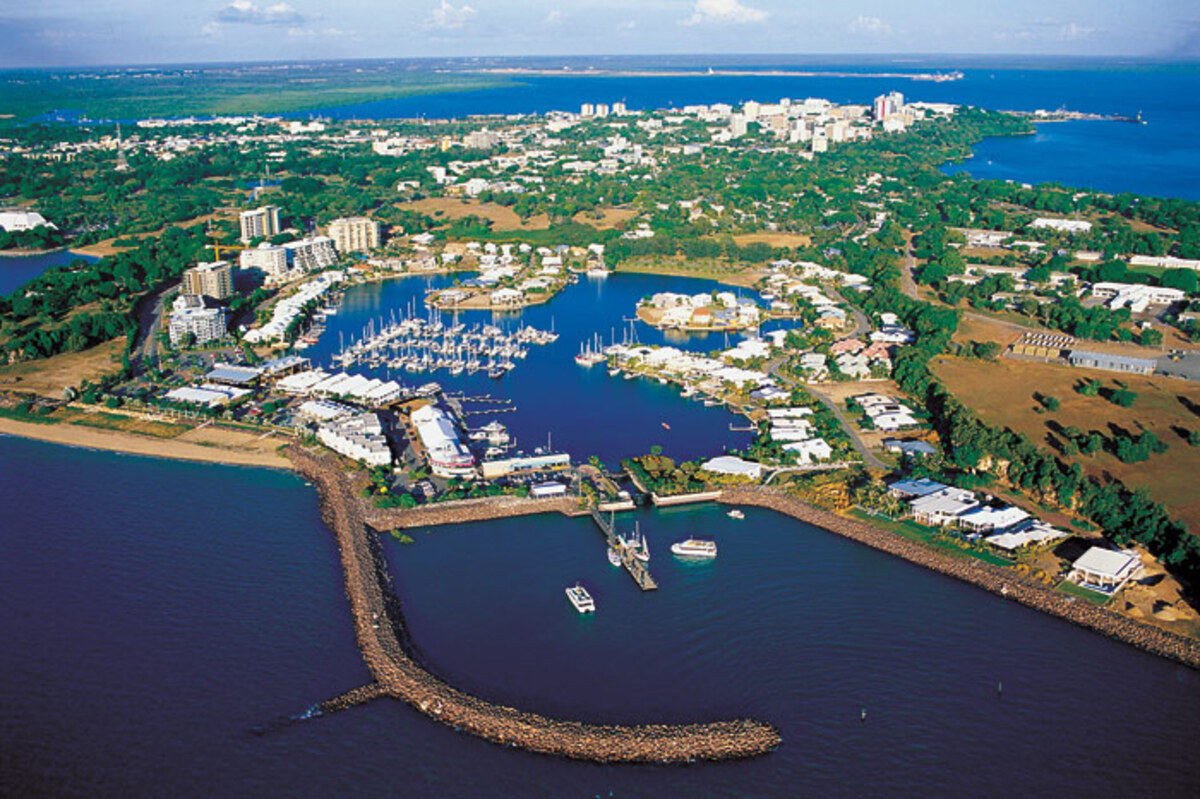

In Darwin, Australia, About 100 Thousand Crocodiles Cohabit with 150 Thousand Residents, Creating Challenges for Security, Tourism, and the Leather Industry.
Darwin, Australia, has a unique situation in the world. There are about 100 thousand crocodiles living in the areas near the city. This impressive population belongs to the Crocodylus porosus species, also known as saltwater crocodiles, famous for their aggressive behavior.
The city was founded in 1869 and is named after the naturalist Charles Darwin. Throughout its history, it has undergone reconstructions after the Japanese bombing in World War II and the passage of a cyclone.
Today, it is home to approximately 150 thousand residents, being the most populous capital of the Northern Territory of Australia. However, the majority of the region’s inhabitants are not human.
-
Viral Video of Giant Gold Nugget in Brazil’s Oiapoque Revealed as Painted Rock by French Guiana Miner

-
18th-Century Treasure Uncovered in Brazilian Amazon: 20 Réis Coin and Dutch Pipes Found at Construction Site
-
New York Resident Uncovers Complete Mastodon Jawbone in Backyard After Spotting Teeth Emerge from Ground
-
Young Treasure Hunter from Brazil’s Balneário Camboriú Finds $22,000 in Jewelry with Metal Detector, Aims for $1 Million, and Returns iPhone Found in Ocean


The Favorable Environment for Reptiles
Darwin has a favorable climate and large areas of rivers and sea, attracting outdoor sports enthusiasts. This same environment creates ideal conditions for the multiplication of crocodiles. Although the current number exceeds 100 thousand, it has not always been this way.
The first inhabitants of the region were the Larrakia, an Aboriginal people who coexisted with these animals for 65 thousand years. For them, crocodiles held spiritual and practical value, serving as a source of meat and eggs. However, the coexistence changed with western advancement.
The Impact of Hunting After World War II
After World War II, the region became westernized, and hunting crocodiles gained momentum. This time, it was not for meat but rather for their skin, which was highly valued in the fashion industry. Intense hunting reduced the population to about 3 thousand crocodiles in the 1960s.
The skin trade was highly profitable, and little concern was given to environmental impact. The situation only began to change in 1971, with the adoption of conservation policies that prohibited rampant hunting.
The Recovery of the Crocodile Population
With the hunting ban and favorable natural conditions, the crocodile population has recovered rapidly. In 50 years, the number soared from 3 thousand to 100 thousand specimens around Darwin.
Despite the increase, the number of fatal attacks has not risen proportionately, thanks to an efficient control system. Park rangers work daily to capture animals that approach urban areas, especially during the breeding season.
Control System and Traps
Kelly Ewin, one of the park rangers, explains that there are 24 traps spread throughout the region, especially in the port area.
Additionally, there is a public education effort. The government created the program “Be Smart Near Crocodiles,” which teaches how to act in areas with the presence of these animals. Natasha Hoffman, responsible for the program, explains: “They hunt in ambush, sit, watch, and wait. If they have the opportunity to grab food, that’s what they’ll do.”
Authorization for Culling in Risk Situations
In cases of direct threat to human life, rangers are authorized to eliminate crocodiles. Recently, the annual quota for authorized culling was increased from 300 to 1,200 animals in an attempt to maintain population balance.
Even so, the debate over new mass culling resurfaces whenever a fatal attack occurs. Politicians often disagree on the best way to handle the situation.
Tourism Near Crocodiles
The presence of crocodiles also boosts local tourism. Attractions such as the “Cage of Death,” where tourists dive with crocodiles protected by capsules, are popular. According to Captain Alex Williams, tourism in the region has grown significantly over the past ten years.
However, expert Grahame Webb warns: “If you swim in the Adelaide River near Darwin, there is a 100% chance you will be killed. The only question is whether it will take five or ten minutes.”
Profitable Crocodile Skin Industry
In addition to tourism, there is intensive farming of crocodiles for luxury skin production. Thousands of animals are kept in captivity to meet the demands of brands like Hermès and Louis Vuitton.
Australia is responsible for 60% of the world’s crocodile skin production, with the Northern Territory producing two-thirds of this total.
However, environmental organizations criticize the conditions of the farms. They denounce the stress of the animals in collective tanks, which facilitates diseases such as salmonella, also affecting workers and the environment.
A Difficult Balance
Even with constant debates among environmentalists, farmers, politicians, and Indigenous representatives, the fact is that the species has managed to recover.
After nearly being extinct, crocodiles have returned to occupy the lands that were once theirs. Managing this coexistence remains a complex challenge, with no definitive solution.
With information from Xataka.


Bala neles
Vida longa para os crocodilos!