Portuguese
  Spanish


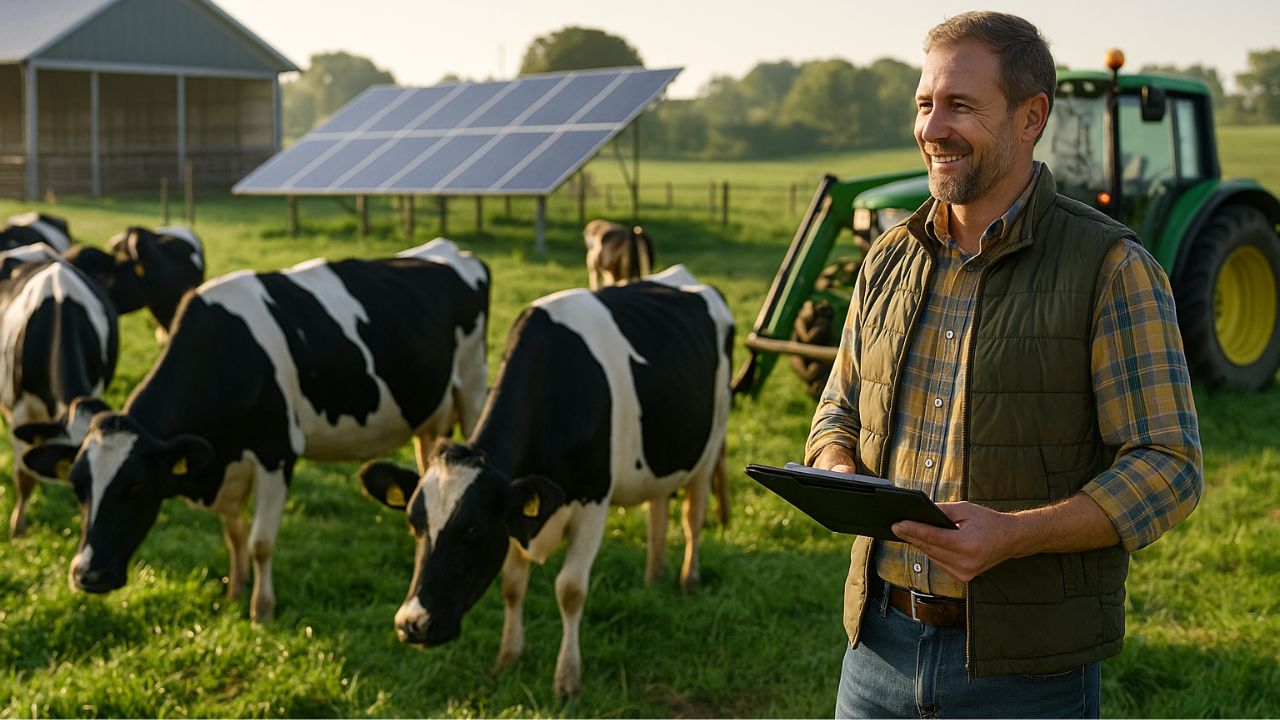

Partnership Between Nestlé and BB Offers Green Credit of R$ 100 Million to Decarbonize Milk Production.
Nestlé and Banco do Brasil have formed an unprecedented partnership of R$ 100 million aimed at financing regenerative agriculture practices in milk production.
The program, launched this month, aims to benefit around one thousand producers in the states of São Paulo, Minas Gerais, and Goiás, focusing on reducing carbon emissions and making livestock farming more sustainable.
The Swiss multinational will act as a bridge between the bank and the producers, assisting farmers in applying the resources for low-carbon technologies and practices.
-
Study of Brazil’s Tietê River Finds 25 Pesticides in Water, Including Cancer-Linked Substance Near Source

-
Young Entrepreneur Expands from 50 to 1,400 Chickens, Proving “Happy Hens” Can Be a Viable Business
-
Small Farm in Brazil’s Minas Gerais Produces 403 Liters of Milk Daily, Sets Benchmark for Rural Producers
-
Man Revives 1930s Abandoned Trout Farm, Learns from Scratch, and Earns $1.1 Million Annually Selling Fish to Michelin-Starred Restaurants


The goal is to ensure that investments truly deliver a positive environmental impact and improve the productive efficiency of dairy farms.
Regenerative Agriculture and Innovation in Agriculture
The program includes guidance on soil management, animal welfare, clean energy use, and agricultural techniques that promote environmental regeneration.
These actions align with Nestlé’s global commitment to achieve net-zero emissions by 2050, reinforcing the strategic role of sustainable agriculture in the company’s value chain.
According to Bárbara Sollero, Director of Regenerative Agriculture at Nestlé, Brazil is currently the company’s largest global hub for the purchase of fresh milk and a reference in sustainability.
“The partnership with BB breaks one of the main barriers to large-scale transition, which is access to financing at competitive rates. Accelerating the transformation of the dairy supply chain is central to our strategy,” explains Sollero.
Competitive Credit Lines and Direct Impact in the Field
The credit lines from Banco do Brasil used in the initiative are the same traditionally offered for rural investment and funding, but now with special conditions for projects involving emission reductions and environmental regeneration.
According to João Fruet, Director of Corporate and Investment Banking at BB, the agreement is an example of how the bank seeks to promote the sustainable use of rural credit.
“The agreement allows producers to obtain financing at competitive rates and offers the partner company the sourcing of materials destined for its production,” says Fruet.
The estimate is that the initial amount of R$ 100 million will be disbursed in about eight months, but both the bank and Nestlé indicate that the amount could be increased.
“It’s a good amount to start with, as the milk supply chain tends to have smaller producers, and thus Nestlé’s curation in this process is important. But we have no restrictions on values; we are ready to move forward,” adds Fruet.
Incentives and Sustainability Goals in the Dairy Sector
The producers who are part of the Nature program by Ninho, an initiative from Nestlé, are rewarded according to the level of adoption of regenerative practices, assessed through bronze, silver, gold, and diamond seals.
The company highlights that 70% of the carbon emissions from its products come from agricultural ingredients, and nearly half of that is linked to milk.
Therefore, investing in sustainable livestock is one of the company’s priorities.
“For many years, we have been working and engaging producers in this decarbonization journey. Now we enter a new stage, which is to secure attractive credit lines for investments and overcome the scale barrier in regenerative agriculture,” says Sollero.
Future Expansion and New Pathways for Agriculture
In addition to reducing the environmental impact of livestock farming, the partnership opens the door for new models of green financing within Brazilian agriculture.
Banco do Brasil sees this collaboration as an opportunity to achieve its sustainable investment goals and support producers in the transition to a low-carbon economy.
“With decarbonization, we are paving a path and can start discussing issues that are not the focus today but have potential, such as carbon capture and trading. We can help producers gain access to liquidity in other markets,” concludes Fruet.
Thus, Nestlé and Banco do Brasil consolidate a partnership model that combines accessible financing, technology, and sustainability, reinforcing the leading role of Brazilian agriculture in the global green transition.