Portuguese
  Spanish


With 1,120 meters in length, 13.8 meters in width, and an investment of R$ 220 million, the bridge between São Francisco and Pintópolis has already reached 50% completion, is part of the Caminhos pra Avançar program, and is expected to replace ferry crossings in the North of Minas
The construction of the new bridge over the São Francisco River has reached 50% completion and progresses as one of the largest ongoing roadworks in Minas Gerais. This Wednesday (1/7), Governor Mateus Simões inspected the works on MG-402, between São Francisco and Pintópolis, highlighting the expected impacts on mobility, economy, and regional integration.
During the visit, the governor stated that the project represents the conclusion of a discussion that began five decades ago. According to him, the connection will allow Montes Claros to be linked to Brasília via a route previously considered unfeasible for freight transport, expanding development opportunities for the North of Minas.
The project receives an investment of R$ 220 million from the Government of Minas and is part of the Caminhos pra Avançar program. In addition to road infrastructure, the construction boosts the regional economy by generating approximately 2,600 direct and indirect jobs, benefiting workers, suppliers, and local companies.
-
Brazilian Homebuyers Still Fall for Illegal “Drawer Contracts,” Risking Foreclosure and Long Legal Battles Without Deeds.

-
World’s Largest Pencil Factory, Producing 2 Billion Annually, Operates in a Brazilian University Town with Its Own Sustainable Forest

-
World’s Largest Banknote Printer is a British Private Company Producing Currency for Over 69 Nations
-
Europe’s Largest Hydrogen Truck Fleet Begins Operation with 125 Vehicles Emitting Only Water Vapor




Bridge over the São Francisco River advances
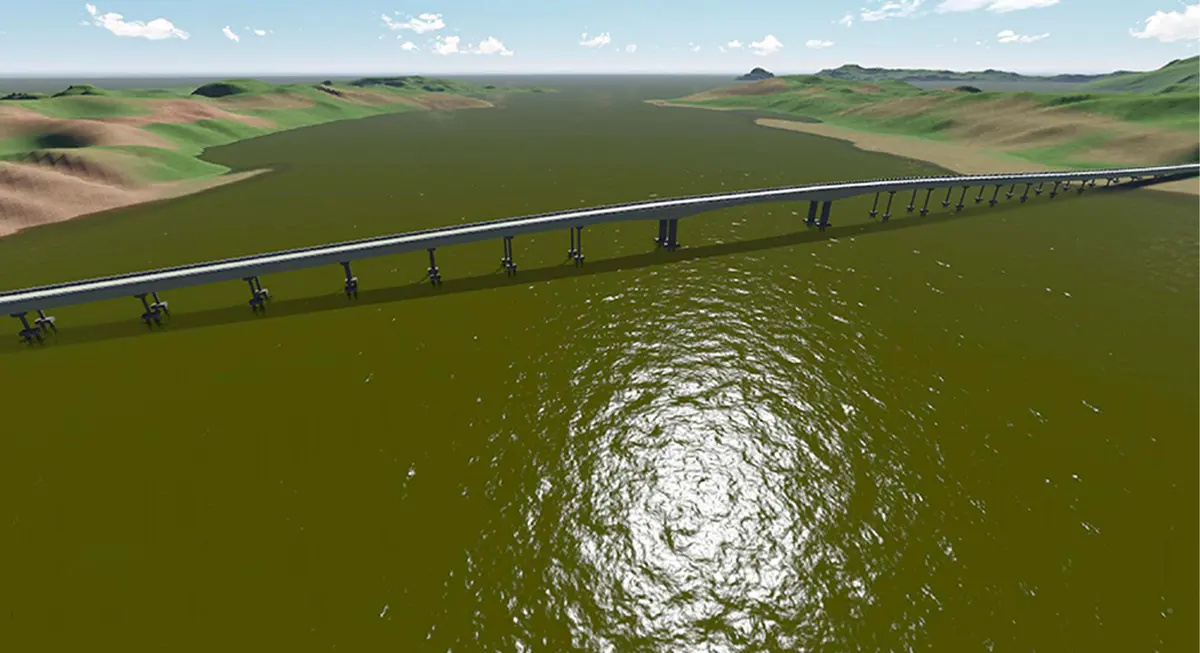
The future structure will be 1,120 meters long and 13.8 meters wide, becoming one of the largest ever built in Minas Gerais. The contract also includes an access variant of 3.06 kilometers, including improvements and paving between São Francisco and Pintópolis.
The services are at different stages of execution. The infrastructure, responsible for supporting the entire load of the bridge and traffic, has reached 85%. The mesostructure is at 56%, while the superstructure, consisting of the deck, beams, and road used by vehicles and pedestrians, has reached 32%.
Expected changes for residents
With the completion of the work, ferry crossings will no longer be necessary. The expectation is to offer faster, safer, and more comfortable travel for residents, rural producers, transporters, and other users of MG-402, strengthening integration between municipalities.
The improvement should also facilitate the transportation of goods, increase regional competitiveness, and create conditions for attracting new investments. The government believes that the benefits will reach areas such as health, education, and logistics, reducing the travel time for the population.
The farmer Hércio Francisco da Rocha stated that he has been waiting for over 70 years for the construction of the bridge. For him, the project will transform the reality of the people living along the banks of the São Francisco River and will end a long wait for the community.
Resources and state program
The construction is part of the Caminhos pra Avançar, a program that includes more than 5,000 kilometers of road works and investments close to R$ 7 billion. More than a hundred interventions have already been completed in different regions of Minas Gerais.
The resources allocated to the bridge are part of the Reparations Agreement signed after the collapse of Vale’s dams in Brumadinho, celebrated to repair social, economic, and environmental damages caused by the 2019 disaster, which resulted in 272 fatalities.
Why is this project important?
Large bridges play a strategic role in regional integration because they reduce natural barriers, decrease travel time, and increase the circulation of people and goods.
By replacing ferry crossings, this type of infrastructure offers greater predictability to travel, improves access to public services, and strengthens local production chains.
It also helps to reduce logistical costs and expand the connection between municipalities, favoring economic activities and regional development when integrated with paved roads and transport corridors.
With information from agenciaminas.