Portuguese
  Spanish


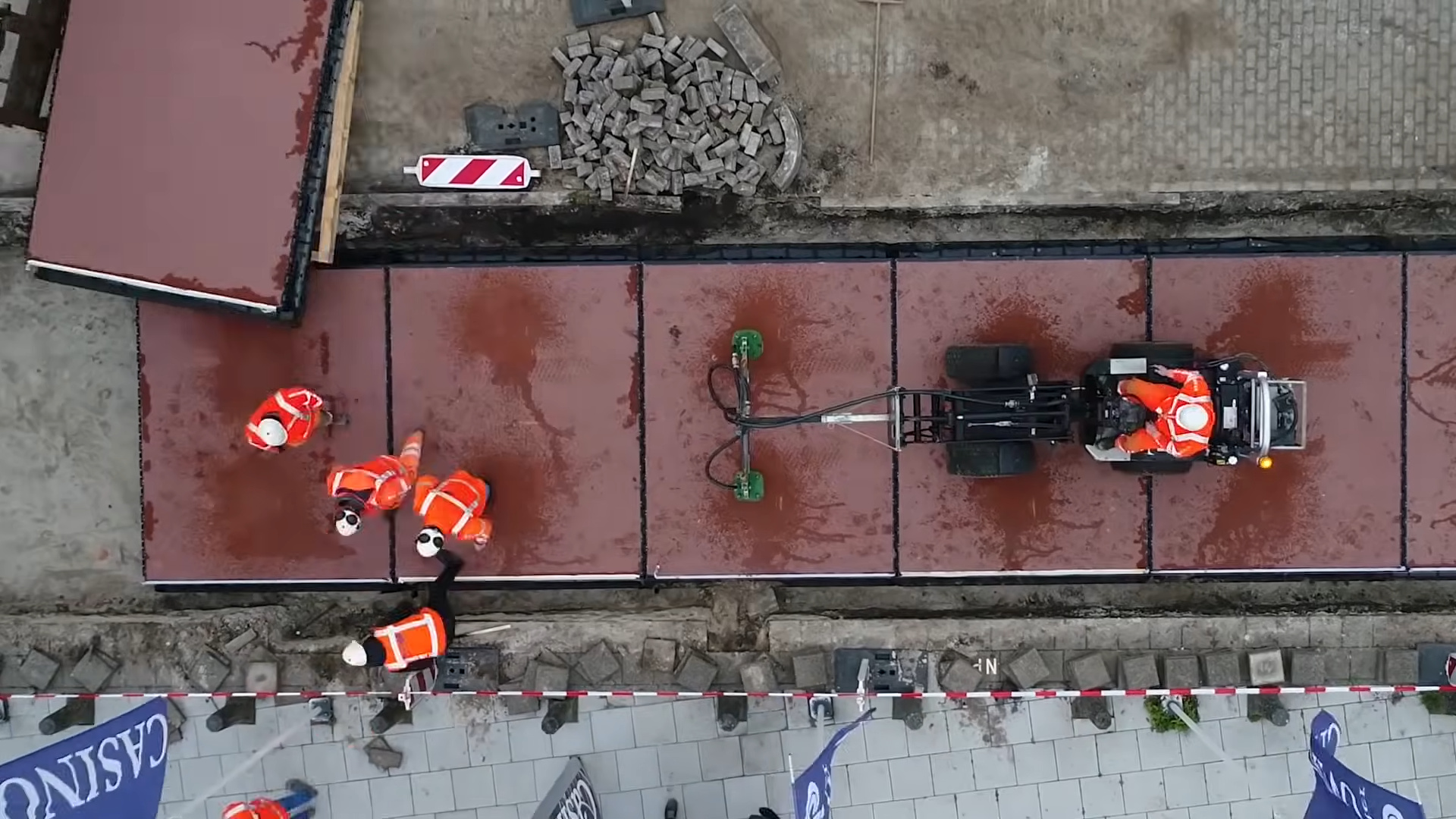

The PlasticRoad in Zwolle uses recycled plastic road, stores rainwater, houses pipelines, and has become a real test of circular urban infrastructure.
On September 11, 2018, the city of Zwolle, in the Netherlands, inaugurated the first modular bike path made with recycled plastic from the PlasticRoad project. The section is 30 meters long and incorporates the equivalent of more than 218,000 plastic cups and 500,000 bottle caps, transforming waste into permanent urban infrastructure.
The project was developed by KWS, Wavin, and Total, now TotalEnergies, with the proposal to create an alternative to traditional asphalt using prefabricated modules, lighter and with extra functions beyond the driving surface. From the beginning, the initiative was presented as a solution to unite plastic recycling, urban drainage, and faster installation infrastructure.
PlasticRoad from the Netherlands was created to transform recycled plastic into circular, modular, and lower maintenance urban infrastructure
The basis of the concept is simple but ambitious: take plastic waste and convert it into prefabricated road modules. According to the developers, the PlasticRoad was designed to be lighter, easier to transport, and faster to assemble than conventional structures, as well as being able to be recycled again at the end of its life cycle.
-
Brazil to Convert 80 Public Properties into 11,000 Affordable Homes Across 44 Cities to Address Housing Shortage

-
Brazilian Company Develops Wall Panels from Recycled Refrigerator Foam with Comparable Thermal and Acoustic Performance

-
Brazil’s São Paulo Region Unveils Latin America’s Largest Timber Shopping Mall, Built in 7 Months, Capturing Carbon and Preventing 900 Tons of Emissions
-
Danish Island Uses Seaweed for Durable, Centuries-Old Roofing Solution


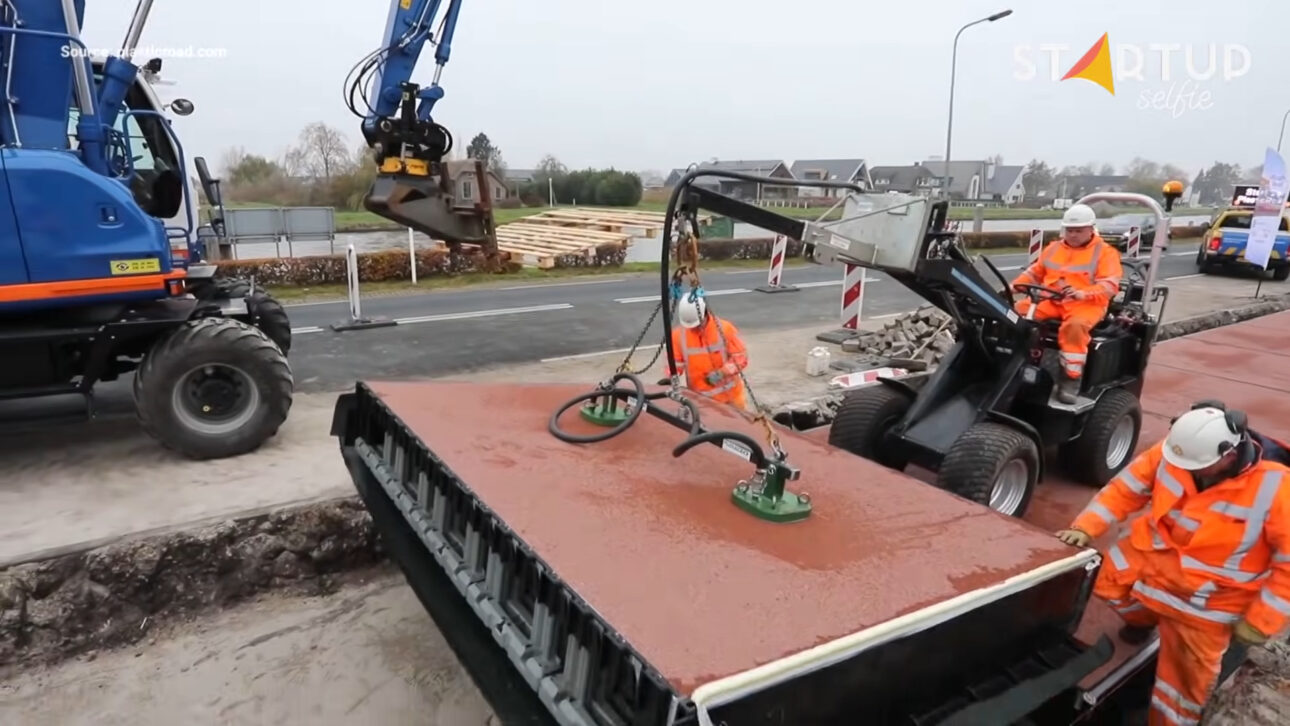
The logic behind the project also addresses a much larger environmental problem. TotalEnergies stated, during the pilot presentation, that the world uses about 350 million tons of plastic per year, while much of this material still ends up in landfills or incineration. PlasticRoad tries to create a higher value destination for this waste.
Instead of treating plastic just as waste, the Dutch project repositions it as an input for urban construction.
Hollow structure of the recycled plastic bike path allows storing rainwater, housing cables, and reducing future excavations
The most innovative element of the system is inside the modules. From the development phase, KWS, Wavin, and Total stated that the PlasticRoad was designed with hollow parts, capable of accommodating cables, pipes, and drainage systems, as well as draining water more efficiently than a conventional surface.


In the tests in Zwolle, this climatic function was one of the most highlighted results. VolkerWessels reported that the maximum water level measured inside the structure reached only 48% of the available capacity on site, and that the water infiltrated into the subsoil in the two following days, as planned in the project.
By concentrating space for water, technical networks, and underground infrastructure within the road itself, PlasticRoad was presented as an alternative to reduce future soil interventions and expand urban adaptation to more intense climatic events.
Sensors and real-time monitoring transformed Zwolle’s PlasticRoad into a living laboratory for smart bike paths
The bike path in Zwolle was not inaugurated just as a physical structure. According to TotalEnergies and Wavin, the pilot received sensors to monitor temperature, number of bicycle crossings, and durability indicators, turning the section into a real-world test platform.
The monitoring phase continued after the inauguration. In May 2020, VolkerWessels reported that the world’s first PlasticRoad had recorded its millionth crossing, and that the two pilots in Zwolle and Giethoorn showed sufficiently positive results to enable the product’s entry into the market.
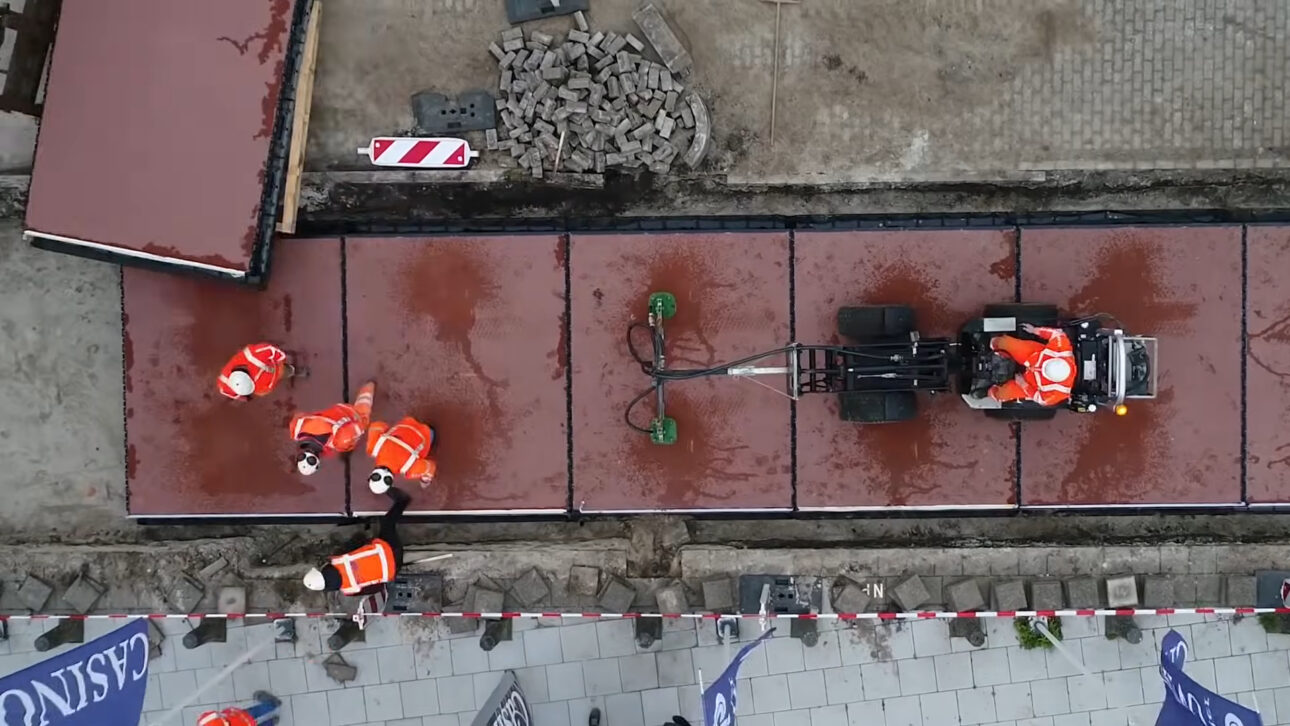
The data also helped to expand the ambition of the project. The company stated that the structure showed the capacity to support even heavier loads, such as garbage trucks and maintenance vehicles, which opened up possibilities for future applications in parking lots, sidewalks, school yards, and other urban areas.
Developers claim that the modular road can last up to three times longer and reduce CO2 emissions compared to asphalt
One of the main arguments used in promoting the project was durability. Wavin stated that the PlasticRoad can last up to three times longer than a traditional road, with a lower risk of cracks, potholes, and fissures, precisely because of the modular composition and the different structure compared to common asphalt. However, this is an estimate from the project’s developers.

On the climate front, VolkerWessels declared that the pilot version of PlasticRoad had already reduced CO2 emissions by 50% to 70% compared to conventional asphalt or concrete slab bike paths.
Dutch project placed plastic recycling at the center of the debate on circular cities and future infrastructure
The Zwolle case has symbolic weight because it shows a change in logic. Instead of sending thousands of cups and lids to disposal, the project transformed them into a functional bike path, monitored and integrated into a broader discussion about circular cities, urban drainage, and resilient infrastructure.
What was inaugurated in the Netherlands was not a highway for heavy traffic, but a 30-meter pilot created to test technical, economic, and environmental viability in real conditions. The project’s own evolution went through validation stages before advancing to industrial production.
Even so, PlasticRoad achieved something rare: transforming a highly problematic urban waste into a showcase of applied innovation.
The section inaugurated in Zwolle does not solve the global plastic crisis on its own, but it showed that part of this material can leave the landfill and literally enter the physical structure of cities.