





 Portuguese
  English
  Spanish
  3 min of reading
  1 comment


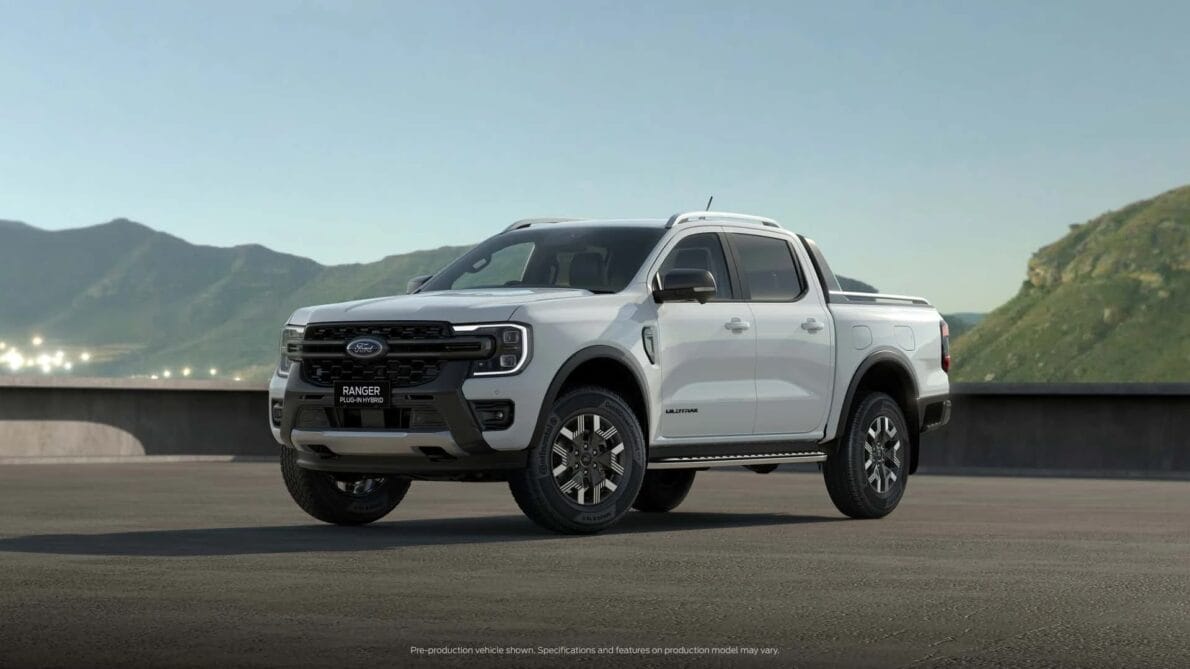


Electric Pickup Market in Rapid Expansion: New Ford Electric Ranger Will Arrive Soon in the Automotive Market and Promises to Be a Direct Rival to the Toyota Hilux.
Ford is preparing to launch the Ranger EV, a mid-size electric version of its current pickup. The model, which may compete with the Toyota Hilux, is expected to go into production in 2027 and will be based on a new platform developed by a team operating independently within the company, with less bureaucracy and more creative freedom, led by Alan Clarke, a former Tesla engineer who was instrumental in developing the Model Y, currently the best-selling car in the world.
Understand Ford’s Initiative with the Official Announcement of the New Electric Ranger
The new Ford Electric Ranger will be the first model to utilize the brand’s new architecture and it seems that this model will be in the electric pickup market alongside the traditional combustion version.
All rumors indicate that the architecture used will be TE1. The current electric pickup market is undergoing an intense global price war, driven by overcapacity and the arrival of approximately 150 new electric models expected in North America by the end of 2026.
-
Better than Corolla? Used Arrizo 6 delivers luxury and turbo engine for the price of a compact

-
The BYD Tai S Ti7 bets on a boxy design and could become the top-of-the-line model in Brazil with 488 hp, over 70 kgfm of torque, 0 to 100 in 4.9 seconds, 5.1 meters in length, and a range exceeding 900 km.

-
‘All in one’: revolutionary engine comes to life with a 1.5-liter [engine] of up to 163 hp, two electric motors, and a compact hybrid system that promises to transform any electric car into a long-range hybrid

-
With a single-cylinder engine, the new Yamaha gets 80 km with 2 liters, delivers 12 hp at 8,000 rpm, features traction control, a 19% stiffer chassis, 267 mm brakes, and a 4.6-inch digital panel for around R$ 12,000.



This competitive scenario has led some automakers to adopt a price reduction strategy. However, this strategy can carry risks, such as brand depreciation and future financial problems, according to Ford’s President and CEO, Jim Farley.
Meanwhile, Ford has already reduced the prices of the 2025 Mustang Mach-E and has managed to cut its costs by US$ 5,000 (R$ 28,835) per unit in the last 24 months. With this, the automaker expects to save US$ 1 billion in electric vehicles this year, focusing on cost reduction and operational efficiency.
New Ford Electric Ranger May Arrive in 2027
Although relatively new in the Brazilian market, the Ford Ranger, rivaling the Toyota Hilux, has been on the global market for two years and Ford is already working on the redesign of the current generation, which is expected to debut in mid-2026 and 2027, when the current design will be five years old.
According to information, the new Ford Electric Ranger, rivaling the Toyota Hilux, is expected to arrive in 2027, based on a groundbreaking platform. It is still unknown whether the combustion model will gain the new base or if it will be something exclusive for the electric pickup market, which seems to be the most logical alternative for Ford.
The electric pickup project is currently being developed by Ford’s “skunkworks” team in California and involves more than 100 people. According to Farley, the most technically qualified and creative professionals from inside and outside Ford were recruited to drive a radical change in the way the brand develops an electric vehicle.
Electric Pickup Market in Brazil
While the new Ford Electric Ranger does not arrive to compete with the Toyota Hilux, the market currently has only two electrified pickups: the Ford Maverick and the BYD Shark. Both represent the growing demand for sustainable vehicles and the transition to electrification in the pickup segment, each offering their characteristics that cater to different consumer profiles.
The Maverick, for example, combines sportiness and versatility, while the BYD Shark focuses on technology and energy efficiency.
The Ford Maverick is a mid-size pickup equipped with a 2.0 L EcoBoost engine that delivers 253 hp and 38.75 kgfm of torque paired with an 8-speed automatic transmission.
On the other hand, the BYD Shark has an electric motor that provides a quiet driving experience. The Shark offers technological features, including a multimedia entertainment system, connectivity, and driving assistants. The interior design is spacious and comfortable, ideal for small families.




Acho q o Brasil deveria moderar na aquisição de carros elétricos. Não estamos preparados, de onde sairá tanta energia ?