Portuguese
  Spanish


Historical agreement between European Union and Mercosur promises to transform prices of imported cars in Brazil with gradual tax reduction and direct impact on Golf GTI
The Brazilian automotive market may be on the verge of a significant transformation, especially in the premium imported vehicle segment. This is because the agreement between the European Union and Mercosur promises to drastically reduce import taxes, creating a more competitive and consequently more accessible scenario for desired models like the Golf GTI.
Currently sold in Brazil with a starting price of R$ 430,000, Volkswagen’s sporty hatchback could directly benefit from these changes. The information was disclosed by “EXAME”, based on an interview with Alexander Seitz, CEO of Volkswagen for South America, who detailed the impacts of the new trade agreement.
In this context, one of the most relevant points involves the creation of an annual quota of 50,000 vehicles. Within this limit, import taxes will be reduced by 50%. In practical terms, this means that the current rate of 35% could drop to approximately 17.5% on internal combustion engine (ICE) vehicles, generating a direct impact on the final price to consumers.
-
Rolls-Royce Turns Heads with 30-Inch Floating Wheels, 6.6-Liter V12 Engine, and 563 Horsepower

-
2019 Kia Sportage EX: A Spacious and Cost-Effective SUV with 2.0 Flex Engine and Panoramic Roof
-
Fiat Strada Becomes Top Seller in June, Surpassing Onix, Polo, Hilux, and T-Cross with 107 HP Engine and 732 km Range.

-
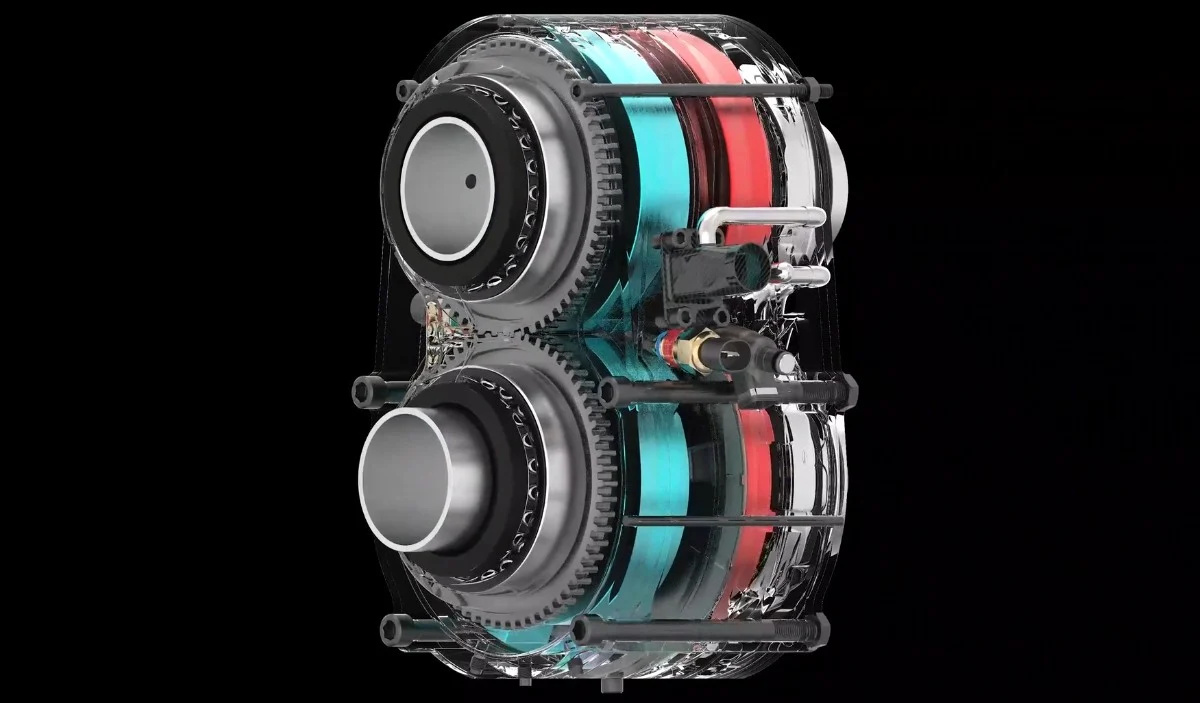
Suitcase-sized hydrogen engine spins at 25,000 rpm, nearly doubling the efficiency of conventional cars and replacing exhaust smoke with water vapor


Moreover, this change not only favors the Golf GTI but also opens space for other European models to gain competitiveness in the Brazilian market, something that could redefine consumer behavior in the coming years.
Volkswagen’s strategy bets on electrification and gradual cost reduction until 2041

At the same time, the agreement also brings important benefits for electrified vehicles. In the case of plug-in hybrids, the reduction will be 20%, with taxes dropping from 35% to 25%. This decrease reinforces Volkswagen’s strategy to expand its presence in Brazil with more sustainable models.
According to Seitz, the automaker is already working on concrete projects to bring new vehicles to the country, taking advantage of the more favorable environment created by the agreement. Thus, Brazil could become an even more relevant market for hybrid and electric technologies.
However, it is essential to understand that the total reduction of taxes will not happen immediately. The treaty provides for a staggered decrease over the years, with complete exemption being reached only in the 15th year of validity, that is, in 2041.
Even so, the initial impact is already considered positive. After all, the simple partial reduction of tariffs can already influence purchasing decisions and make vehicles previously considered inaccessible into more viable options.
Relationship between Brazil and Germany strengthens and expands opportunities in the automotive and technological sectors

In addition to tax changes, the agreement also strengthens the economic relationship between Brazil and Germany. According to the CEO of Volkswagen, there is a clear goal to double the business volume between the two countries in the next three to four years.
This growth is not limited to the automotive sector. On the contrary, it involves strategic areas such as renewable energy, biofuels, agriculture, mining, and technology, creating a conducive environment for innovation and industrial expansion.
In this scenario, the visit of President Luiz Inácio Lula da Silva to Germany and his participation in the Hanover fair — considered the largest technology fair in the world — reinforces this approach. The meeting with Chancellor Friedrich Merz symbolizes a new phase in bilateral relations.
Additionally, another important point under discussion is the end of double taxation between Brazil and Germany. If this agreement advances, the impact could be even more significant, reducing costs and encouraging international investments.
Meanwhile, the Brazilian market continues to evolve. The presence of Chinese brands, for example, grew rapidly, increasing from 1% to 13% in just two years. Still, Volkswagen also advanced, expanding its market share from 13% to about 16% to 17%.
Given this competitive scenario, the automaker advocates for more balanced rules, especially regarding local production. This is because producing in Brazil involves greater challenges, such as labor and environmental legislation, and tax burden.
Finally, digital transformation also gains prominence. Volkswagen already uses artificial intelligence in production processes, logistics, and customer interaction, promoting a structural change in the automotive industry.
Thus, by connecting tax reduction, technological innovation, and international strengthening, the agreement between the European Union and Mercosur positions itself as a game-changer. For the Brazilian consumer, this could mean something simple yet powerful: better, more accessible cars and a much more competitive market in the coming years.