






 Portuguese
  Spanish


Electric car charger in building garage came under the Fire Department’s radar because fire safety, exclusive circuit, and technical responsibility began to guide installations in condominiums. With electrified vehicles advancing, home charging leaves improvisation and requires planning, signage, and care in enclosed areas.
The electric car charger installed in a building garage is no longer just an internal condominium decision and now involves fire safety, exclusive circuit, and technical responsibility in different states of Brazil. The change affects residents, building managers, construction companies, and technical managers, especially in enclosed, covered, or shared-use areas.
According to a report by NSC Total, published on July 2, 2026 and updated on the same day, Pernambuco has implemented a specific regulation effective from July 1, 2026. This rule adds to regulations, public consultations, and guidelines from other states in light of the advancement of electrified vehicles.
Garage outlet became a fire safety issue
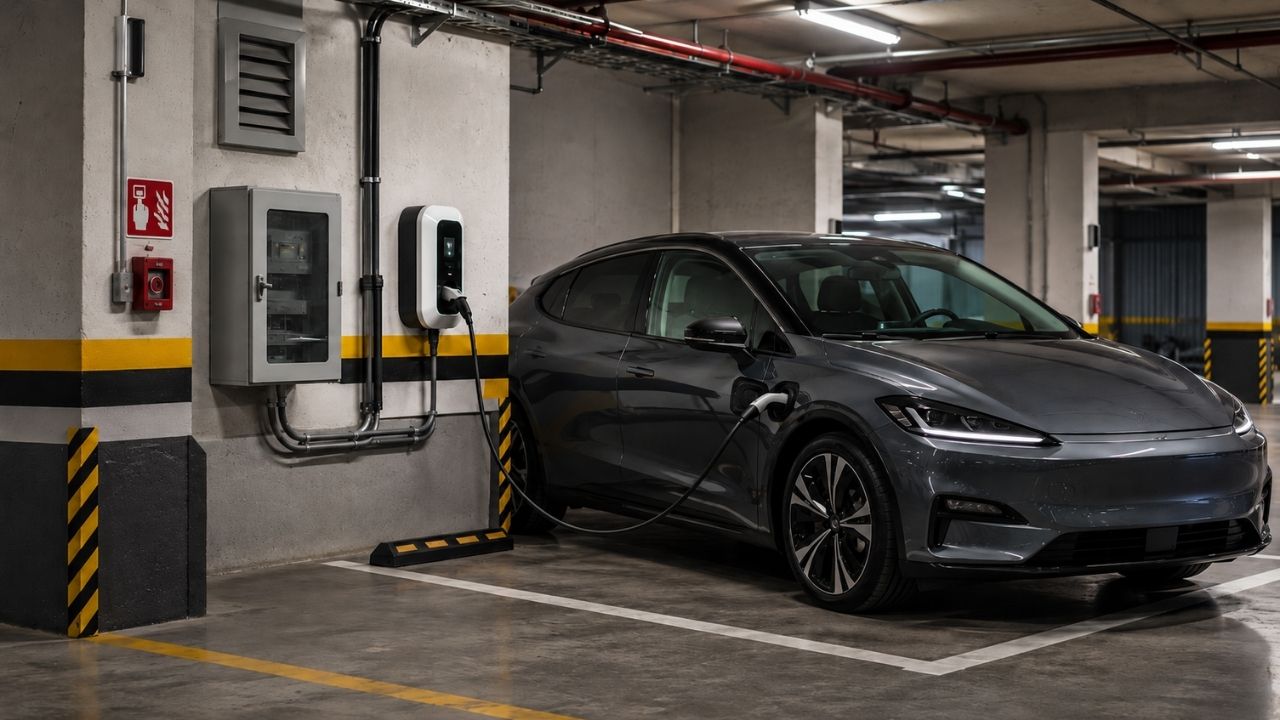
Charging an electric car in the building’s parking spot may seem like a simple routine: the driver parks, connects the cable, and lets the battery recharge overnight. But installing an electric car charger should not be treated like a regular outlet, especially in enclosed garages or internal condominium areas.
-
Argentinian Students Transform Cigarette Butts into Eco-Friendly Bricks, Cutting Cement Use by Over 50% and Halving Costs

-
For the First Time, Scientists Extract Ancient Human DNA from Cave Art, Revealing Insights into Prehistoric Cave Dwellers

-
Australian Teen Invents Device to Simultaneously Purify Water and Generate Electricity Using Sunlight

-
Indian Student Designs Bamboo Houses with Floating Blocks and Recycled Bottles for Flood-Prone Areas; University of Texas Project Aims for Sustainable Housing in Vulnerable Communities




The Fire Departments’ concern involves electrical overload, cable heating, protection failures, difficulty in emergency shutdown, and specific risks related to lithium-ion batteries. The aim of the rules is not to prevent charging, but to avoid improvisations that could turn a regular parking spot into a risk point.
New rule in Pernambuco reinforces the alert to condominiums
In Pernambuco, Technical Standard No. 17/2025 of the Military Fire Department came into effect on July 1, 2026. The text addresses fire prevention in garages and locations with charging systems, establishing requirements for those intending to install electric car chargers in condominiums and developments.
Among the points mentioned are fire detection and alarm, sprinklers, manual shutdown, exclusive circuit, signage, and restrictions on the location of charging spots. In new developments, there are also additional requirements related to mechanical smoke extraction and structural fire resistance.
Exclusive circuit and circuit breaker are no longer technical details
State regulations often emphasize that the charging system must have adequate power supply, exclusive circuit, electrical protection, and clear identification. This means that the electric car charger should not rely on extensions, adapters, or improvised connections, especially in internal and enclosed garages.
Items such as identified circuit breaker, protection device, grounding, signage, and manual shutdown point appear in the rules or guidelines cited in different states. In practice, the condominium needs to know where to shut down the system in case of emergency and who is technically responsible for the installation.
Firefighters target enclosed garages and collective use areas
The advancement of electrified vehicles has brought domestic charging into condominiums. As a result, covered garages, basements, and shared areas have required more attention because they concentrate cars, resident circulation, escape routes, and electrical infrastructure in the same environment.
The installation in a building garage needs to consider not only the owner’s spot but the entire building. Exit routes, distance from sensitive areas, possibility of smoke control, and ease of access in emergencies are part of the fire safety analysis, depending on the complexity of the location.
National base guides, but each state defines its rules
In 2025, Ligabom, an entity that brings together general commanders of the Fire Departments, published a National Guideline on garages and locations with Electric Vehicle Supply Systems, known by the acronym SAVE. The document serves as a reference for states to create their own regulations.
This explains why the rule is not identical throughout the country. In some states, there is already a specific regulation in force. In others, the topic is still in public consultation, technical guidance, or adaptation phase. For the condominium, the first task is to check what the local Fire Department requires before approving any installation.
São Paulo has already updated the rule for charging systems
São Paulo, the largest market for electrified vehicles in the country, updated Technical Instruction No. 41 in March 2026 to include rules on charging systems in buildings. The standard addresses proper installation, grounding, dedicated power supply, shutdown buttons, emergency signage, and technical responsibility.
The São Paulo corporation itself states that charging is safe when the equipment meets technical standards and the installation is carried out by a qualified professional. In other words, the problem is not with the electric car charger itself, but with how it is installed, documented, and integrated into the building’s safety.
Santa Catarina also already has a regulation in force
Santa Catarina is another important case because the Normative Instruction 23 of the state’s Military Fire Department came into force on June 25, 2026. The rule regulates locations with SAVE in new, recent, existing, and pre-existing buildings that have charging points in enclosed, covered, or outdoor areas.
Among the requirements are a manual shutdown point on each floor, signage, separation of the power supply for the charging system, protection of exit routes, and shared responsibility between the technician, installer, and property owner. Charging is now seen as part of the condominium’s safety system.
Other states advance with consultations, notes, and guidelines
In the Federal District, the Fire Department has opened a public consultation for a technical standard on charging in buildings. The cited proposal restricts charging modes in covered parking lots and allows for more dedicated systems, instead of common outlets or portable chargers in internal areas.
Minas Gerais has also put an update for electric vehicle supply systems in collective use buildings into public consultation. The proposal includes technical responsibility, a summary of the systems, a commissioning or inspection report, and information on the type of charging, location, and number of installed stations.
Rio, Paraná, Ceará, Goiás, and Espírito Santo expand the map
In Rio de Janeiro, the Fire Department has initiated a public consultation for a technical note on Power Systems for Electric Vehicles and electric micromobility devices in buildings and risk areas. The state also published transitional requirements through Note CHEMG 326/2025.
In Paraná, there is technical guidance while a specific standard is not published. Ceará, Goiás, and Espírito Santo are also among the states that have advanced with rules or standards on recharging, including requirements such as exclusive circuit, circuit breaker, DPS, DR, grounding, individual shutdown switch, and prohibition of common outlets, adapters, and extensions in internal and closed garages.
Residents can charge, but cannot improvise
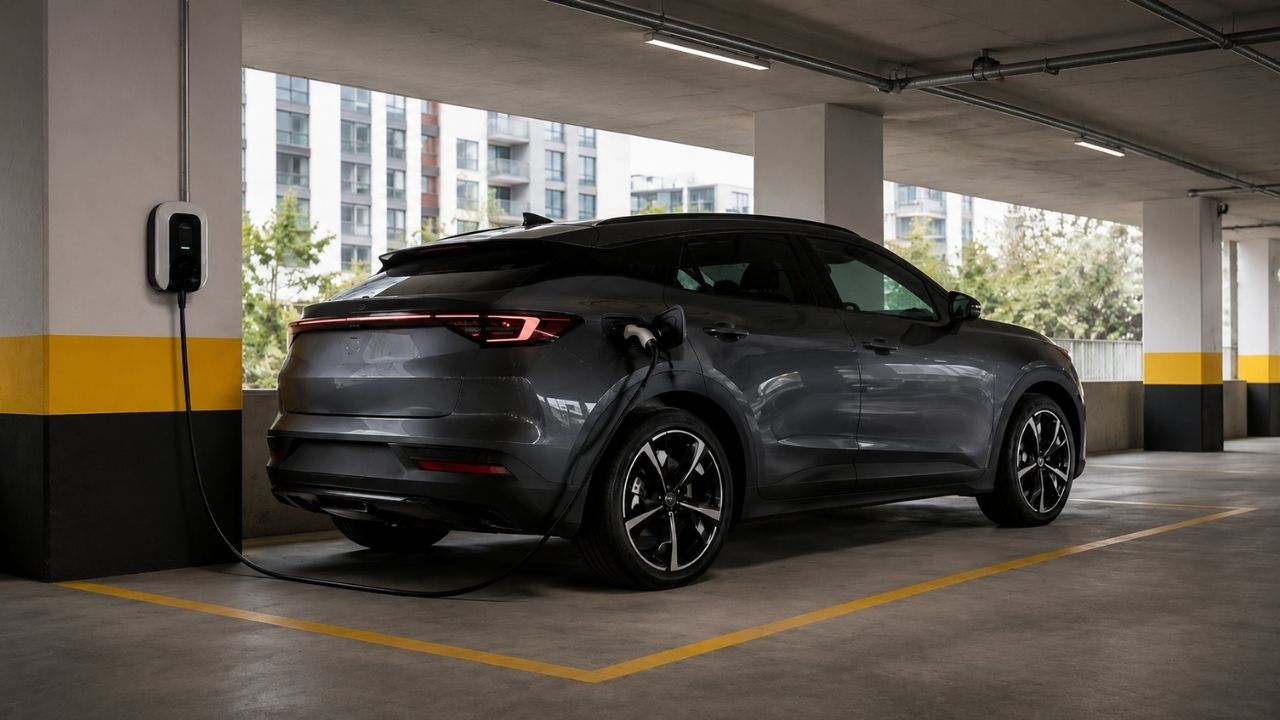
The answer for those asking if they can install an electric car charger in the building is: yes, as long as the installation follows the technical standards and the requirements of the state’s Fire Department. What changes is the path to regularize, present documents, and ensure that the system does not put the condominium at risk.
For the resident, the main message is that the building garage with recharging should not be treated as an individual and isolated solution. For the condominium, the decision has moved beyond just a meeting topic and entered the field of fire safety, technical responsibility, and even risk assessment by insurers.
Night charging exposes a new phase for condominiums
With more electrified cars on the streets, the building garage has become part of the electric mobility infrastructure in Brazil. The electric car charger now requires planning, documentation, maintenance, and technical responsibility, especially when installed in closed or high-traffic areas.
The alert does not eliminate the trend of residential charging, but changes the expected safety standard. What once seemed like just an outlet on the wall now involves a project, technical responsibility, and evolving state rules. Do you think condominiums should allow chargers more easily or require strict rules before installation?


