Portuguese
  Spanish


What was supposed to be just another stretch of tracks turned into one of the country’s most important archaeological recoveries, with drawings spanning from prehistory to the Aztec era engraved in the rock
The rock art that appeared in the path of a Mexican railway was not on any tourist map: it emerged when the works of a new passenger train crossed a stone wall in the state of Hidalgo. What the workers found were drawings up to 4,000 years old, a time capsule carved in the rock.
The find is the kind that changes plans. Given the age and value of the engravings, the train’s route itself was altered to preserve them, a rare case where the past triumphed over the schedule of a major project.
A railway project that turned into an archaeological rescue
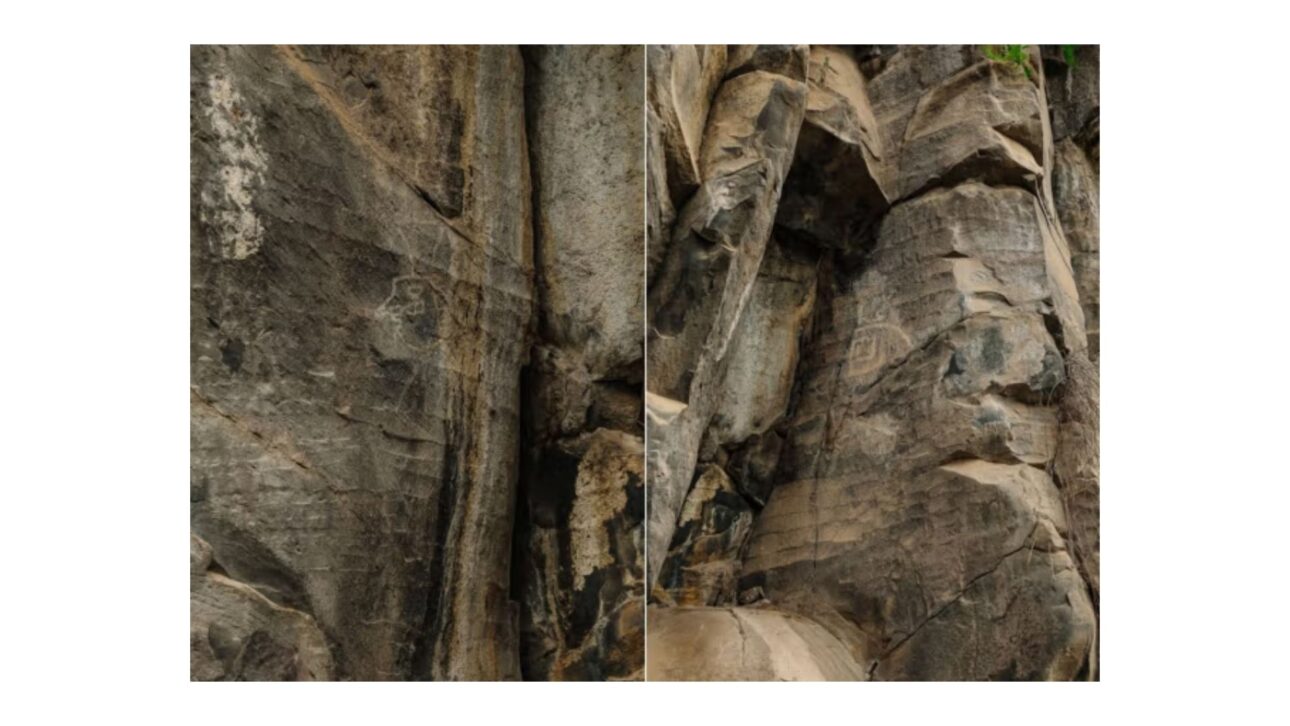
Photos: Gerardo Peña, Instituto Nacional de Antropología e Historia
The starting point was a construction site. According to Mexico News Daily, the paintings and engravings were found at the archaeological site of El Venado, in the state of Hidalgo, during the rescue archaeology conducted along the route of the passenger train that will connect Mexico City to Querétaro.
-
Chinese Researchers Discover Largest Whale Graveyard in Indian Ocean: Nearly 500 Skeletons, Some 5.3 Million Years Old, Reveal Ecosystem Insights and Potentially Unknown Species

-
11-Year-Old Takes Truck, Crashes Into Pilgrimage in Thailand, Killing Eight Buddhist Monks

-
Archaeologists Uncover Ancient Ruins and Artifacts in Shiloh, Potentially Shedding Light on the Biblical Ark of the Covenant
-
Havaianas Covers Brazilian Landmark with 4,500 Flip-Flops to Create Visual Spectacle of National Flag


The scale of the project highlights the element of chance. According to The Art Newspaper, the new railway line is 232 kilometers long, and the find emerged with the work still in its initial stage, with about 10 percent completed.
The contrast is what gives strength to the story. Where modern tracks and trains would pass, the signature of peoples who lived there millennia before appeared. The Mexican law, which requires investigation before major works, is what turned a routine excavation into a discovery.
Sixteen drawings and a 4,000-year window
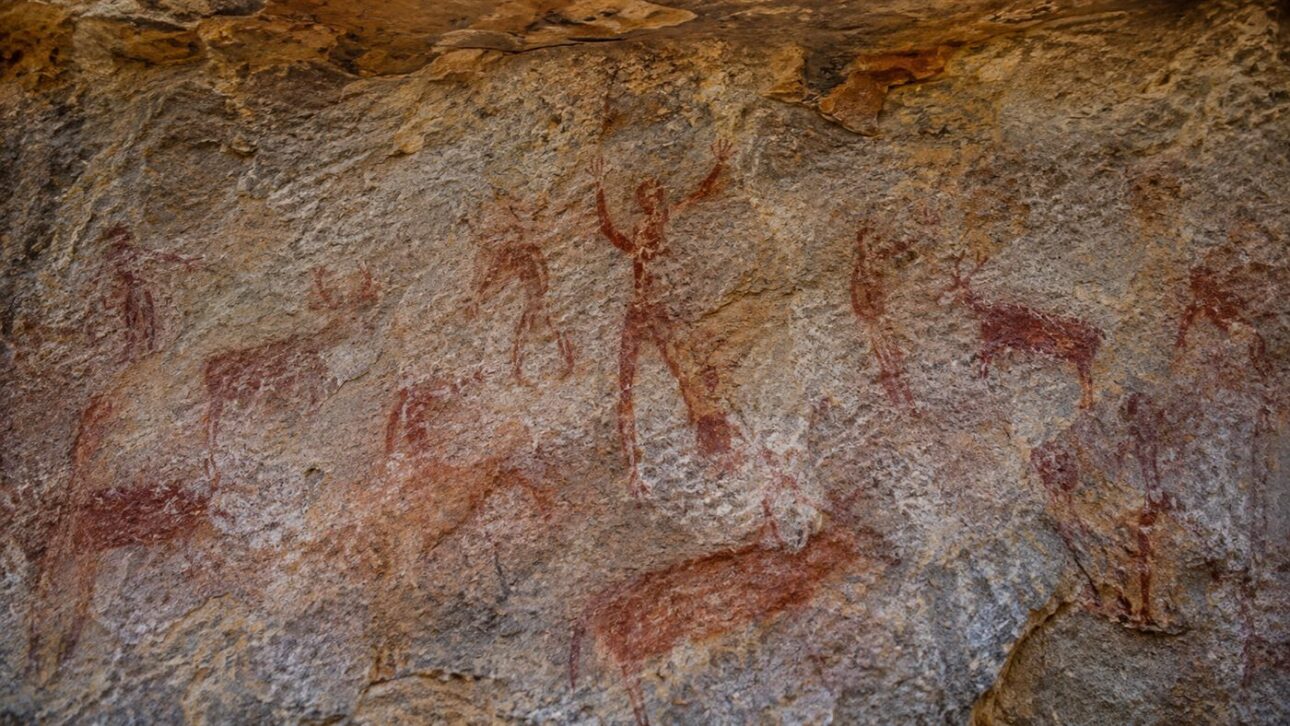
The size of the collection is impressive. According to Mexico News Daily, 16 pre-Columbian paintings and engravings were recorded at the El Venado site, a significant number for a single location.
The depth in time is even more remarkable. According to The Art Newspaper, the works range from prehistory, with pieces over 4,000 years old, to the Mesoamerican post-classic period, which extends from about 900 to 1521 AD. On the same wall coexist marks from different millennia.
This makes the place a cultural mosaic. According to Mexico News Daily, this time span covers from prehistoric peoples to the time of the Toltecs and later the Mexicas, the Aztecs, stacking layers of history on a single rock.
The rain god on the stone: what the drawings show
The figures are the heart of the find. According to Mexico News Daily, among them is one carrying what appears to be a macana, a type of club, with a headdress and goggles reminiscent of Tláloc, the Aztec god of rain, storms, and fertility, often associated with caves and springs.
The repertoire is varied and intriguing. According to The Art Newspaper, there also appears a stylized anthropomorphic figure in red pigment, an image resembling a serpent or a lightning bolt, the representation of a deer, and a figure with fangs, antennae, and bird legs, linked to the influence of the Mogollon culture.
There are even traces of the clash of worlds. According to The Art Newspaper, one of the images shows an anthropomorphic face with hair and four legs, possibly already from the period of contact with the Spanish. It is pre-Columbian and colonial history engraved side by side.
Mineral paint and pointillism: how they were made
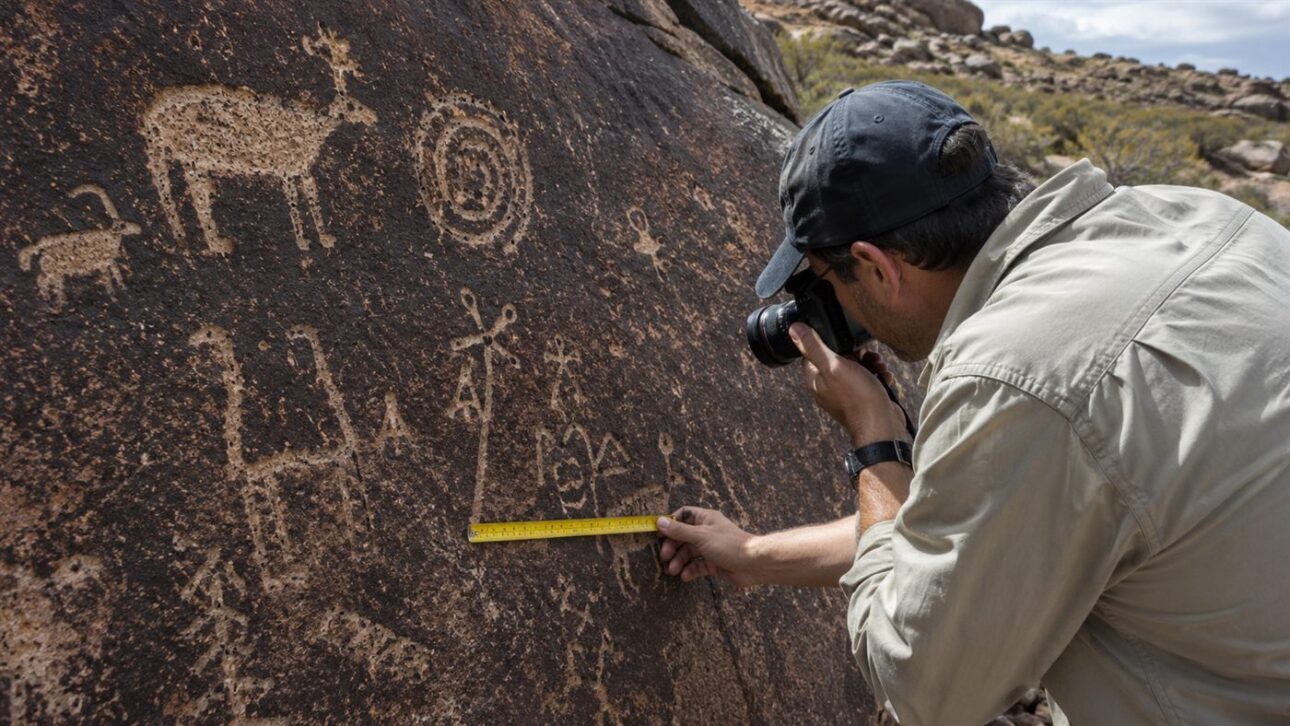
The technique reveals the care of the authors. According to Mexico News Daily, the paintings were made with mineral or vegetable pigments, while the engravings were executed with pointillism, small dots that form the figures.
The task of identification fell to specialists. According to The Art Newspaper, it was the National Institute of Anthropology and History, the INAH, that recognized and announced the findings, providing technical support for the discovery.
This rigor separates guesswork from science. Documenting each figure, its pigment, and its technique is what allows dating the works and understanding who passed through there and why.
A train diverted to not destroy the past
The most symbolic turnaround came from the public authorities. According to The Art Newspaper, President Claudia Sheinbaum announced the modification of the railway’s route to avoid interference in the area of the discovery.
The adjustment was not small. According to Mexico News Daily, the original route of the train between Mexico City and Querétaro was shifted by about 8 kilometers to avoid hitting the site of the engravings. A mega-project bowed before drawings 4,000 years old.
This type of decision is rare and carries a message. It shows that preservation and infrastructure do not need to be enemies when there is a will to protect heritage.
Why they were there: ritual, sky, and calendar
The location of the drawings does not seem to have been chosen by chance. According to Mexico News Daily, for the INAH the position of the works suggests a mythical-religious purpose, perhaps linked to astronomical or calendar phenomena.
This interpretation connects art and sky. The link of Tláloc with caves and water, combined with the possible calendrical function, indicates that the cliff may have been a point of observation and worship, and not just a mural.
The scientific value lies precisely there. According to The Art Newspaper, specialists classified the ensemble as a transformative milestone for the study of the region’s rock art, due to the variety and the temporal breadth gathered in a single site.
Why this rock art rewrites the region
The case of Hidalgo shows that large projects can reveal treasures that were invisible beneath our fast-paced rhythm. Such ancient and diverse rock art, found by chance on a railway, reopens questions about who inhabited that land and how they viewed the world.
It also sets an example of choice. Diverging a train to save drawings 4,000 years old is to say, in practice, that the memory of a people is worth more than a few kilometers of track. It is not always so, and that is why the case matters.
And here is a provocation for you: how many messages from millennia ago are still engraved on forgotten cliffs, waiting for a project that, unintentionally, brings them back to light?