Portuguese
  Spanish


De Ceuvel combines repurposed boats, phytoremediation, and contaminated soil, showing how an industrial shipyard can gain productive use while plants help treat pollution with environmental control.
Boats out of water, repurposed structures, and vegetation growing where a shipyard once operated created an unusual scene in Amsterdam. The De Ceuvel project placed retired vessels on contaminated soil and used phytoremediation to help recover the industrial area.
The information was released by DELVA Landscape Architecture, the landscape architecture firm responsible for the project. The area occupied the former Ceuvel Volharding shipyard in the Buiksloterham port district and received a park of plants capable of extracting some of the pollutants present in the soil.
The solution did not treat pollution as a problem hidden under a new construction. The land began to host productive activities while environmental recovery followed a planned process, with usage limits and the need for technical monitoring.
-
Saudi Arabia to Build 33,000-Seat Desert Arena with Retractable Roof and Clay Courts for 2028 Masters 1000 Tournament

-
Copenhagen Builds 92 Homes Using Reclaimed Materials from Demolished Carlsberg Brewery, Highlighting Each Material’s Origin

-
Nigerian Housing Crisis Addressed with Innovative Solution: Architect Builds Solar-Powered Modular Homes from Recycled Waste in Just 4 Hours for Low-Income Families

-
Mushrooms, orange peels, and agricultural waste are being turned into insulation panels for construction, replacing conventional materials with grown rather than manufactured walls.




The old contaminated shipyard gained repurposed boats and a new function
In 2012, the city of Amsterdam and the Noordwaarts organization made the land available for 10 years for the chosen plan. The proposal brought unused vessels to the area and transformed the boats into spaces for creative enterprises.
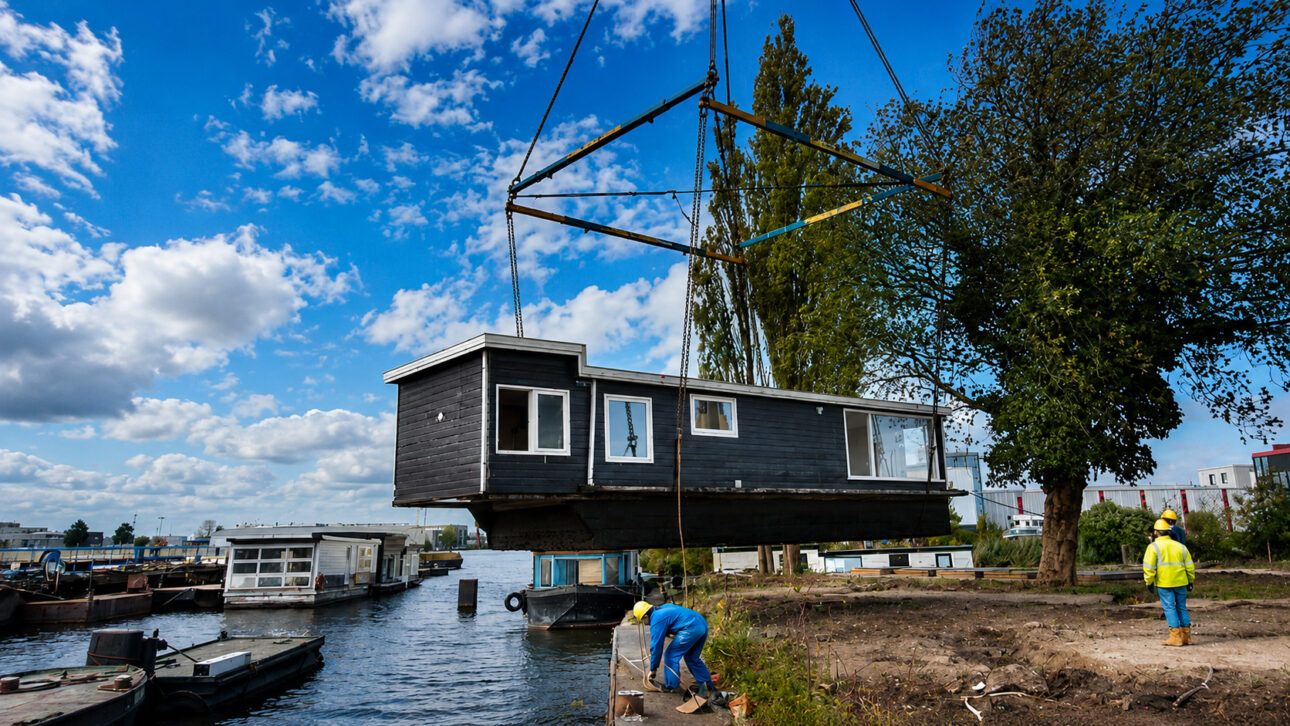
The idea prevented the shipyard from remaining empty until a future conventional intervention. The vessels were installed on the land, allowing the area to host work, research, and activities related to urban innovation.
The project also showed that recovering an industrial area does not solely depend on demolishing, excavating, and starting all over again. In places where pollution has accumulated, temporary use can give a function to the space while the land undergoes treatment.
When plants enter the plan for contaminated soil recovery
Phytoremediation is a technique that uses plants to remove unwanted substances from the soil. In simple words, the roots help deal with the pollution present in the land, as long as the chosen species are suitable for the type of contaminant present.
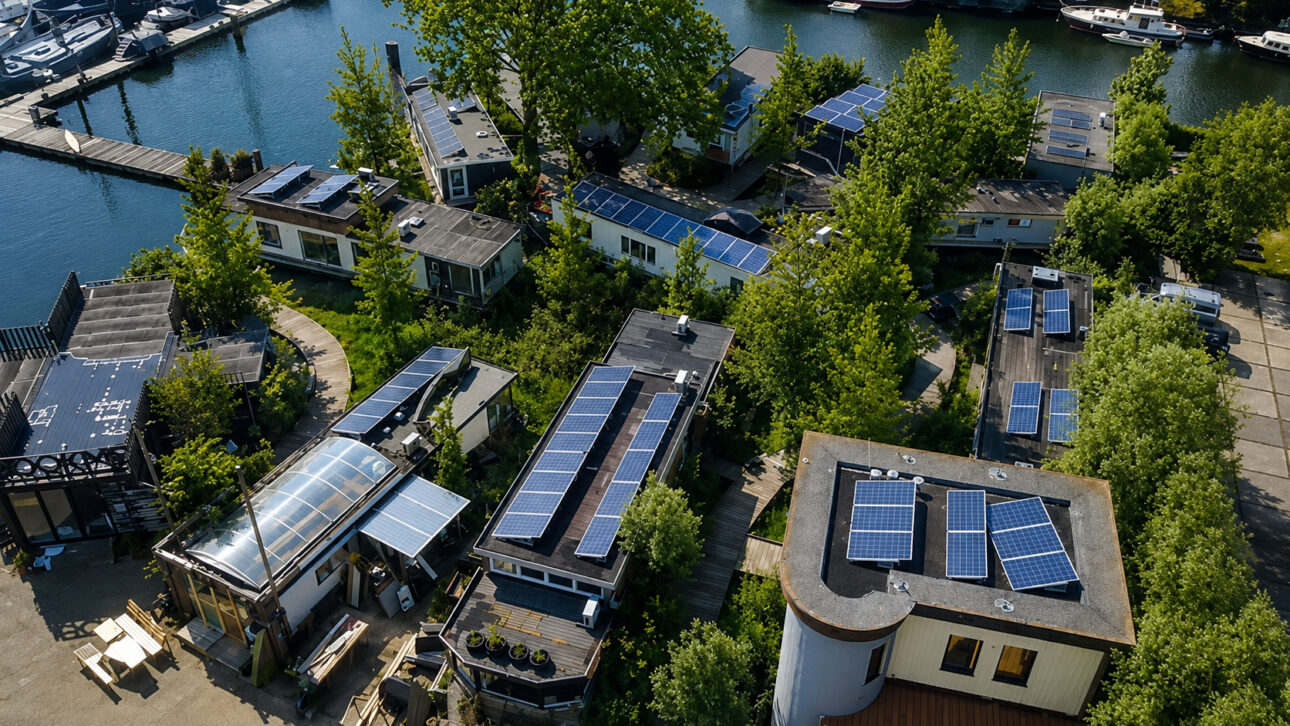
At De Ceuvel, vegetation was planted to act on the contaminated land and form an environmental cleaning park. The choice of plants was not only for visual purposes, as the goal was to help reduce the pollutant load while the area remained in use.
This process takes time. Plants do not solve an environmental problem in a few days, and the technique is not suitable for any contaminated area. The result depends on the material present in the soil, the depth of the pollution, the species used, and the monitoring done throughout the work.
The cost of removing all contaminated soil can be high
The complete removal of contaminated soil usually requires excavation, transportation, and proper disposal of the material. Instead of eliminating the problem on-site, the pollution may just be moved to another location, where it will still need control.
De Ceuvel adopted an alternative for land awaiting new urban use. The proposal used plants to help recover the land and repurposed boats that no longer had a function in the water.
This does not mean that soil removal is unnecessary in all cases. There are areas where contamination requires more complex solutions and direct interventions. The difference lies in assessing the real risk before deciding if the soil needs to be completely removed.
Research and monitoring define the limits of phytoremediation
DELVA Landscape Architecture, the landscape architecture firm responsible for the project, detailed that De Ceuvel served as a testing area for research on organic soil cleaning and biomass production, plant material that can be used to generate energy.
The presence of plants does not eliminate the need for environmental studies. Before choosing this technique, it is necessary to identify which substances are in the land, check the depth of the contamination, and understand if the chosen species can act in that environment.
Monitoring tracks soil evolution and shows if recovery progresses as expected. When a plant absorbs pollutants, it also needs to be handled carefully after removal, as the contaminated material cannot simply return to the environment.
Abandoned shipyards can return to the economy without hiding the problem
The case of Amsterdam shows a possibility for industrial areas that became vacant after the closure of former activities. Instead of keeping the shipyard isolated for many years, the project created a temporary occupation linked to work and research.
The practical gain is in preventing a contaminated land from becoming just an abandoned space. Reused boats, vegetation, and productive activities began to share the same location, each part with a defined function.
The recovery of an environmental liability, the name given to the pollution left by an old activity, cannot be treated as urban decoration. The central point is to reduce risks, monitor the soil, and prepare the area for a future function that respects the land’s conditions.
The project shows that recovering contaminated land requires more than planting trees
De Ceuvel does not present phytoremediation as a simple answer for any deactivated shipyard or factory. The technique works within a plan that includes soil analysis, plant selection, structure reuse, and constant monitoring.
The experience also reinforces that abandoned industrial areas can regain utility while environmental recovery takes place. Temporary occupation does not erase pollution, but it can prevent the problem from being hidden behind walls, debris, and abandonment.
In Amsterdam, retired boats and plants began to work in the same space: some received productive activities, others helped treat the contaminated soil. The result was a form of urban recovery that combined land use and environmental responsibility.
Do you believe that former industrial areas in Brazil could regain use while undergoing environmental recovery, without hiding the pollution left in the soil? Leave your opinion in the comments and share this publication.