






 Portuguese
  Spanish


In the south of Minas, the founder of Bricoffee, Luiz Fernando Zolet, noticed the coffee grounds drying in a filter thrown in the trash and had an idea. Today his company, in Varginha, transforms the residue into biomass pellets, an ecological firewood that replaces wood, and earns between R$ 180,000 and R$ 200,000 per month.
A trivial scene in the neighbor’s trash turned into a real business. It was by noticing the coffee grounds drying inside a discarded filter that Luiz Fernando Zolet had the idea to transform this residue into fuel. That was the seed of Bricoffee, a story told by the Diário do Comércio.
Today, Bricoffee is a company in Varginha, in the south of Minas Gerais, that transforms coffee grounds and other grain residues into biomass pellets, small cylinders that function as ecological firewood. What was trash became a source of energy.
The numbers show the strength of the idea. According to Diário do Comércio, Bricoffee produces about 1 ton of pellets per hour and earns between R$ 180,000 and R$ 200,000 per month, giving the coffee grounds a much nobler destination than the landfill.
-
In China, Six-Armed Humanoid Robot Revolutionizes Washing Machine Factory, Boosting Efficiency by 30%

-
Engineers Uncover Rain’s Role in Airflow Mystery at Brazilian Underground Facility

-
Brazilian Engineers Lead $200 Million Project to Bring Water from São Francisco River to Transform Supply in Northeastern Cities

-
Brazilian University Tests Recycled Plastic Component for Homes, Aiming for More Sustainable Single-Family Housing Construction


Next, see how a forgotten coffee filter in the trash became a company, why biomass pellets are called ecological firewood, and what Bricoffee has to do with the thousands of tons of coffee grounds that Brazil discards every day.
How a coffee filter in the trash became a company
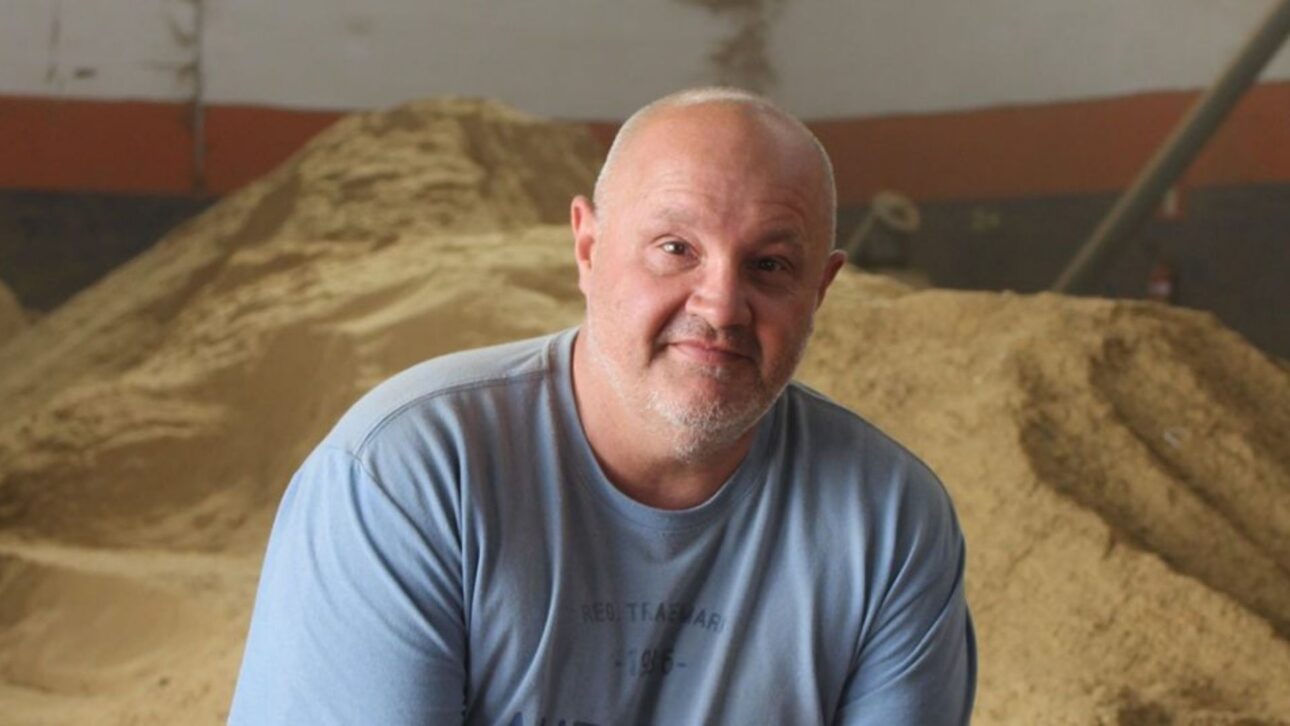
The origin of Bricoffee lies in a detail that almost everyone would ignore. According to Diário do Comércio, while collecting the trash of a neighbor that had been rummaged by a dog, Luiz Fernando Zolet left behind a coffee filter. But that residue stayed in his mind.
It was the following observation that changed everything. According to the same source, Zolet noticed that the coffee grounds in that filter had dried up and began to wonder if there was any way to make use of the product. Curiosity turned into research, and research turned into a project.
The path was not immediate. The production of pellets made from coffee grounds began around 2020, in a rented factory in Paraná, still on a small scale. Bricoffee was officially created in March 2022, when the idea already showed that it had a market.
The timing also helped to kick things off. The start of production, around 2020, coincided with a period of searching for new sources of income, and the bet on coffee grounds emerged as a concrete work alternative. From the idea to the first batch of pellets, however, a lot of testing was needed.
What stands out is the change in perspective. Where most saw only waste, the entrepreneur saw raw material. This shift in perception is the heart of the Bricoffee story, which transformed discarded coffee grounds into a product with real value.
What is Bricoffee and how coffee grounds turn into pellets
Bricoffee works with what is left over from coffee. The company transforms grain residues, such as coffee grounds, the husk, and the shell, into biomass pellets suitable for burning. It is an almost total utilization of what usually goes to waste.
The pellets are the final form of the product. They are small cylinders compacted from the dry residue, easy to transport, store, and burn. This standardized format is what allows coffee grounds to be used as fuel in a practical and scalable way.
The development was based on technical expertise. The product underwent laboratory studies and development at Senai, which helped turn an intuition into an industrial process. It is not a homemade recipe but a tested product.
The result is a new source of biomass. By concentrating the energy power of coffee grounds into pellets, Bricoffee creates a renewable fuel that competes with traditional firewood, with the advantage of originating from a residue that already exists in abundance.
But why do coffee grounds burn well? The residue is basically organic matter that, once dried, concentrates a good amount of energy. Compacted into pellets, this biomass releases heat consistently, making it useful as fuel in furnaces and boilers.
Why coffee grounds pellets are called ecological firewood
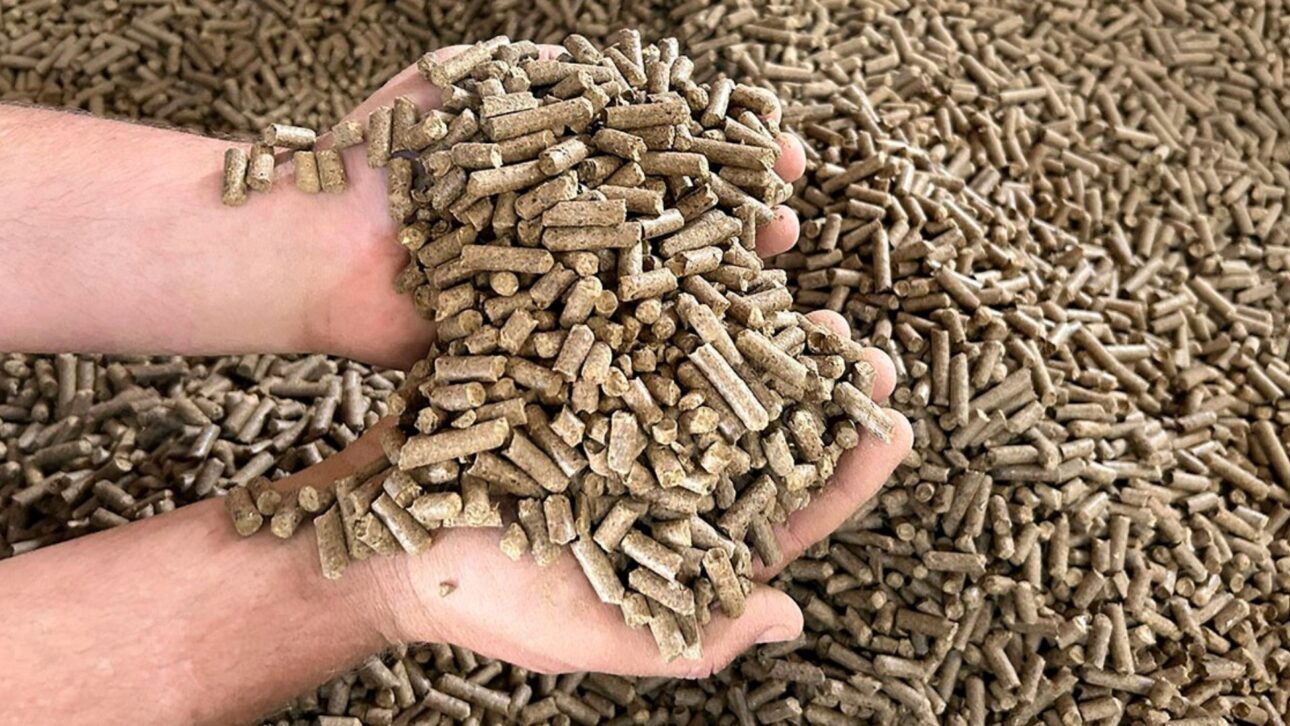
The nickname of ecological firewood is not for nothing. The pellets made from coffee grounds are burned instead of wood, used to heat boilers and generate steam. In other words, they fulfill the same function as firewood, but from a reused waste.
The performance helps explain the name. According to the same source, the pellets from Bricoffee have a calorific value of 5,100 kcal, compared to about 4,600 kcal for wood. In practice, this represents an estimated savings of between 20% and 25% compared to regular firewood.
There is also a clear environmental gain. Replacing traditional firewood with biomass pellets made from coffee grounds avoids cutting down trees and gives a destination to a material that would go to the landfill. It is a fuel that solves two problems at once.
Therefore, the product positions itself as a concrete alternative. For those who depend on firewood to heat ovens, boilers, and environments, the pellets from Bricoffee offer more energy per kilo and a sustainable origin, combining efficiency and lower environmental impact.
For the industry, this difference weighs on the pocket. Factories that depend on firewood or other fuels to keep boilers heated spend on this every month. A savings of 20% to 25% per kilo, as attributed to the pellets from Bricoffee, can mean a significant cost cut over the year.
From Paraná to Varginha, the coffee capital
The story of Bricoffee has an important geographical turn. Production began in Paraná, but the scarcity of raw material in the region became an obstacle. Without enough coffee grounds nearby, growth was difficult.
The solution was to go to the source of the waste. In August 2024, the company moved its headquarters to Varginha, in the south of Minas Gerais, a city recognized for its strong coffee production. Close to those who process the bean, there is much more coffee grounds to turn into pellets.
The change unlocked production. The capacity jumped from 200 to 300 kilos per hour initially to about 1 ton per hour in the new unit. The proximity to the raw material was decisive for this escalation.
The case shows the logic of biomass. Since the transportation of waste weighs on the cost, it makes sense to produce where the material is abundant. By setting up in Varginha, Bricoffee ensured a large volume of coffee grounds and reduced dependence on distant suppliers.
Varginha is a strategic location. Known as one of the coffee capitals in the country, the city concentrates industries that process the bean and, with them, generate coffee grounds in large quantities. Being there means having the raw material practically at the factory’s doorstep.
1 ton per hour: Bricoffee’s biomass production
The current numbers give the dimension of the business. Bricoffee currently produces about 1 ton of pellets per hour, which generates between 10 and 12 tons of biomass per day. It’s a volume that already places the company on an industrial scale.
And the expectation is to double in size. According to the same source, the plan is to reach 2 tons per hour, which would increase production to 20 to 24 tons daily. The planned investment is between R$ 1.5 million and R$ 2 million, with execution estimated for 2026.
The raw material does not seem to be the bottleneck. Still according to the Diário do Comércio, there is availability of 600 to 800 tons of waste per month in the region, which gives room for expansion. There is plenty of coffee grounds to turn into pellets.
This pace shows that the idea moved beyond improvisation. From the dry filter in the trash to the production of tons of biomass, Bricoffee built a real operation, with growth targets and a chain built around the discarded coffee grounds.
To give an idea, 10 to 12 tons per day equate to thousands of kilos of waste that no longer go to the trash daily. Multiplied over the month, this volume shows why Bricoffee already sees itself as a biomass operation on a scale, and not just a simple experiment.
Up to R$ 200,000 per month: the business behind the waste
The reuse turned into consistent revenue. Bricoffee now earns between R$ 180,000 and R$ 200,000 per month from the sale of biomass pellets. It’s proof that giving a destination to coffee grounds can be a good business.
The model has an interesting inversion. According to the same source, instead of industries paying to dispose of the waste, Bricoffee pays for the material, valuing what was previously thrown away. What was a cost for some became a source of income for the company.
This setup transforms a liability into an asset. A waste that generated expense and environmental problems now has market value as biomass. The coffee grounds, once a nuisance, become a sought-after input within a circular economy logic.
It’s worth emphasizing where it all started. Going from an observation in household waste to earning up to R$ 200,000 per month is an example of how a good idea, combined with method and work, can transform coffee grounds into a profitable and useful product.
The model also helps the client on both sides. The industry that provides the waste no longer bears the cost of disposal, and those who buy the pellets replace firewood with a sustainable source fuel. It’s a win-win situation for everyone involved in the coffee grounds chain.
What are coffee grounds pellets used for?
The applications are more varied than they seem. According to Canal Rural, coffee grounds pellets can be used to heat poultry houses, warm water in hotels and clubs, fuel industrial and commercial furnaces and boilers, and even heat residential spaces. It’s energy for many uses.
In all these cases, the product replaces firewood. Where wood or another fuel was previously burned, biomass pellets take over, with the advantage of coming from a waste product. The switch is direct and generally does not require major equipment changes.
There is also a significant environmental advantage. According to Canal Rural, Bricoffee is developing a carbon credit project linked to the substitution of fuels with this biomass. The idea is to add environmental gain to the economic gain for those who adopt the pellets.
All this broadens the reach of coffee grounds. Instead of being restricted to a niche, the ecological firewood from Bricoffee can serve industries, businesses, and even homes, showing that the residue from coffee has utility far beyond the cup.
What this has to do with Brazil
Brazil is, at the same time, a coffee giant and a waste generator. According to Bricoffee, about 8,000 tons of coffee grounds are discarded daily in the country, an enormous volume destined only for landfills. It’s waste with plenty of potential.
This scenario opens up a significant opportunity. Transforming part of these 8,000 tons into biomass pellets would mean generating clean energy and reducing waste at the same time. Bricoffee‘s experience shows, in practice, that this is possible.
There is also a connection with the energy matrix. By offering ecological firewood with good calorific value, coffee grounds can help industries reduce the use of more polluting fuels. In a country discussing cleaner energy, every alternative counts.
There would be no shortage of raw material to scale the idea. Brazil is the largest coffee producer in the world, which means an immense amount of coffee grounds and other grain residues generated throughout the year. Taking advantage of this surplus as biomass is an opportunity befitting the size of the country.
Finally, the case highlights national innovation. A Brazilian company that was born from an observation in the trash and today profits from coffee biomass is an example of circular economy made in the country. It’s the kind of solution that other cities and sectors can replicate across Brazil.
And you, did you imagine that coffee grounds could turn into firewood?
The journey of Bricoffee shows how a keen eye can transform waste into opportunity. From a dry filter in the neighbor’s trash to a factory in Varginha, Luiz Fernando Zolet created a business that transforms coffee grounds into biomass pellets and earns up to R$ 200,000 per month, giving the residue the role of ecological firewood.
More than a curiosity, it is a concrete example of circular economy in Brazil. By paying for the residue that previously went to the landfill and returning it to the market as energy, Bricoffee proves that sustainability and business can go hand in hand, with real numbers behind it.
And you, did you imagine that the coffee grounds left in the filter could turn into ecological firewood capable of heating ovens and boilers? Do you think more companies should take advantage of residues like this to generate energy? Share your opinion here in the comments and share with those who love a good coffee.


