Portuguese
  Spanish


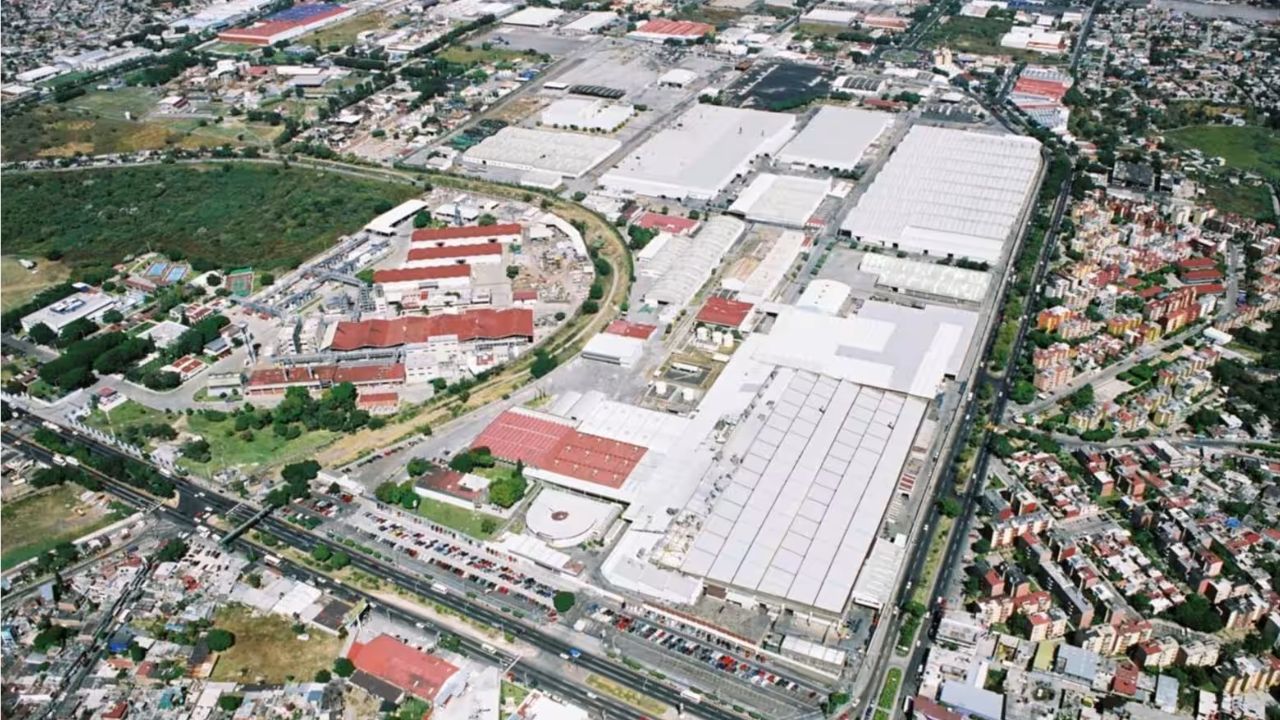


Nissan Closes Its Oldest Factory Outside Japan, Located in Mexico. Production Will Be Transferred to Aguascalientes by March 2026.
Nissan Ends Operations at the CIVAC Factory in Mexico by 2026
Nissan announced that it will close its historic CIVAC factory, located in the state of Morelos, Mexico, by March 2026.
The decision is part of the automaker’s global restructuring plan, called Re:Nissan, and aims to address the company’s biggest crisis in recent years.
With the closure, production of the Versa, V-Drive models and the Frontier pickup will be relocated to the Aguascalientes unit, also in Mexico.
-
Facing a housing shortage, Hong Kong uses prefabricated concrete modules to construct a 12-story public building with the help of massive cranes and trucks.

-
Brazilian City Innovates Waste Collection with Underground Vacuum System
-
Amsterdam Repurposes Retired Boats and Plants to Restore Contaminated Industrial Land Instead of Removing All Polluted Soil
-
Copenhagen Builds 92 Homes Using Reclaimed Materials from Demolished Carlsberg Brewery, Highlighting Each Material’s Origin


The CIVAC unit, inaugurated in 1966, is the oldest Nissan factory outside Japan. After nearly 60 years of operation, the plant will cease operations as part of an effort to make the automaker more efficient and competitive in the global market.
Global Restructuring Affects Mexican Operations
The Nissan factory in Morelos is currently responsible for producing three important models: the Versa and V-Drive sedans, as well as the Frontier pickup (known as NP300 in some markets).
These vehicles will now be manufactured in Aguascalientes, where the Sentra model is already produced.
According to Ivan Espinosa, CEO of Nissan, “Today we made a difficult but necessary decision that will allow us to be more efficient, competitive, and sustainable.”
The automaker emphasizes that it will ensure a careful transition, seeking to respect the workers affected by the measure.
Closed Factory Is Part of a Larger Plan
The end of production at CIVAC will not be immediate. Nissan has set the end of the fiscal year 2025 as the deadline for the transition, meaning that the change will be completed by March 2026.
Details about the number of employees who will lose their jobs due to the factory closure have not yet been disclosed.
This is not the first plant of the automaker to be closed in recent months. In April, Nissan confirmed the closure of the Santa Isabel unit in Argentina, with the shutdown scheduled for November 2025.
From there, the Frontier sold in Brazil was produced, which will now be imported from Mexico.
CIVAC and Nissan’s Global Efficiency Goal
With the Re:Nissan plan, the company aims to reduce its global production capacity from 3.5 million to 2.5 million vehicles per year.
The strategy seeks to optimize resources and eliminate waste, fully utilizing the capacity of the remaining factories, such as the Aguascalientes plant.
Despite the local impact, Nissan asserts that the change is essential to ensure its sustainability in the international market.
The CIVAC factory, which has marked generations and represented the advancement of the automotive industry in Mexico, now closes an important chapter in the automaker’s history.