Portuguese
  Spanish


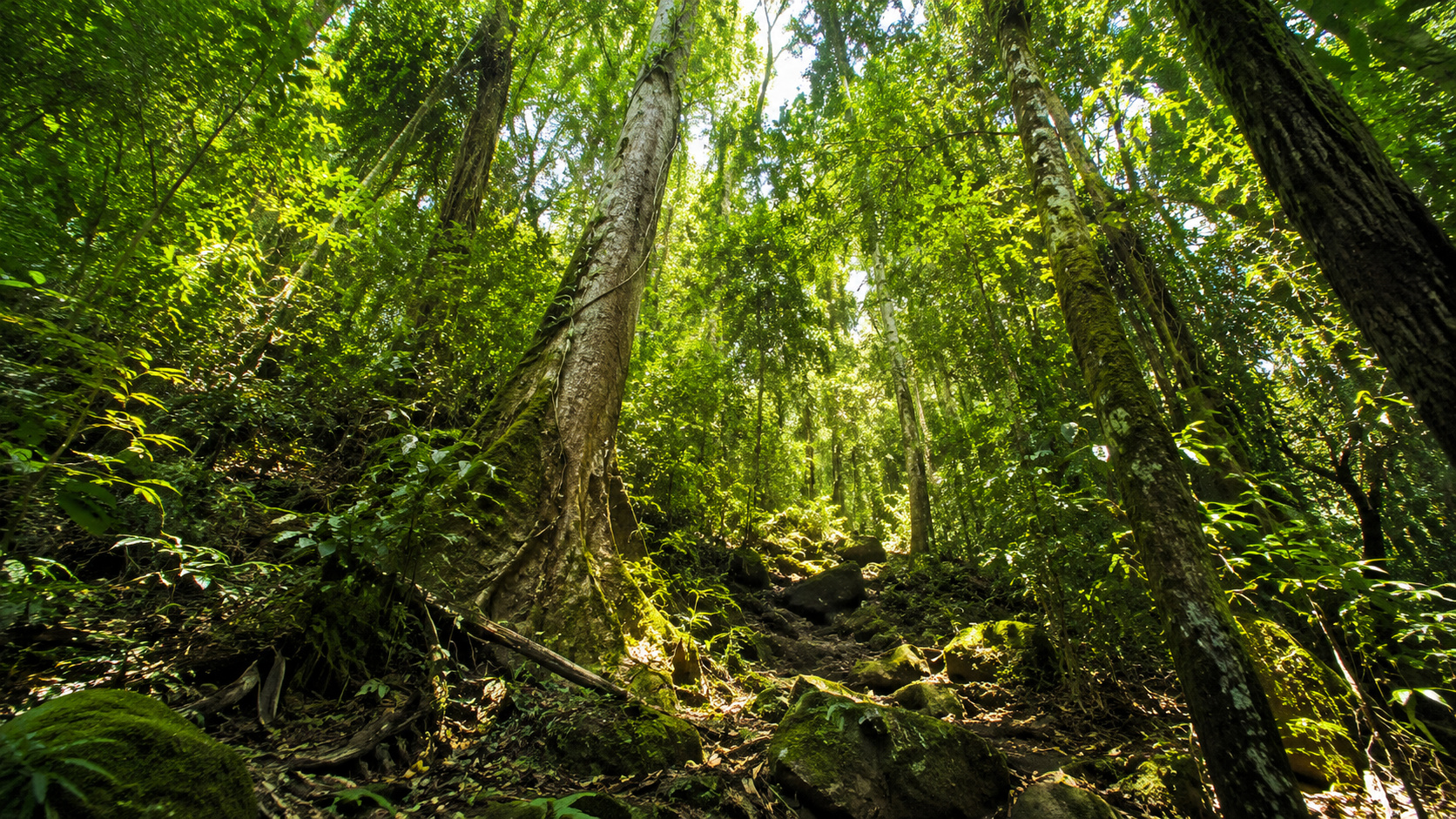

16-meter tree was found in Pedra Branca State Park, in Realengo, during Transcarioca Trail action with support from Inea
A rare discovery caught the attention of researchers at the Pedra Branca State Park, in Rio de Janeiro. The pau-brasil specimen was located in the Piraquara Nucleus, in Realengo, during a monitoring activity carried out in early May.
The tree of the species Paubrasilia echinata measures 16 meters in height, equivalent to a five-story building. The trunk is also impressive, as it has a 2.35-meter circumference and requires three adults holding hands to embrace it.
According to the State Environment Institute, Inea, the identification was made by researcher Diego Monsores, volunteer coordinator of the Transcarioca Trail. The specimen may be over 200 years old, which increases the scientific value of the discovery.
-
Race for Data Centers in Brazil Intensifies Pressure on Critical Energy Resources

-
Melting Glaciers Uncover Ancient Tools, Preserved Mummies, and Strategic Minerals in the Arctic and European Mountains
-
Melting Glaciers Uncover Ancient Tools, Preserved Mummies, and Strategic Minerals in the Arctic and European Mountains
-
Melting Glaciers Uncover Ancient Tools, Preserved Mummies, and Strategic Minerals in the Arctic and European Mountains

Drone investigation reveals centennial specimen
The location of the pau-brasil occurred during aerial monitoring conducted with drones along the sections of the Transcarioca Trail. The technology allowed mapping the tree canopies and identifying endangered species in the conservation unit’s forests.
According to Diego Monsores, the work uses cameras for fauna monitoring and drones for aerial observation. In this way, the teams can locate, record, and map species important for environmental conservation.
The project’s objective involves the collection of seeds and the production of seedlings from the specimens found. Thus, the initiative seeks to preserve the local genetic diversity and strengthen future ecological restoration actions.
Transcarioca Trail acts in the protection of endangered species
The Transcarioca Trail, in partnership with Inea, develops the Pro Species project, aimed at mapping communities of plants threatened with extinction. The trail’s forest corridor is over 184 kilometers long.
The route is considered the first long-distance trail in the country. Therefore, monitoring has become strategic to identify rare specimens and support preservation actions in Rio de Janeiro.
Rare population of Brazilwood also appears on the same trail
During the surveys, another discovery also surprised the researchers. The team found a population with about 50 individuals of Brazilwood-folha-arruda-RJ, a very rare species exclusive to Rio de Janeiro.
Until a few years ago, Brazilwood was known for three main forms: rue leaf, coffee leaf, and orange leaf. Advances in research on the species’ genome identified five lineages on the Brazilian coast.

UERJ study confirms native population in Rio
A recent study conducted by biologist and researcher Patrícia da Rosa, from the State University of Rio de Janeiro, UERJ, confirmed the existence of the native population of Brazilwood-folha-arruda-RJ.
According to Patrícia da Rosa, the rediscovery of these populations represents important news for the conservation of the Atlantic Forest in the State of Rio de Janeiro. The presence of these specimens confirms that remnants of the arruda-RJ lineage still survive in urban areas.
Even after centuries of exploitation and habitat loss, these trees continue to be present in preserved sections of the city. The discovery reinforces the scientific and environmental relevance of constant monitoring.
Pedra Branca holds one of the largest urban forests in the world
The Pedra Branca State Park is located in a densely urban area of Rio de Janeiro. The unit covers part of 17 neighborhoods in the west and southwest zones of the capital of Rio de Janeiro.
The park is considered one of the largest forests in an urban area in the world. Therefore, the discovery of the giant Brazilwood reinforces the importance of technology, preservation, and ecological restoration actions.
The presence of a centennial tree and a rare population shows that the Atlantic Forest still holds important surprises. After all, how many other rare specimens might still be hidden on the urban trails of Rio?