Portuguese
  Spanish


Inside China, Connectivity and Digital Agriculture Changed the Countryside: Automation Reduces Physical Labor, Improves Decisions, Integrates Production with the Internet, and Brings Small Producers Closer to Markets and Sustainable Income.
In southern China, a farm transitioned from a manual irrigation system under a scorching sun to operating 900 acres with smart sensors, automated irrigation, and over 40 GB of daily data flowing through fiber optics. This is the story of Jinfu Farm, the most concrete example of how technology is reinventing the Chinese countryside.
Guangxi: The Chinese Capital of Dragon Fruit
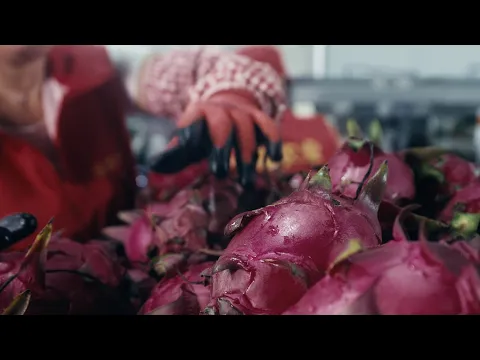
Guangxi is the largest dragon fruit-producing region in all of China. In 2020, cultivation occupied 57,000 acres, which represented 40% of national production capacity: two out of every five dragon fruits sold in the domestic market came from this province.
With around 22,700 hectares planted, approximately one-third of the national area, and an annual production reaching 450,000 tons just in the capital Nanning, Guangxi has consolidated itself as the epicenter of this tropical fruit.
-
A Japanese governor single-handedly stalled the construction of the world’s fastest train for nine years, and only now has he agreed to allow a tunnel excavated at a depth of 1,400 meters.

-
Almost 1 billion euros, two gigafactories, and a million-dollar public investment, Chinese company aims to turn Spanish city into Europe’s new battery hub.

-
Advancement in the industry: Brazilian company creates ultralight material comparable to steel and paves the way for hydrogen cylinders up to 70% lighter, with a direct impact on logistics, the energy industry, and national competitiveness – learn about Forza Composites

-
In Brazil’s backyard: Tesla, by Elon Musk, announces official operations in Uruguay, where electric vehicles already make up 20% of new cars but still leaves out the largest market in the region.




Even so, despite abundant sunshine and fertile soil, Guangxi was one of the poorest regions in China in terms of income. Traditional farming methods were extremely labor-intensive: fertilization and irrigation were done manually, barrel by barrel, under suffocating temperatures. This harshness pushed young people to cities, leaving rural communities aged, with little income and too much work.

The Problem: When Human Effort Is No Longer Enough
In Long’an, a locality in Guangxi, residents saw dragon fruit as an economic escape about a decade ago. But they lacked experience and technical knowledge. The fields were overrun with weeds, some taller than the first dragon fruit plants they tried to grow, and the initial production was disappointing.
The traditional model faced central obstacles:
- Exhaustive manual irrigation: a single worker could irrigate only about 1.6 acres per day by carrying buckets of water.
- Imprecise fertilization: without data on soil conditions, large amounts of fertilizer were wasted.
- Lack of climate control: frosts in winter and extreme heat in summer harmed the plants with no possibility of intervention.
- Commercial isolation: farmers had little access to larger markets and little visibility for their products.
The Turn: Gigabit Networks and Smart Agriculture Platform

In 2017, Jinfu Farm made a leap by adopting a cloud-based smart agriculture platform and deploying a fiber-to-the-room (FTTR) solution to build a gigabit optical network across the property. This high-speed, low-latency, and highly reliable infrastructure enabled the transformation of a farm powered by human labor into a data-driven operation.
Automated Irrigation for 900 Acres
The integrated fertigation system automates irrigation for up to 900 acres, freeing farmers from the task of carrying buckets under the sun. Sensors spread throughout the plantation continuously monitor soil conditions, moisture, pH, nutrients, and enable precision fertilization that reduces fertilizer costs by nearly $1,000 per acre per year.
Automated Climate Control
The dragon fruit needs temperatures between 6°C and 35°C to develop under ideal conditions. Jinfu Farm installed an automatic temperature control system: in summer, sprinklers cool the plants with mist; in winter, heaters maintain the appropriate temperature range. Thanks to this control, the plants produce fruit for about ten months a year, significantly increasing annual productivity.

Traceability and Real-Time Monitoring
A visual traceability system powered by cameras and video feeds tracks the development of the fruits in real-time. The gigabit optical network handles over 40 GB of data generated daily, sending everything quickly to the cloud. This allows consumers to scan a QR Code on each fruit to see exactly where and how it was produced, increasing trust and transparency.
The Economic Impact: From $95 Per Month to a Revolution in Income
The results have been transformative. An employee of Jinfu Farm reported that before digitization, her monthly income was around $95 to $125; after adopting the technology, that amount multiplied by more than four.
The overall numbers confirm this change:
- Annual Production (2020): 20,000 tons.
- Revenue Generated (2020): $20.5 million.
- Direct Benefit to Low-Income Farmers: $3.15 million distributed among more than 40,000 people.
- Savings on Fertilizers: about $1,000 per acre per year.
- Data Generated Per Day: over 40 GB.
The director of Jinfu Farm, Ye Juhong, also began live streaming the production process on e-commerce platforms, greatly expanding the commercial reach of the fruit and shortening the path to the final consumer.
The Broader Scenario: The Digital Revolution in the Chinese Countryside
The experience of Jinfu Farm is part of a national transformation. According to the action plan for smart agriculture, the Chinese market for technologies in the countryside surpassed the equivalent of $14.35 billion in 2024 and is expected to reach about 120 billion yuan in 2025.
China has been building a robust framework for digital agriculture that includes:
- Integration of artificial intelligence, 5G, low-altitude drones, and satellite technology.
- Use of the Beidou navigation system for precision planting.
- Fully autonomous planting areas and intelligent crop protection systems.
- Formation of “new farmers,” who master technology, modern agricultural techniques, and market operation.

A Global Market in Expansion
In Guangxi province, the local telecommunications operator launched, in 2021, gigabit broadband services for urban and rural areas, achieving comprehensive optical coverage wherever fiber could be installed.
Technological advancement comes at an ideal time. Recent estimates indicate that the global dragon fruit market was valued at about $4.1 billion in 2026, projected to reach approximately $5.6 billion by 2031, driven by a compounded annual growth rate exceeding 6%.
The Asia-Pacific region accounts for the largest slice of the market, with China consuming over 2 million tons of the fruit per year. In the United States, the dragon fruit market is also growing rapidly, supported by the demand for healthy eating, “superfoods” rich in antioxidants and fibers, and derived products such as freeze-dried powder, juices, extracts, and natural colorants.
IoT and Drones: The Next Chapter of Dragon Fruit
Recent research confirms the path chosen by Jinfu Farm. The application of the Internet of Things (IoT) in dragon fruit cultivation is revolutionizing agricultural practices by enabling real-time monitoring of soil and weather data, precisely adjusting irrigation schedules.
Drones equipped with multispectral cameras can detect early signs of stress in plants, allowing for quick interventions and reducing the risk of harvest losses. Data-driven precision management, combining sensor measurements, drone images, and monitoring tools, helps the producer tailor fertilization, pest control, and handling specifically for each area of the crop, enhancing productivity and quality.
Lessons for the World
The story of Jinfu Farm shows that the gap between traditional and digital agriculture cannot be bridged merely by good intentions: it requires concrete infrastructure. A gigabit fiber optical network is not a technological luxury but the nervous system that connects sensors, cameras, irrigation systems, and online sales platforms into a single productive ecosystem.
For agricultural regions in developing countries, from Brazil’s semi-arid region to the interior of the African continent, Guangxi’s model offers a possible roadmap: first invest in high-speed rural connectivity, deploy sensors and automation as working tools, and use data and traceability as a bridge to global markets. The agriculture of the future is cultivated not only with land and water; it is increasingly cultivated with data.