






 Portuguese
  Spanish




The dispute also reached the courts. In 2024, the South Korean Constitutional Court rejected residents’ challenges against the system.
The central issue is simple. Part of the population did not accept the radar’s presence due to fear of local impact, while the government maintained the system as part of its defense strategy.
Fear of radiation put agriculture and geopolitics in the same debate
The word radiation often generates fear because it seems difficult to understand. In Seongju’s case, this fear grew around the electromagnetic waves linked to the radar.
-
European Country Achieves 100% Glass Recycling and 52% Municipal Waste Recovery, Highlighting Brazil’s Challenges Despite Selective Collection in 60.5% of Cities

-
Facing extreme heat, floods, and disappearing fertile soil, Pakistan launches a “10 Billion Tree Tsunami” in three years to combat desertification, protect rivers, create green jobs, and make reforestation a national survival priority.

-
Cape Verde’s World Cup Surprise: Betting on Electric Cars, a 5 MW Solar Plant, and an Ambitious Plan to Transform Energy for 600,000 Residents

-
Man Finds 1,469 Ancient Roman Silver Coins While Metal Detecting in Romania


This type of concern gains strength when it involves food. When a well-known fruit becomes associated with risk, the discussion ceases to be technical and becomes a matter of public trust.
This is how the Korean melons entered a geopolitical crisis. What started as a military installation turned into a debate about crops, regional identity, and foreign presence.
When military defense turns into fear in the fruit market
The Seongju case is striking because it seems improbable. An anti-missile system, created for protection, ended up being accused in the local imagination of threatening fruits.
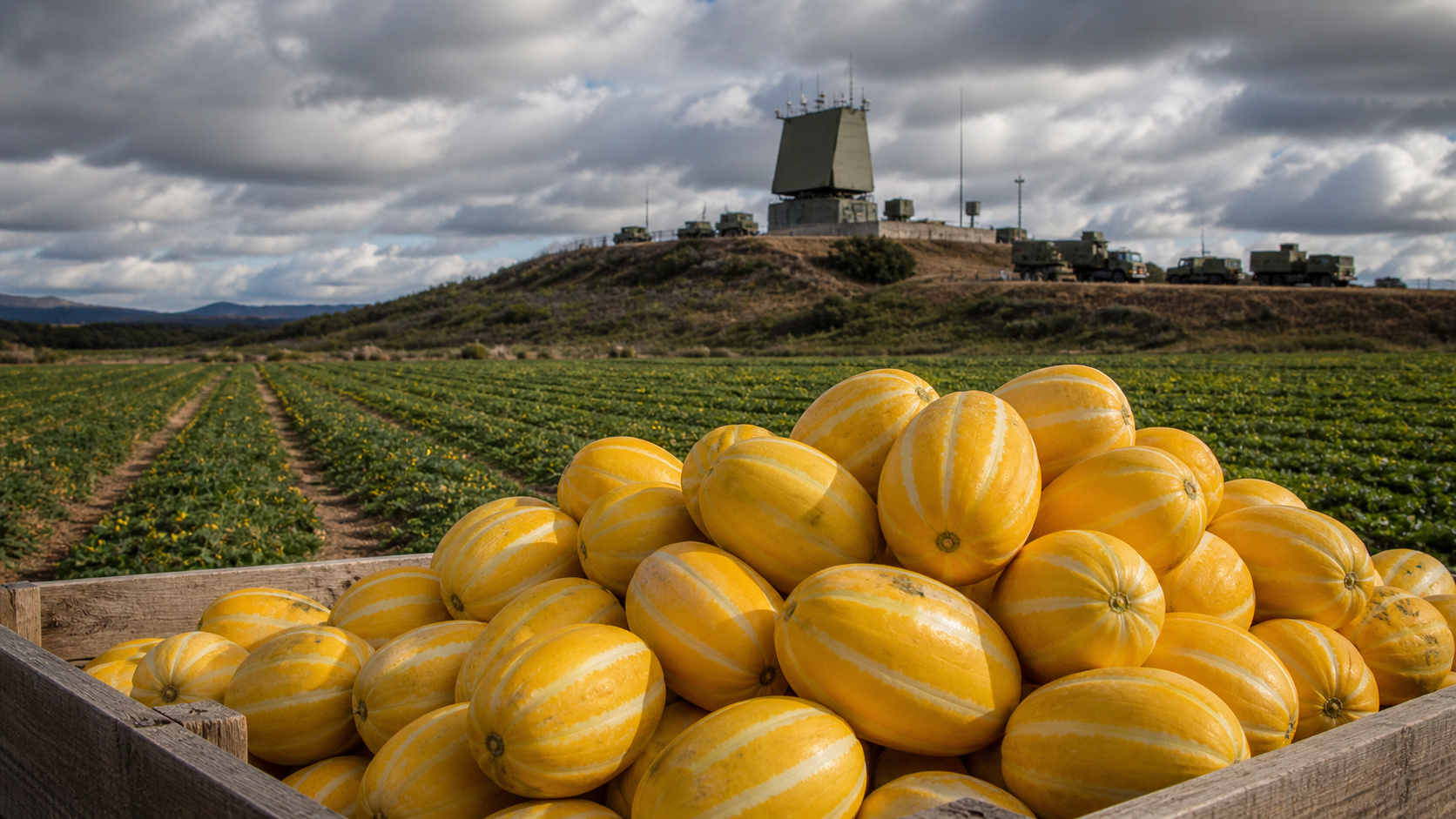
This image explains why the story gained so much traction. THAAD became a symbol of a larger tension between national security and daily life.
In the end, the crisis showed that military decisions can have a social impact far beyond bases and offices. In Seongju, they reached the fields, the market, and the reputation of a famous fruit.
The Seongju Korean melons continued to sell well, but the controversy left its mark. The fear of radiation, the protests, and the legal dispute transformed a regional fruit into a symbol of public distrust.
And you, do you think a community should accept a strategic military system when it causes fear about local food and crops, even without a drop in sales? Leave your opinion in the comments and share this story with those who enjoy curious topics about technology, agriculture, and international politics.
The case of Seongju’s Korean melons showed how the fear of radiation, the military presence of the United States, missile defense, and local agriculture can mix in a public crisis that started in the fields, reached the courts, and became a symbol of distrust between residents, government, and military in South Korea
No one imagined that the famous Korean melons would be dragged into a geopolitical crisis, but that’s what happened in Seongju, South Korea, after the installation of the THAAD anti-missile system.
The investigation was published by Chosun Ilbo, a national South Korean newspaper. The case gained traction because residents began to fear that electromagnetic waves from the radar could contaminate or harm the region’s melons.
The controversy united seemingly distant themes: military defense, the presence of the United States, fear of radiation, local agriculture, and regional identity. Even with rumors since 2016, sales of Seongju melons continued to grow and reached records.
Military radar became suspected of contaminating fruits in Seongju
THAAD is an anti-missile system installed to strengthen defense against air threats. It uses radar to detect risks and support military response.
In Seongju, some residents began to see the equipment differently. The radar ceased to be seen merely as defense technology and became central to an everyday concern: its possible impact on crops and food.


The most striking suspicion involved Seongju’s Korean melons. The idea that electromagnetic waves could harm the region’s famous fruits transformed a military issue into fear in the countryside.
Korean melons became a symbol of a larger dispute
Seongju melons do not just represent a local fruit. They also carry economic value, agricultural labor, and regional pride.
Therefore, the rumor about possible contamination gained traction. For residents and producers, any doubt about the product’s quality could affect trust, reputation, and income.
The case shows how a decision linked to national defense can affect everyday life. A military radar began to be discussed in the same debate as planting, trade, and consumption.
Chosun Ilbo reported rumors since 2016 and record sales
Chosun Ilbo, a national South Korean newspaper, brought up the most curious point of the story: despite rumors since 2016 about THAAD‘s electromagnetic waves contaminating Seongju melons, sales continued to grow and reached records.
This contrast made the crisis even more unusual. Fear circulated among residents, but the melon market did not collapse.
The real consequence appeared on another front. The system’s installation generated persistent protests, legal action, and friction between residents, government, and military.
Protests against THAAD exposed tension between residents, government, and military
The deployment of THAAD in South Korea was marked by prolonged demonstrations. Seongju residents contested the system and took the discussion beyond the streets.
The dispute also reached the courts. In 2024, the South Korean Constitutional Court rejected residents’ challenges against the system.
The central issue is simple. Part of the population did not accept the radar’s presence due to fear of local impact, while the government maintained the system as part of its defense strategy.
Fear of radiation put agriculture and geopolitics in the same debate
The word radiation often generates fear because it seems difficult to understand. In Seongju’s case, this fear grew around the electromagnetic waves linked to the radar.
This type of concern gains strength when it involves food. When a well-known fruit becomes associated with risk, the discussion ceases to be technical and becomes a matter of public trust.
This is how the Korean melons entered a geopolitical crisis. What started as a military installation turned into a debate about crops, regional identity, and foreign presence.
When military defense turns into fear in the fruit market
The Seongju case is striking because it seems improbable. An anti-missile system, created for protection, ended up being accused in the local imagination of threatening fruits.
This image explains why the story gained so much traction. THAAD became a symbol of a larger tension between national security and daily life.
In the end, the crisis showed that military decisions can have a social impact far beyond bases and offices. In Seongju, they reached the fields, the market, and the reputation of a famous fruit.
The Seongju Korean melons continued to sell well, but the controversy left its mark. The fear of radiation, the protests, and the legal dispute transformed a regional fruit into a symbol of public distrust.
And you, do you think a community should accept a strategic military system when it causes fear about local food and crops, even without a drop in sales? Leave your opinion in the comments and share this story with those who enjoy curious topics about technology, agriculture, and international politics.


