






 Portuguese
  Spanish
 4 min of reading
  0 comments


Project for the Reactivation of the São Francisco River Waterway Plans Integration with Railways and Roads, Strengthening Freight Transport and Connecting Inland Bahia to the Coast. Estimates Point to a Movement of R$ 5 Million in the First Year.
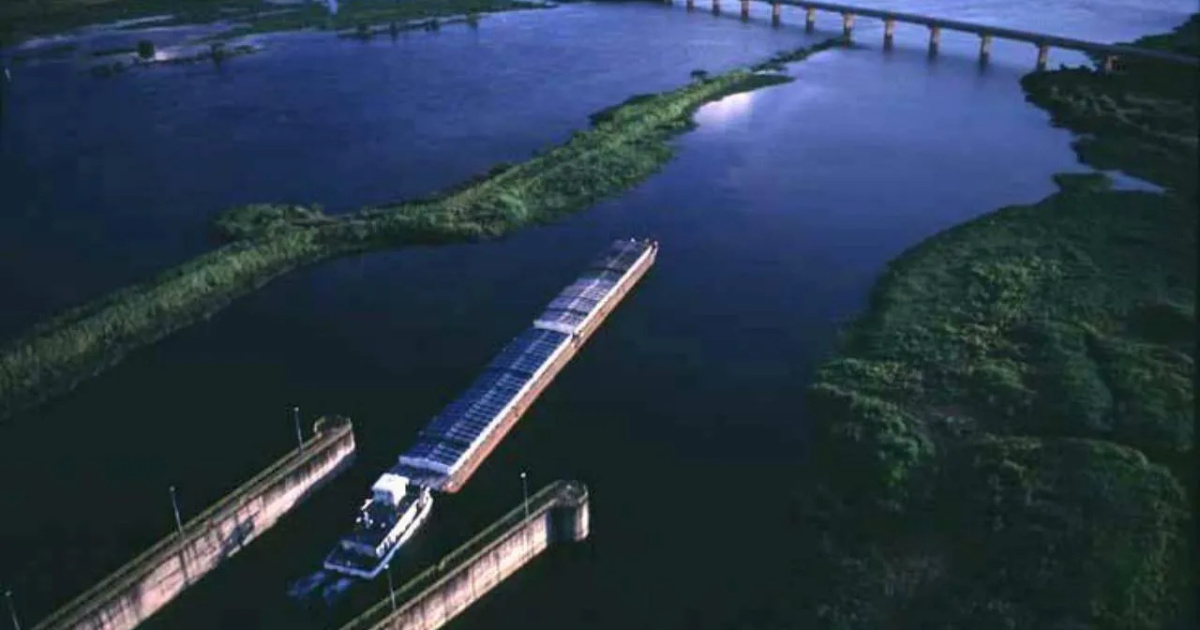
As published by CPG, the Port Authority of Bahia (Codeba) recently presented the reactivation of the São Francisco River Waterway, a corridor of 1,371 km that will be integrated with railways and roads to strengthen freight transport in the country.
This week, the entity revealed that it projects to move up to R$ 5 million in the first year of operations of the São Francisco River Waterway.
Presentation and Objective of the Project
According to Codeba, the strategy will restore commercial navigability to the São Francisco and connect it to railway and road segments with access to the coast.
-
Brazilian Joins Homeownership Consortium, Faces Decade of Dual Payments Totaling $141,000, Surpassing Traditional Mortgage

-
Land Rover to Halt Production in July, Putting 371 Jobs at Risk, as Chinese Automaker Negotiates to Convert Factory to 100,000 Vehicles Annually by 2027

-
Mexican Pest Threatens U.S. Cattle Herds at Historic Lows, Potentially Boosting Brazilian Beef Exports as Burger Prices Soar

-
Brazilian Freight Bill Progresses in Congress with $5,000 Minimum Wage, 70% Advance Payment, and Fines Up to $1 Million, as Agriculture and Industry Warn of Rising Costs and Legal Uncertainty


The authority classified the waterway as the largest in continuous territorial extension under the control of a port authority on the continent, a condition that expands the logistical reach of the initiative and creates new routes to compete with exclusively land corridors.
Multimodal Integration to Reduce Costs
The proposal relies on the combination of waterborne, rail, and road transport.
Inland navigation concentrates large volumes along the riverbed, while roads connect production hubs and waterway terminals.
Subsequently, the freight accesses the rail network and proceeds to port areas with storage and docking capacity.
The expectation is to gain predictability in delivery times and sensitivity in costs per ton, as well as to alleviate seasonal congestion on roads.
Key Connections with FCA, FIOL, and Aratu Port
Three axes form the core of the integration. The first aims at the rehabilitation of the Centro-Atlântico Railway (FCA) connecting Juazeiro to Aratu Port, in the Metropolitan Region of Salvador.
The second establishes a connection with the West-East Integration Railway (FIOL) in Bom Jesus da Lapa (Cariacá), using the road-rail system associated with the railway bridge over the São Francisco River.
The third links the FIOL network to FCA, creating a direct route between Jequié and Aratu Port. Together, these segments pave the way for the flow initiated in the middle and lower São Francisco to reach the coast without interruptions.
What Changes for Freight Logistics
With the reactivation, the authority projects more competitive routes for bulk, semi-finished products, and inputs.
The multimodal arrangement allows for the distribution of volumes throughout the year and enhances resilience against seasonal harvests.
Moreover, the use of the waterway tends to reduce dependence on long road trips, with the potential to lower operational costs and enhance transport safety.
Estimated Movement and Demand Revision
Codeba works with an estimate of up to R$ 5 million moved in the first year, an initial threshold to be increased as the connections come into full operation.
According to the presentation, new demand fronts were incorporated into the latest studies and were not included in the curves assessed until last year.
This adjustment projects a more diversified customer base, anchored in origins from inland Bahia and neighboring areas connected to the São Francisco basin.
Statements and Guidelines of the Port Authority
The president of Codeba, Antonio Gobbo, stated that the reactivation will significantly change the transportation matrix in the region. In his words, “this waterway will generate a revolution in freight logistics.”
He added that the team is working “with the possibility of implementing a railway network for Aratu,” aimed at increasing the reach and regularity of the shipping windows.
The statements indicate a priority for connections that provide immediate scale gains and support the corridor’s expansion.
Implementation Phases and Interoperability
The reactivation stages have been designed so that the infrastructure comes into service in a scaled manner, prioritizing segments with the highest potential for initial loading.
Interoperability among systems—waterway terminals, rail yards, and port areas—appears as a central requirement.
The proposal is to synchronize works, services, and authorizations so that the supply of transport grows at the same pace as contracted demand, allowing medium and long-term contracts with price and capacity predictability.
Territorial Scope and Connection with Productive Hubs
By reactivating an axis of 1,371 km, Codeba signals the capacity to serve agro-industrial and mining hubs supplied by roads converging to the São Francisco.
The connection with Aratu Port provides access to hinterlands and terminals capable of accommodating various loads, favoring the formation of logistics chains with mapped transshipments and lower risk of operational bottlenecks.
Expected Impact and Next Steps
The authority described a governance structure involving railway operators and transport agencies to standardize procedures, safety, and schedules.
Still without detailing the complete calendar, the guidance is to start with connections that ensure travel regularity and stable costs, principles seen as essential to attract new shippers.
Structural Markers for the Recovery
The Juazeiro–Aratu segment, the connection at Bom Jesus da Lapa (Cariacá), and the FIOL–FCA link with access from Jequié have been highlighted as structural markers of the corridor.
These points allow for continuous routes from the interior to the coast, minimizing transshipments and preserving the economic efficiency typical of waterborne and rail convoys for large volumes.
How can the reactivation of the São Francisco River Waterway, combined with the FCA, FIOL, and Aratu Port connections, reshape the competitiveness of freight transport in the Northeast in the coming years?


-

-

-

-

-

-

26 people reacted to this.