






 Portuguese
  Spanish
  5 min of reading


The Northeast and the New Energy Cycle
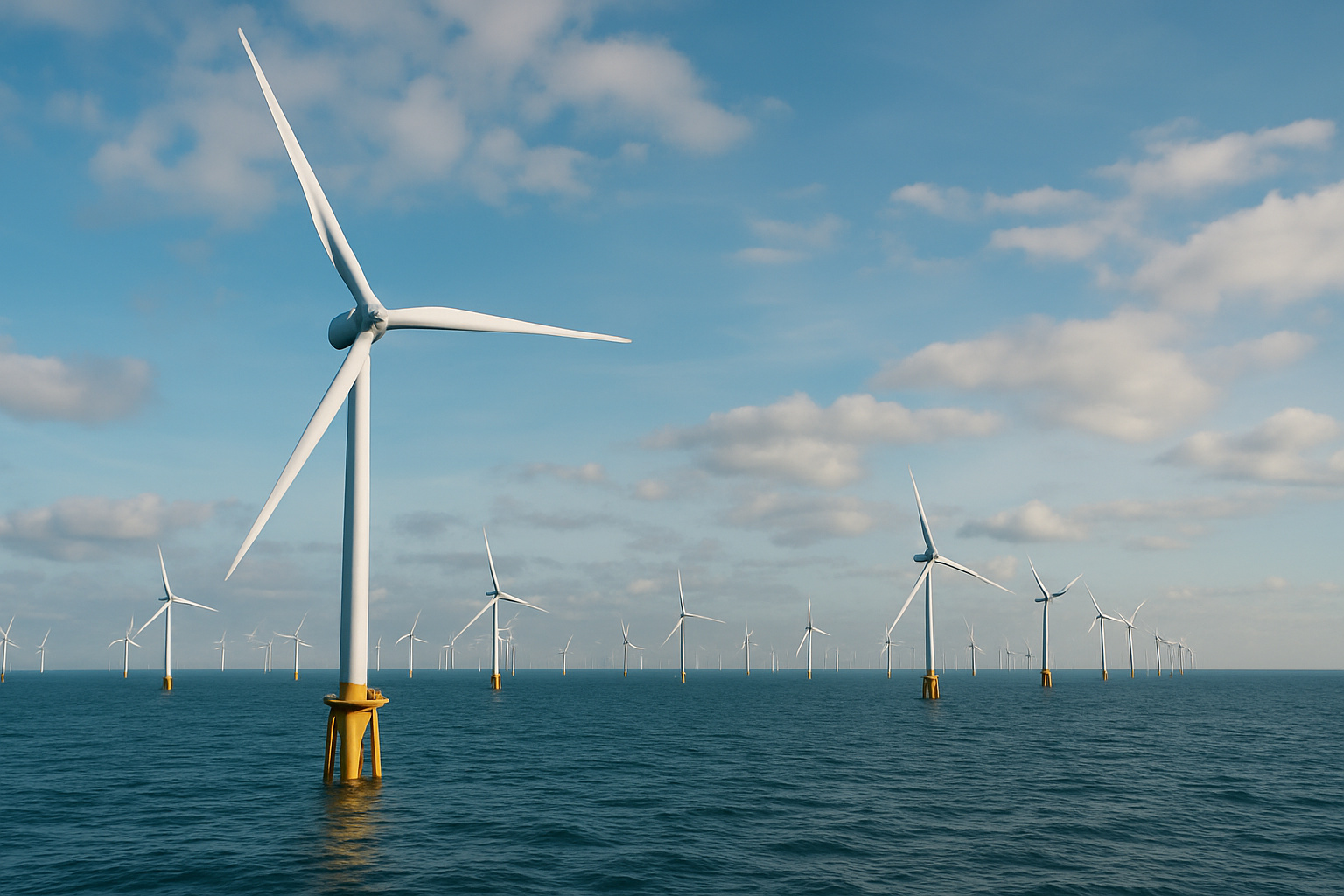
The advancement of offshore energy in Brazil creates a new stage in the national energy transition. Therefore, when Marcello Cabral, director of New Business at ABEEólica, stated that the Northeast is likely to assume a leading role in this sector, the statement quickly gained traction. According to him, during interviews and public presentations throughout 2024 and 2025, the region has natural and technical conditions that few territories in the world possess. Thus, this movement strengthens an agenda that combines sustainability, innovation, and economic growth with direct social impact.
Furthermore, according to the ABEEólica website, interest in offshore projects increased after climate studies released between 2022 and 2024, which showed the enormous potential of Brazil’s coastal winds. In addition, the federal government and institutions such as EPE and IBAMA began updating regulations, analyses, and necessary licenses for this type of undertaking, always relating the criteria to the climate goals assumed by Brazil in international agreements.
Why the Northeast Becomes the Main Hub
The prominence of the Northeast is not a coincidence. Historically, the states in the region have established themselves as a reference in renewable energy since the 2000s, when wind energy installed its first large-scale towers in Ceará and Rio Grande do Norte. As the region has consistent, strong, and stable winds, the expansion happened naturally. Therefore, when the idea of taking technology offshore began to gain strength, the Northeast already offered infrastructure, skilled labor, and accumulated experience in land-based parks.
-
A 24,200-ton oil platform is removed from the North Sea in just 10 seconds and taken to be scrapped on land, in an operation where more than 97% of the Brent Delta structure was reused or recycled.

-
Ocyan takes AI and data to the FPSO Brazil Congress 2026 to showcase how digital technologies can enhance safety, integrity, and performance in next-generation FPSOs.

-
Sodexo debuts unique maritime hospitality on Seagems ship to transform the well-being, food, and comfort of offshore professionals.

-
European ship will transport captured CO₂ to be stored under the North Sea as the Greensand project prepares the first industrial offshore storage in the European Union to operate in 2026 with an initial target of 400,000 tons per year in Denmark.




Additionally, according to data released by the Ministry of Mines and Energy in 2025, the region’s ports are already operating adaptations to receive components of offshore wind turbines. This includes logistical bases in Pecém, Suape, and Porto do Açu. As these areas provide adequate depth and easy access to wind zones, the projects become more competitive.
Offshore Energy and Its Relationship with Regional Development
Offshore energy also means social impact. For this reason, Cabral explained that, over the next few years, northeastern states will be able to generate jobs in various sectors. This includes logistics, heavy metallurgy, engineering, shipbuilding, and information technology. Thus, the production chain grows and strengthens the local economy.
According to the federal government, studies initiated in 2023 show that each gigawatt installed in offshore wind can generate thousands of direct and indirect jobs. As the Northeast holds more than 70% of the projects under preliminary analysis, the economic effects could be significant by 2035.
However, Cabral also emphasizes that development must occur with environmental responsibility. Thus, the region should monitor studies on marine biodiversity, fishing routes, and impacts on the coastline. Therefore, while there is great potential, each step must be conducted with scientific rigor.
The Historical Evolution of the Brazilian Energy Transition
The debate on offshore energy is directly related to the country’s energy history. When Brazil structured its electric matrix in the 20th century, hydraulic power dominated the landscape. Then, with the start of pre-salt in 2006 and its expansion after 2010, oil became essential for national economic planning.
However, after 2015, international discussions like the Paris Agreement placed Brazil in front of the need to diversify its matrix. Thus, public policies for wind, solar, and biofuels gained strength. According to gov.br, in 2023 the country already had one of the cleanest energy matrices in the world, with more than 85% of electricity coming from renewable sources.
Thus, offshore energy arises not as a substitute for oil, but as a strategic complement to ensure continuous supply and reduce greenhouse gas emissions.
The Role of Technological Innovation
The offshore expansion depends on advanced technology, and Brazil is observing this movement closely. As the sector requires resilient platforms, complex anchoring systems, and giant towers installed offshore, investment in research becomes essential. Thus, universities, innovation centers, and private companies have expanded partnerships since 2022.
According to the National Institute of Clean Energy, published in 2024, Brazil is already testing smart sensors, climate forecasting software, and remote maintenance systems to operate offshore turbines more safely. Furthermore, experiences conducted in Europe and Asia serve as a basis to avoid mistakes and accelerate the learning curve.
Offshore Energy and Global Sustainability
Offshore energy engages with broader climate issues. Therefore, when Cabral mentions COP30, which took place in Belém in 2025, he reminds us that the world demands low-carbon solutions. Thus, Brazil, by harnessing the Northeast’s potential, reinforces its image of environmental leadership.
Moreover, as the country has an extensive coastline and favorable weather, the impact can be global. According to IRENA reports released in 2025, Brazil is among the ten countries with the greatest potential for offshore wind energy on the planet. Thus, each approved project brings the country closer to climate neutrality.
The Next Steps
Although the sector is advancing rapidly, the country is still awaiting the legal framework for offshore energy, expected to be updated after 2025. Therefore, the regulatory environment remains essential. With it, investors will have the security to start works and hire teams, while the government will expand environmental criteria.
According to statements from the MME, published in March 2025, the goal is to balance development and preservation, ensuring that economic growth does not compromise coastal ecosystems.
For this reason, Cabral emphasizes that the Northeast is prepared. He states that, with planning, technology, and environmental commitment, the region can become a global showcase for renewable energy.
A Lasting Vision
As offshore energy combines innovation, sustainability, and economic results, the topic remains relevant, regardless of the progress of projects. Thus, the Northeast establishes itself as an example of adaptation to new climate requirements. In addition, the wager on clean sources creates opportunities for future generations, strengthening energy autonomy and reducing external dependencies.
Therefore, when ABEEólica highlights that the Northeast will be a protagonist, the statement summarizes a historical movement. The region brings together experience, infrastructure, climatic conditions, and political will. Thus, what once seemed distant is now transforming into a concrete path for Brazil’s energy transition.
And, as Cabral points out, “offshore energy represents Brazil’s renewable future”.





Be the first to react!