Portuguese
  Spanish


Railway Project in the Northeast, Announced in 2006, Faced Paralysis and Scandals, but It Resumed Progress with Active Works, Billion-Dollar Investments and Expectation of Transforming the Regional Economy with New Tracks and Strategic Connection to Ports.
A promise made in 2006 in the northeastern hinterland seemed doomed to oblivion.
Announced as the railway that would change the region’s economy, the Transnordestina spent years marked by suspended works, billions of reais wasted, and successive delays.
Today, almost two decades later, machines are operating again, investments have resumed, and the project is beginning to come to fruition.
-
New Smart Radar Begins Issuing Fines to Solo Drivers in Carpool Lanes, Uses Cameras to Count Occupants, Changing Traffic Enforcement Rules on Busy European Roads

-
Why can the crane operator only obey the correct signalman on the construction site: among dozens of workers, a hand raised by the wrong person can confuse the maneuver and turn a load of tons into an immediate risk.
-
What changes with the new public transportation rules that can reduce pressure on fares and pave the way for zero fare in Brazil?
-
Argentina confirms Belgian giant to lead strategic Paraná River waterway and promises to reduce logistical costs on one of South America’s most important routes

According to the engineer responsible for the channel EngeZone, who detailed the project’s trajectory in a video published in 2025, the railway has never been closer to becoming a reality.
But how did a project so often labeled a failure gain new momentum?
Origin and First Promises
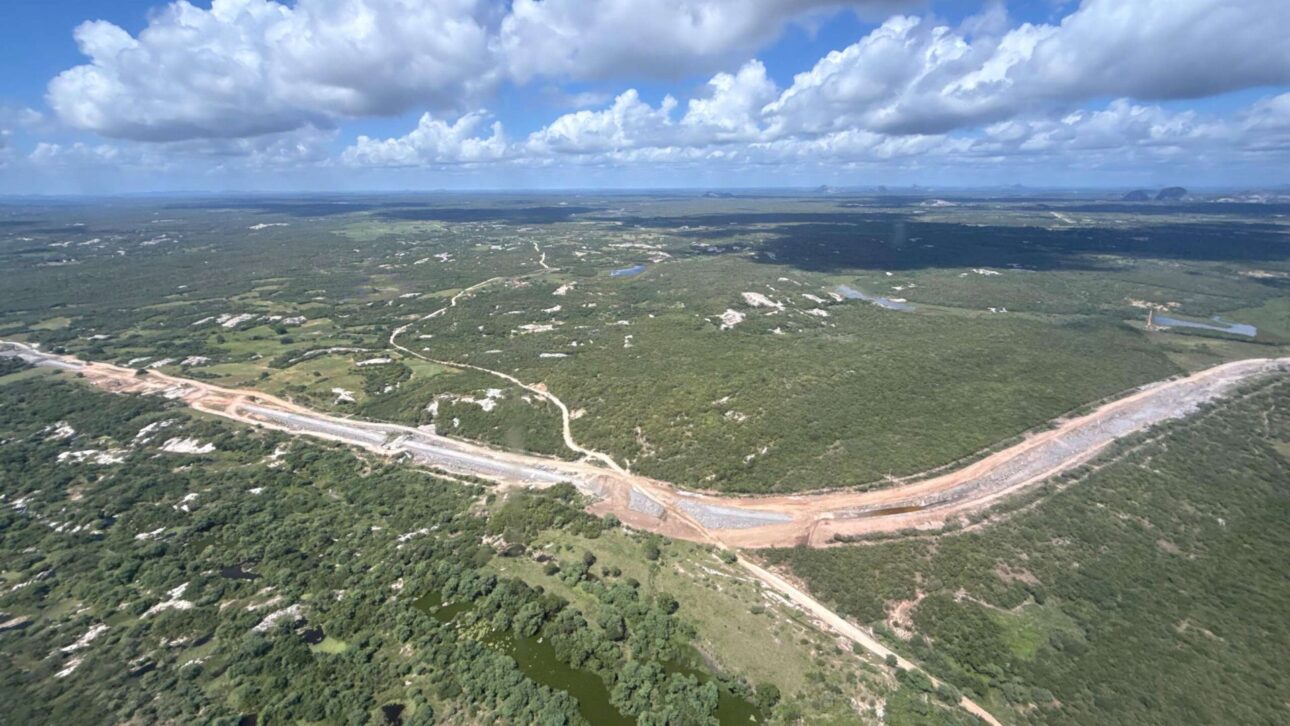
The idea of creating a railway in the Northeast emerged in the late 1990s, within the plan to modernize the national railway network.
However, it was only in 2006 that the project received the green light.
During a ceremony in Ceará, then-President Luiz Inácio Lula da Silva announced the construction of the Transnordestina, which was supposed to connect the interior of Piauí, Ceará, and Pernambuco with the ports of Suape and Pecém.
As highlighted by EngeZone, the objective was clear: reduce logistical costs, accelerate the flow of agricultural and mineral production, and integrate the Northeast more competitively into the global market.
On paper, it would consist of over 1,700 km of tracks, a work considered strategic for agribusiness and mining.
Years of Paralysis and Scandals
The reality, however, was different.
By 2008, two years after the beginning of the works, the budget jumped from R$ 4.5 billion to R$ 5.4 billion, while less than 6% of the project had been completed.
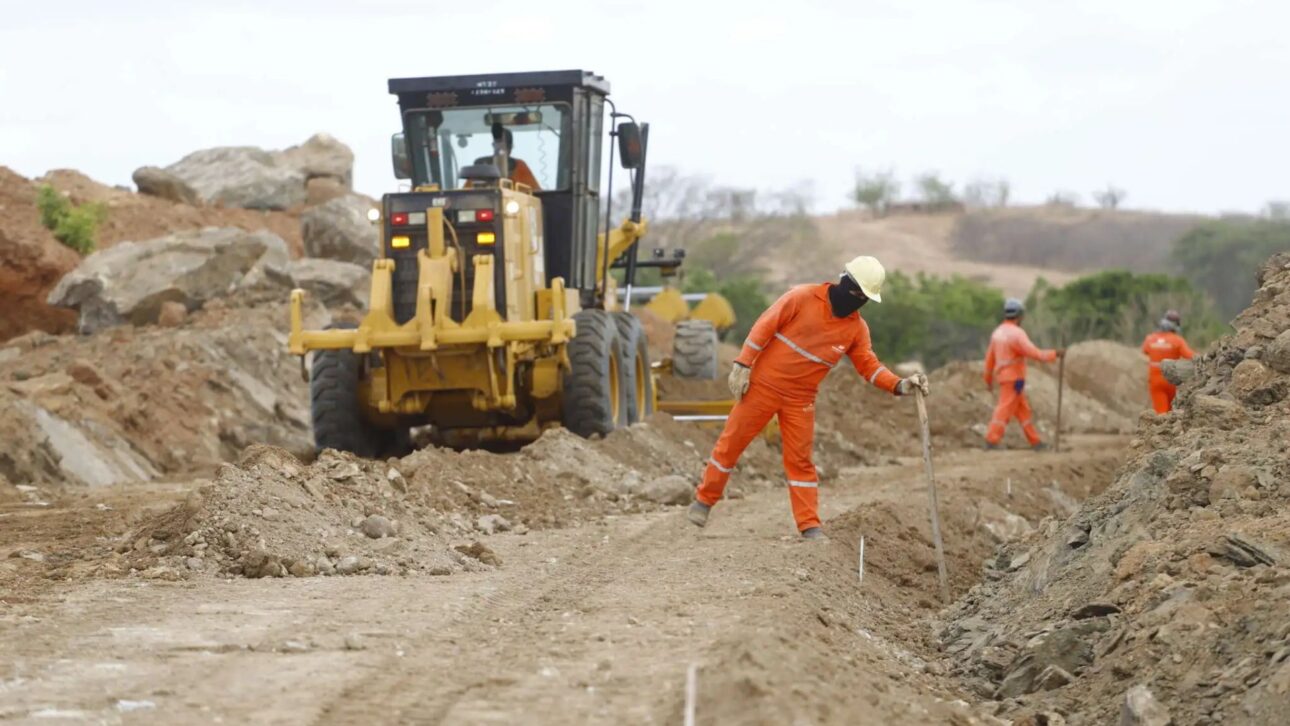
The channel recalls that the railway soon became synonymous with frustration: constant suspensions, failures in environmental licensing, irregular transfers, and poor financial management marked the following decade.
Deadlines were pushed from 2010 to 2013, then to 2016.
In 2017, the Federal Court of Accounts suspended federal transfers, and the National Agency of Land Transport even considered revoking the concession.
What should have been a logistics corridor became a symbol of waste of public resources.
Restructuring and New Momentum
The scenario began to change in 2022, when the federal government decided to restructure the project.
According to the video from EngeZone, the exclusion of the segment between Salgueiro and Suape, deemed unfeasible, marked a turning point.
From then on, the priority became the so-called Phase 1, connecting Eliseu Martins (PI) to Porto do Pecém (CE).
The following year, this segment was once again included in the New PAC, opening the possibility for future resumption of the connection to Pernambuco.
“The restructuring brought a new schedule, updated contracts, and attracted public and private investments,” noted the engineer on the channel.
Progress on the Tracks
In July 2025, the Ministry of Transport reported that 75% of Phase 1 was already completed. A total of 676 km of track is ready, equivalent to three-quarters of the priority stretch.
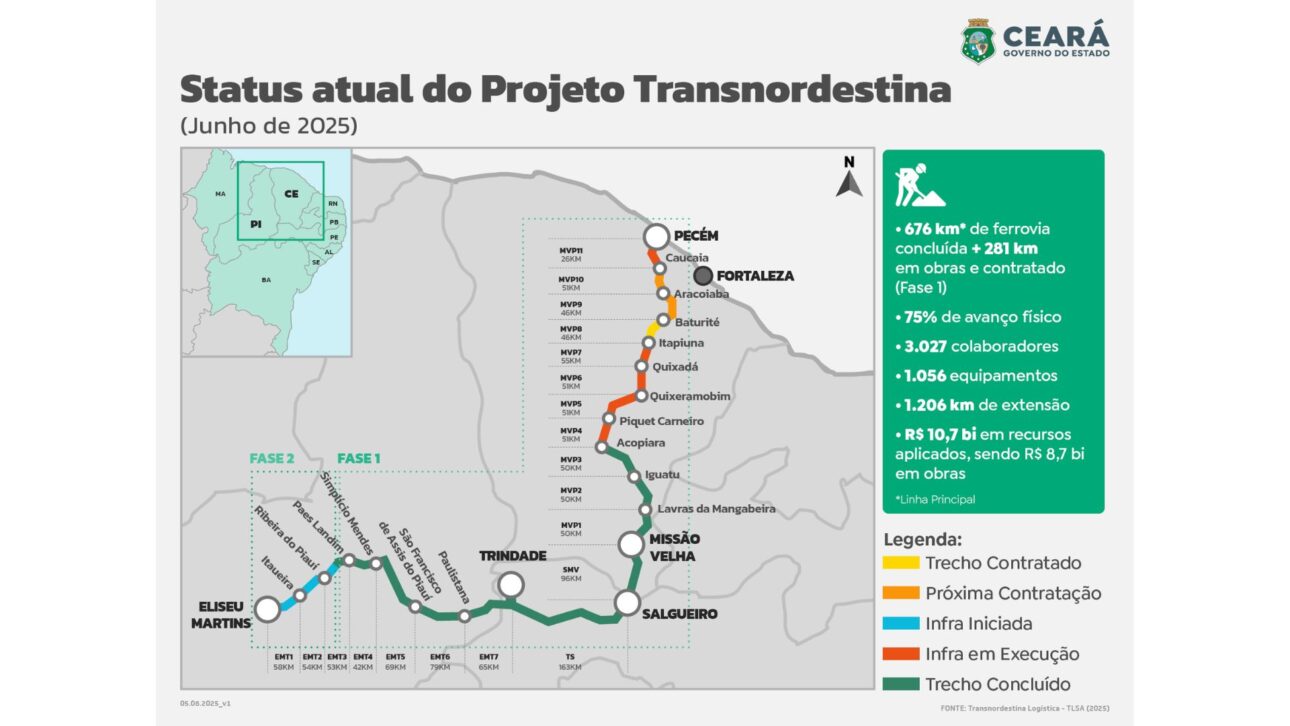
Today, machines are working on various segments, and the project employs over four thousand people.
According to EngeZone, the railway utilizes continuous welding technology, which reduces wear and increases the durability of the track.
This will allow for the transport of up to 30 million tons per year, a volume compatible with the agricultural production of Matopiba — the region that includes Maranhão, Tocantins, Piauí, and Bahia.
The standard gauge of 1.6 meters, another technical differential, ensures stability for heavy loads and facilitates future integrations with other railways.
Among the segments under construction, the following stand out:
- The segment of 46 km between Quixadá and Baturité, in Ceará, which receives R$ 1 billion from the Northeast Development Fund.
- The segment of 26 km that connects the municipality of Caucaia to Porto do Pecém, considered strategic for completing the connection with the port terminal.
Economic and Social Impacts
The federal government announced, in 2025, an additional investment of R$ 1.4 billion to accelerate the partial delivery of the railway still this year.
The total budget has already surpassed R$ 15 billion, of which more than R$ 4 billion was contracted after restructuring.
As highlighted by the EngeZone channel, the expectation is to reduce the transportation time for agricultural production by up to 40% and decrease freight costs by over 30%.
In addition to grains such as soy and corn, the railway will transport fuels, cement, and limestone.
The benefits also include less dependence on road transport, reduction of heavy traffic on roads, and a decrease in carbon emissions.
The creation of intermodal terminals along the line has the potential to attract new investments and transform the economy of municipalities that were previously outside the major logistics corridors.

Next Steps for Transnordestina
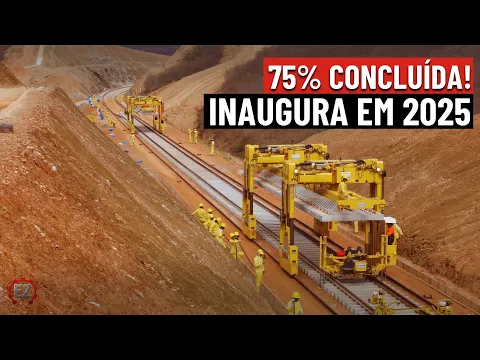
Still in 2025, the section between Bela Vista (PI) and Iguatu (CE) should enter experimental operation, transporting grains on a commissioned basis.
The forecast is that the entire Phase 1, with 1,040 km, will be completed by the end of 2027.
According to EngeZone, the government has also already mandated new studies to evaluate the future concession of the Salgueiro–Suape section.
Another proposal under analysis is the construction of a branch line to Porto Franco (MA), which would allow a connection with the Northern-Southern Railway.
After nearly twenty years of delays and uncertainties, Transnordestina is once again seen as a key piece to transform the Northeast into an exporting hub.
But the question remains: will this time the railway manage to maintain its pace until the end and establish itself as a vector for regional development?