Portuguese
  Spanish


The federal government approved a new allocation of resources for the Transnordestina and announced a new completion date for the 1,753-kilometer railway that cuts through the hinterlands of Piauí and Ceará towards the ports of Pecém and Suape — the same railway that was initially expected to be ready in 2010, then in 2014, then in 2020, and now has a new date that history teaches us to treat with cautious skepticism and real hope at the same time.
What the Transnordestina is and what it could change
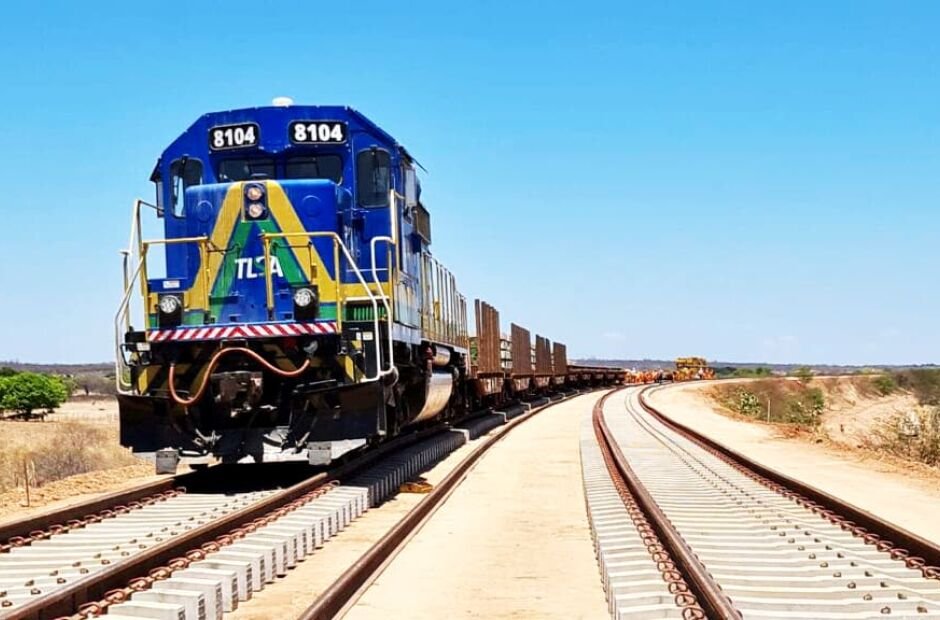
The Transnordestina is not just any railway. It is the missing link to economically enable one of Brazil’s largest yet unexplored agricultural frontiers: the MATOPIBA — the cerrado of Maranhão, Tocantins, Piauí, and Bahia — which has the potential for soybean, corn, and cotton production comparable to Mato Grosso twenty years ago.
Today, the soy produced in the southwest of Piauí — in cities like Uruçuí, Bom Jesus, and Baixa Grande do Ribeiro — travels about 1,800 kilometers by truck to reach the Port of Santos in São Paulo. The Transnordestina would shorten this route to less than 500 kilometers by rail to Pecém, in Ceará.
The cost difference per ton is brutal: road transport in the Northeast costs between R$ 150 and R$ 200 per ton for distances of this magnitude. Railway costs between R$ 30 and R$ 50 per ton. For the agribusiness in Piauí, which competes with Mato Grosso in the international market with severe logistical disadvantage, the railway is not a luxury — it is the difference between long-term economic viability and inviability.
-
Saudi Arabia’s $500 Billion Desert Ski Resort Project Canceled — What’s Left Tells a Bigger Story

-
Street Vendor Builds Her Own 15m² House in Kenya Using Mushroom Root Panels, Spending Only $208 on Walls Compared to $1,000 for Traditional Bricks

-
At 42, She Left Greater Buenos Aires for a Mountain, Built a 30m² Hexagonal House with Adobe and Straw, and Now Constructs Homes for Other Families
-
Couple Transforms 1920s UK Cinema into Garden with 4-Meter Window After $450,000 Renovation


What has changed this time
The history of the Transnordestina is a series of announcements, reschedulings, and stoppages that has become a reference in the Brazilian debate on large projects. The concession was given to Transnordestina Logística S.A. — TLSA, controlled by the CSN group — in 2006. The original deadline was 2010. Twenty years later, about 30% of the railway is built, distributed in disconnected sections that do not yet form a complete route.
The new allocation from BNDES and the federal government, via a revised concession contract, brings some changes that previous follow-ups did not have: a performance guarantee mechanism by section — TLSA receives the resources as it delivers certified kilometers, not before; phased completion deadlines with contractual penalties for delays; and participation of the TCU infrastructure fund as an independent auditor.
If these mechanisms are respected, the new governance is significantly more robust than any previous version of the contract. The “if” is big — but it is different from previous versions where the money came out before the work arrived.
The bottleneck the railway will solve — and what it won’t
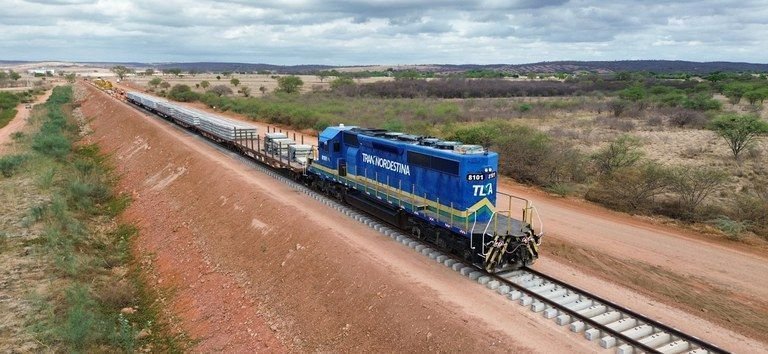
The Transnordestina ends at the ports of Pecém and Suape. Pecém, in Ceará, already operates as a bulk port with berths for Panamax ships. Suape, in Pernambuco, has less bulk capacity but is expanding. To absorb the grain demand that the railway will generate, both ports will need investments in storage capacity and ship loading speed.
This is the next link in the logistics chain that no one discusses when talking about the Transnordestina: the port has to be ready when the rail arrives. There is no point in having a functioning railway if the port will bottleneck the grains due to lack of quay capacity.
The good news is that the private sector is already investing: Hidrovias do Brasil and Tegma are expanding facilities in Pecém, and a group of Piauí agricultural cooperatives has formalized pre-lease agreements for warehouses at the port as soon as the railway is certified.
Why the Transnordestina matters for Brazil in the global grain market
China will import between 80 and 90 million tons of soybeans per year by 2030, according to USDA projections. The competition between Brazil, the USA, and Argentina for the Asian market will largely be decided by who can deliver cheaper, faster, and more regularly. Brazil has the soil, the climate, and the agronomic technology. What is missing is logistics — and the Transnordestina is a central piece of this equation.
I confess that each new announcement about the Transnordestina leaves me in an uncomfortable position: I want to believe, because the railway makes all economic sense, but the history demands skepticism. This time there are parts of the contract that are better. It remains to be seen if the execution will follow the paper.
Read also: the giant waterway that Brazil bets on to transport soy by barge | the missing rail while the world has already connected continents.
Do you think the Transnordestina will really be completed in this new round, or will it go to the fifth rescheduling? Comment here what you think about major infrastructure projects in Brazil.