






 Portuguese
  Spanish


Researchers Identify New Species of Fish in the Xingu, Imparfinis arceae, With Significant Morphological and Genetic Difference.
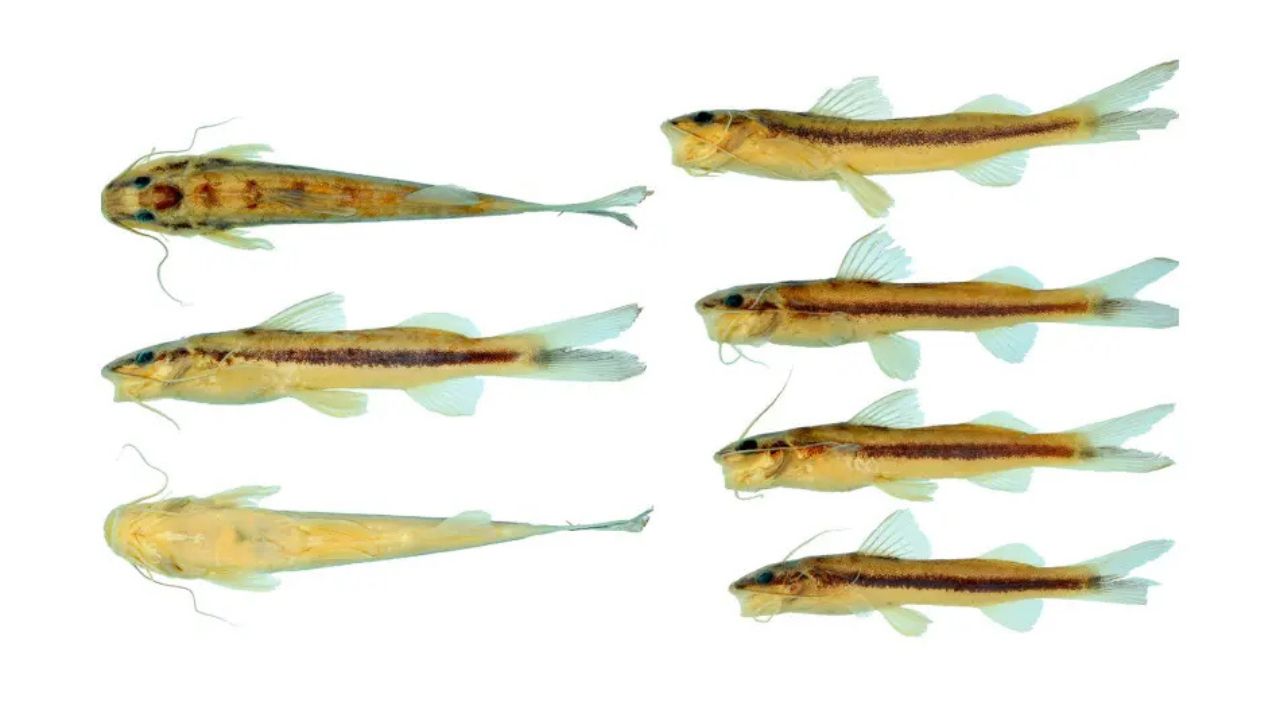
A group from the Institute of Biosciences of Botucatu at Unesp discovered a new species of fish in the Xingu River named Imparfinis arceae, in a study published on September 14, 2025. The work involved genetic and morphological analysis of the specimens and was supported by FAPESP.
The discovery occurred because a black lateral stripe on the bodies of the fish caught attention, indicating something different from what was previously known.
-
U.S. National Park Deploys Robotic Birds Near Wyoming Airport to Protect Endangered Species: Dancing and Sound-Emitting Replicas Aim to Lure Real Birds to a 100-Acre Restored Area Away from Runways After 32 Aircraft-Related Deaths

-
Russia and India Lift 320-Ton Pressure Vessel into Kudankulam Nuclear Plant Reactor, Advancing Project That Has Already Prevented 112 Million Tons of CO2 Emissions

-
Brazilian Student Wins Global Science Fair in the U.S. with Sound Wave Method to Alter Alzheimer’s-Linked Genes
-
Bosch Unveils Revolutionary 2.3 kg Hub Motor for E-Bikes with 45 Nm Torque and 400 Watts Power, Eliminating Resistance Above 25 km/h in Historic Shift for German Manufacturer


Morphological Characteristics Confirming New Species
The researchers examined 20 individuals of Imparfinis arceae, collecting data such as coloration, number of vertebrae, eye size, head length, etc.
Comparing it with Imparfinis hasemani, they noted: the specimens of the new species have 39 vertebrae, smaller eyes, and proportionally larger heads.
The black lateral stripe is wider in the new fish than in I. hasemani. These morphological differences were decisive for separating it.
Genetics Reinforces Distinction of the New Species
In addition to morphology, the scientists conducted sequencing of DNA fragments, part of integrative taxonomy — which combines physical (morphological) and molecular data to classify organisms.
It was found that there is more than 6% genetic divergence between Imparfinis arceae and other species of the genus Imparfinis, which confirmed that it is a distinct species.
Importance of the Discovery in the Xingu
The Xingu River is a region of high biodiversity, focused on many studies of aquatic fauna. Discovering a new species of fish there reinforces the need for conservation of the Amazonian watersheds.
Furthermore, it changes the landscape of the genus Imparfinis by including characteristics that had not been documented before, contributing to understanding evolution and local adaptation.
Process and Context of the Research
The study was published in the journal Ichthyology & Herpetology. It was supported by FAPESP and led by Gabriel de Souza da Costa e Silva from IB-Unesp.
The researchers emphasize that identifying new species requires attention to external visual cues — such as different coloration patterns — followed by physical measurements and genetic analyses to confirm that it is not merely variation within an already known species.
Consequences for Science and Conservation
The discovery of Imparfinis arceae reinforces that there is still undescribed biodiversity in the Xingu, which may influence environmental preservation policies.
It may also impact future studies on the ecology, behavior of local fish, and potential effects of environmental changes or human interventions in the river.
The new species of fish in the Xingu, Imparfinis arceae, shows that the combination of morphology and genetics is powerful in revealing new and differentiated life.
The study led by Unesp, with support from FAPESP, expands our understanding of Amazonian biodiversity.
Source: Compre Rural


-

1 person reacted to this.