Portuguese
  Spanish


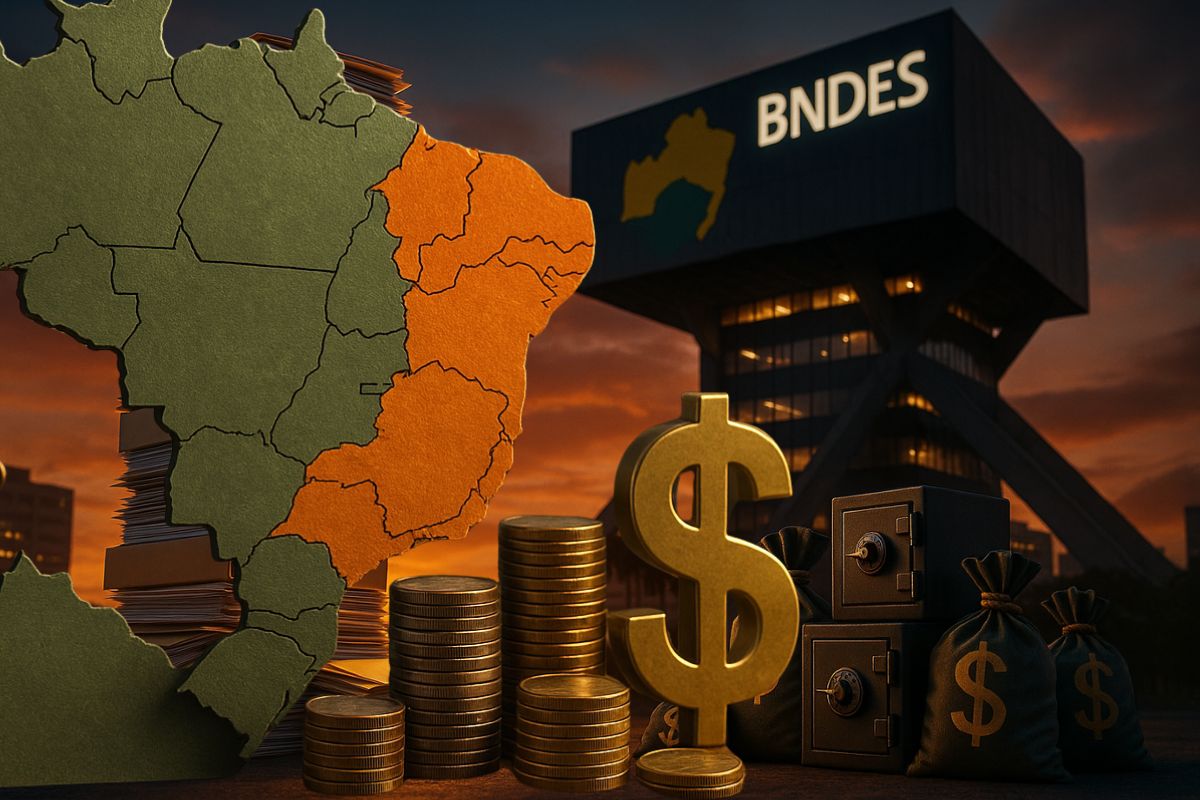


The Nova Indústria Brasil Program Received R$ 127.8 Billion in Proposals in the Northeast, but Only R$ 10 Billion in Credit Was Available, Which May Leave Projects Without Funding.
The Nova Indústria Brasil revealed the strength of demand from the productive sector and, at the same time, the fragility of public financing capacity. According to the movimentoeconomico portal, BNDES received R$ 127.8 billion in proposals from northeastern companies, almost 13 times more than the R$ 10 billion offered in this call. The result raised the alarm: many innovation, energy transition, and sustainable development projects may be left without credit, delaying the country’s reindustrialization.
BNDES President Aloizio Mercadante stated that the selection will be stringent and that consistent projects will be prioritized, even if there is a need to increase the initially planned amount.
According to specialists, the excess demand shows both the potential of the region and the challenge of making long-term industrial policies feasible.
-
Northern Brazilian ports surpass the South as the country’s largest grain corridor amid record harvest

-
Amazon launches its own brand in Brazil a week before Prime Day, following a $3.7 billion investment and the establishment of over 300 distribution centers nationwide by 2025.

-
Trump’s 50% Tariff on Brazilian Goods Cuts U.S. Exports by 30%, Brazil Sets Records in 42 Countries and Germany Becomes Top Coffee Buyer
-
Brazil Harvests Record 358 Million Tons of Grain but Lacks Storage for 134 Million Tons


What Is Nova Indústria Brasil
Launched in May, the Nova Indústria Brasil is a national policy focused on technological innovation, reindustrialization, and sustainability. The Northeast call was the largest ever made, bringing together BNDES, Banco do Brasil, Caixa Econômica Federal, Banco do Nordeste, and Finep, with technical support from Sudene and the Consórcio Nordeste.
According to movimentoeconomico, the goal is to consolidate the region as a new frontier for industrial investments, increasing competitiveness and reducing historical inequalities.
The governor of Piauí and president of the Consórcio Nordeste, Rafael Fonteles, emphasized that the significant demand reinforces the need to expand access to productive credit.
Sectors That Most Demanded Credit
There were 246 proposals registered in the nine northeastern states, distributed across five strategic areas: green hydrogen (R$ 54.3 billion), automotive and agricultural machinery sectors (R$ 25.2 billion), green data centers (R$ 16.9 billion), energy transition (R$ 15.3 billion), and bioeconomy for pharmaceuticals (R$ 5.4 billion).
The highlight was green hydrogen, which accounted for nearly half of the total requested amount. In addition, 88% of the projects came from small and medium-sized enterprises, 73% had the participation of science and technology institutions, and about 30% were structured in consortia.
This shows that interest is not restricted to large industries, but spreads across different scales of the productive sector.
The Competition for Limited Resources
Despite the significant volume of proposals, only R$ 10 billion is available in this phase of the Nova Indústria Brasil. This difference in proportion raises questions about how many projects will actually materialize.
The president of Finep, Luiz Antonio Elias, classified the call as a milestone for public policies but admitted that it will be necessary to seek alternative financing to avoid disappointing companies and local governments.
According to analysts, the credit gap may cause delays in strategic areas for the economy, such as renewable energies and the pharmaceutical industry.
The risk is that innovative projects may falter, even in the face of clear demand from the productive sector.
The Impact on the Northeast and the Country
For movimentoeconomico, the Nova Indústria Brasil placed the Northeast at the center of the debate about the country’s industrial future. The region attracted attention not only for the volume of proposals but also for the diversity of sectors involved.
This reinforces the idea that Brazil needs consistent industrial policies, with predictable and scalable financing.
The overload of projects compared to the available credit shows that demand for modernization is greater than the current capacity for financial support.
If resources are not expanded, the risk is of losing global competitiveness and wasting opportunities in strategic sectors.
The Nova Indústria Brasil showed that the appetite for investments is enormous, but it also exposed the limits of the available credit policy.
On one hand, there are companies ready to innovate; on the other, the lack of resources threatens to shelve fundamental ideas for the country’s reindustrialization.
Do you believe the government should increase the resources for Nova Indústria Brasil to meet this historical demand? Or do you think that the rigorous selection of projects is the right path?
Leave your opinion in the comments, your perspective is essential for this debate.