Portuguese
  Spanish




Project Creates the National Education System, Integrates School Data Across the Country, and Defines Minimum Investment Per Student with New Governance Committees to Monitor Goals and the Quality of Public Education.
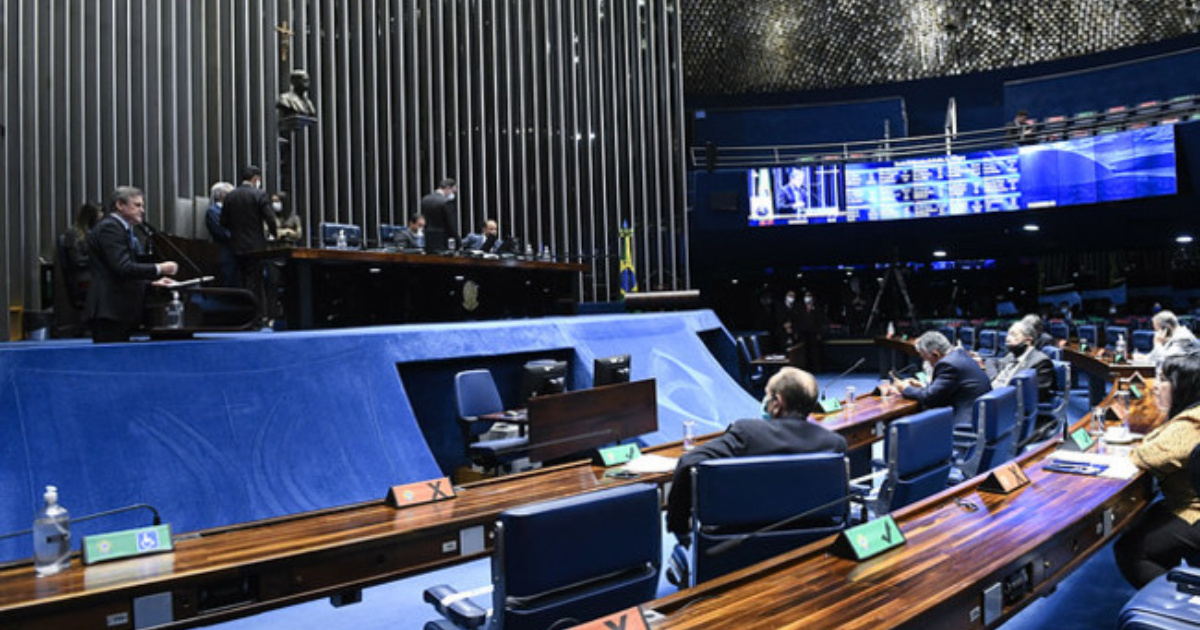
The Senate approved, on Tuesday (7), the project that creates the National Education System (SNE), nicknamed the “Unified Health System of Education”.
The proposal passed with 70 votes in favor and one abstention and will now go for the signature of President Luiz Inácio Lula da Silva.
The text had already been reviewed by senators in 2022 and returned after changes approved by the Chamber of Deputies in September.
-
Brazil to Issue “Panda Bonds” in China, Aiming to Raise Up to 5 Billion Yuan at Lower Interest Rates Than Dollar Debt
-
NATO Faces Internal Tensions as U.S. Pushes for Increased Defense Spending, Targeting 5% of GDP by 2035, with Warnings for Countries Near 2% Level

-
Brazil to Introduce B16 Diesel with Increased Soybean Oil Content for Trucks by 2026
-
Brazil’s July Bolsa Família Payments May Include Extra $150 and $50 for Families with Children, Pregnant Women, and Updated CadÚnico Registration


What Changes with the National Education System
The initiative establishes cooperation norms among the Union, states, Federal District, and municipalities to organize educational policies in a coordinated manner.
Among the objectives are eradicate illiteracy, equalize educational opportunities, appreciate education professionals, and ensure quality standards in all stages of basic education.
These principles guide goals and shared responsibilities among the federative entities.

Governance and Creation of Cite and Cibes
For federative coordination, the project creates the Tripartite Intergovernmental Commission on Education (Cite), a national body that brings together managers from the three levels of government.
The Cite will be presided over by the Minister of Education and composed of six representatives from the Union, six from state secretariats, and six from municipal secretariats, with mandatory regional representation.
At the subnational level, the Bipartite Intergovernmental Commissions of Education (Cibes) are established to coordinate states and municipalities.
The Chamber altered the original design approved in the Senate in 2022 to reduce the centralizing character of decisions at the tripartite level, following criticism about the potential loss of autonomy for states and municipalities.
With the 2025 version, the agreements become advisory for the networks, with exceptions: the definition of the minimum quality standard and the adoption of the Quality Student Cost (CAQ) must be observed in a binding manner, through Cite resolutions.
Quality Student Cost Defines Minimum Investment Value
The Quality Student Cost (CAQ) will be the reference for the minimum amount to be invested per student in public basic education.
The calculation will consider essential inputs — such as suitable infrastructure, educational materials, school hours, student-teacher ratio, teacher training, and career with a salary floor — and will be adjusted to regional realities.
The methodology must follow parameters agreed upon in the Cite, based on technical studies from Inep, and will be formalized in commission resolutions.
Integrated Data Base and Unique Student Identifier
The text also creates the National Education Data Infrastructure (INDE), an integrated base under the coordination of the Ministry of Education, to interoperate, share, and protect educational data from all networks.
Associated with this architecture comes the National Unique Student Identifier, a record linked to the CPF that will concentrate the academic history from preschool, even in the case of changing schools, networks, or cities.
The management and supervision of INDE will be the responsibility of the MEC, respecting the General Data Protection Law (LGPD).
Goals and Monitoring of Educational Policies
With the new governance, the Cite and the Cibes will coordinate strategies for the goals of the National Education Plan, define minimum quality standards, and monitor the execution of policies.
The project confirms the existence of instances of monitoring and social control, with consultative, propositional, and oversight functions, reinforcing transparency channels and society’s oversight over the results and use of resources.
Procedure and Reports of the Project
The proposal is proceeding as PLP 235/2019, authored by Senator Flávio Arns.
After the Chamber’s revision on September 3, under the report of Deputy Rafael Brito (MDB-AL), the text returned to the Senate.
The final stage was reported by Senator Professor Dorinha Seabra (União-TO), who resumed the vote on October 7.
“Just like we have the SUS, which organizes the health agenda, the SNE will organize basic education. With this text, we take a significant step forward for the advancement of Brazilian education,” said Dorinha while advocating for approval.
Next Steps After the Approval
With the presidential sanction, the federal government must establish the Cite, publish its first resolutions, and begin negotiations with states and municipalities.
The regulation of the CAQ and the implementation of the INDE are central steps to enable the minimum investment per student, data integration, and goal monitoring.
The expectation is that the CAQ methodology, agreed upon in the Cite based on Inep studies, directs the redistribution of resources and the prioritization of infrastructure, training, and professional appreciation within the networks, observing regional specificities.
Why the Project is Called the “SUS of Education”
The analogy to the SUS indicates national coordination with decentralized execution, as well as common rules and quality standards agreed upon.
The comparison, used by parliamentarians and in the report itself, underscores the intention to universalize educational rights and equalize conditions of provision across the territory, preserving the autonomy of federative entities.
At the same time, it reinforces the role of the MEC in defining operational norms and in data management to guide policies based on evidence.
While the text awaits sanction, education networks and managers are already discussing how to adapt calendars, planning processes, and infrastructure to meet the minimum standards and feed into the new data base.