






 Portuguese
  Spanish
  4 min of reading
  2 comments


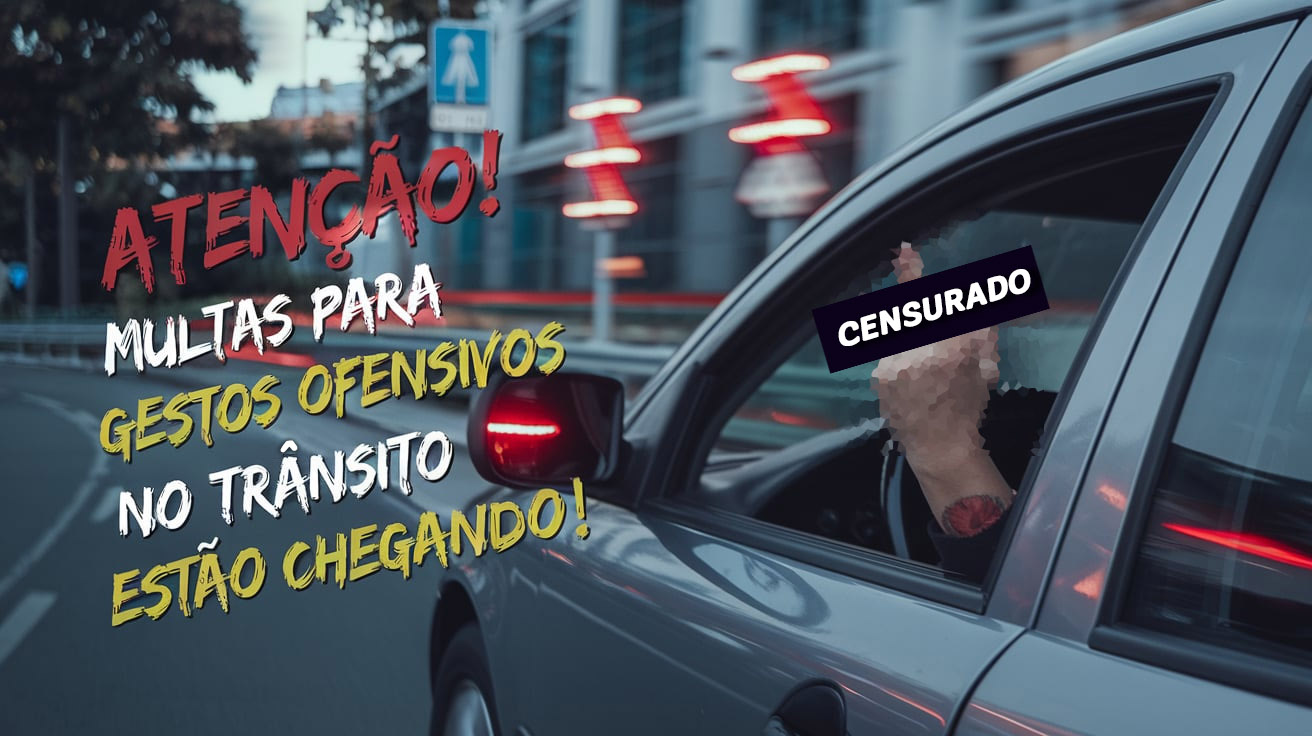


An Impulsive Gesture in Traffic Can Be Expensive! Bill 3575/21 Proposes Fines and Points on the Driver’s License for Those Who Make Obscene Gestures While Driving. Find Out How This Measure Can Transform Brazilian Traffic, Reducing Conflicts and Promoting More Safety on the Streets.
Have you ever stopped to think that a simple impulsive gesture can cost you a lot in the traffic?
Actions such as insults or obscene gestures not only increase the risk of accidents but can now directly impact your wallet and your driver’s license.
A new legislative proposal is stirring discussions by including such behavior in the list of traffic violations under Brazilian law.
-
Coal mine purchased for $2 million in Wyoming, the Brook Mine holds rare earth elements and critical minerals estimated at up to $37 billion, in an asset that the US is competing for with China.

-
In the year Brazil won the World Cup, gasoline cost R$ 1.77, the cheapest car was worth R$ 13,000, there were no flex-fuel cars, SUVs were rare, and no Chinese brand sold a single vehicle in the country.
-
New Honda HooRide 125 scooter debuts in China with ADV styling, 17-inch wheels, TFT panel, Smart Key, and fuel consumption of up to 47.17 km/l, aiming to resemble an urban X-ADV with a 125 engine, CVT transmission, and an economical proposal for cities.

-
Volkswagen focuses on ethanol and tests a Saveiro 100% alcohol-powered with a recalibrated engine; the project may ensure tax reduction, targets corporate fleets, and revives technology that lost ground since the arrival of flex-fuel vehicles in 2003.


Fines and Points on the Driver’s License: What Does the Bill Say?
The Transportation and Traffic Commission of the Chamber of Deputies has taken an important step to reinforce respect on Brazilian roads.
The Bill 3575/21, presented by former deputy Carlos Bezerra (MT) and reported by deputy Diego Andrade (PSD-MG), proposes a fine of R$ 88.38 and three points on the driver’s license for drivers who make obscene or insulting gestures while driving.
The bill aims to amend the Brazilian Traffic Code (CTB), including this type of behavior among minor infractions.
The main justification is to reduce conflicts in traffic, promoting a more peaceful and safe coexistence between drivers and pedestrians.
According to the reporter, Diego Andrade, the measure is necessary because offensive gestures often trigger risky situations.
He emphasized: “The exchange of insults, obscene gestures, and other types of hostility can generate impulsive reactions and even physical conflicts between drivers, leading to reckless behaviors such as risky maneuvers and chases.”
A Cultural Problem in Brazilian Traffic
Traffic in Brazil is known for its hostility, and statistics on violence on the roads reinforce this perception.
Conflicts that begin with simple gestures or words can escalate quickly, resulting in serious accidents or even physical aggression.
This culture of disrespect is, unfortunately, one of the factors that most compromises safety on the streets.
The proposal to punish obscene gestures seeks to tackle this root problem, educating drivers and pedestrians about the importance of mutual respect.
Furthermore, by associating financial and administrative penalties with these behaviors, it is hoped that the measure will discourage impulsive actions in traffic.
How Will the Application of the Law Work?
If Bill 3575/21 is approved, drivers caught making obscene or insulting gestures may be fined by traffic authorities.
The infraction will be considered minor, with a fine of R$ 88.38, an amount that, although low, serves as an initial warning.
Additionally, the offender will have three points recorded on their driver’s license, which can negatively impact drivers who already accumulate other penalties.
It is important to remember that, in Brazil, the points limit is 40 before the license is suspended.
International Overview: What Can We Learn?
While Brazil begins to discuss punishment for offensive gestures, other countries already have strict legislation in this regard.
In Germany, for example, drivers can pay fines exceeding 1,000 euros for gestures considered offensive, such as showing the middle finger.
In the United States, some jurisdictions also classify these acts as disorderly conduct, which can lead to arrest in more severe cases.
These initiatives show that the concern for respect in traffic is global, and penalties seek to protect the integrity of all involved.
Legislative Progress: What Is Missing to Become Law?
Although it has been approved by the Transportation and Traffic Commission, the bill still needs to go through other stages before being sanctioned.
The next step will be the analysis by the Constitution, Justice and Citizenship Commission (CCJ).
If approved by the CCJ, the bill will proceed to a vote in the Chamber of Deputies and, subsequently, in the Federal Senate.
Since it is processed conclusively, the text can be approved directly by the committees, without the need to go through the Plenary, unless there is a contrary objection.
Reflection: The Importance of Changing Habits
Traffic is a reflection of society. Offensive gestures are not just a matter of etiquette but of safety and responsibility.
Small actions, such as avoiding insults and respecting other drivers, can make a difference in preventing accidents and promoting a more civilized traffic.
Education, in this context, plays a crucial role.
Although penalties are important, educational campaigns can reinforce the message that respect is fundamental for everyone’s safety.
After all, the change in traffic begins with the change in behavior of each one of us.
The proposal to fine drivers who make obscene gestures in traffic sends a clear message: respect must prevail on public roads.
In addition to reducing violence, the measure can help transform traffic into a safer and more harmonious environment.
And you, do you believe that simply applying fines will be enough to change drivers’ behavior, or do you think broader actions, such as awareness campaigns, are necessary?


Não é lei! É um Projeto de Lei, logo tem que ser aprovado o Congresso Nacional e sancionada pelo Presidente da República e publicada em DOU. Sugiro deixar isso claro no título, evita criar alarde nos condutores!
Não adianta multar isso não vai mudar nada, o povo brasileiro é mau educado