






 Portuguese
  Spanish




Labor Reform Approved in Greece Allows Workdays of Up to 13 Hours in Exceptional Cases, Amid Strong Reaction from Unions and Opposition, Who Denounce a Backslide in Rights and Warn of Impacts on Labor Relations.
The Greek Parliament approved, on October 16, 2025, a labor reform that authorizes workdays of up to 13 hours in situations classified as exceptional.
The government claims that the extension is optional, restricted to the private sector, and limited to 37 days per year per worker.
The measure has faced strong rejection from unions and opposition parties, who see a risk of regression in historical employment guarantees.
-
Australia Dumps Hundreds of Thousands of Tons of Gravel into Rivers to Restore Natural Barriers and Reverse 150 Years of Erosion

-
Bird-Inspired Robot Glides on Air Currents up to 10 m/s, Balances Itself, and Aims to Save Energy in Industrial Inspections and Meteorological Balloons
-
Eight Artists Secretly Lived in a Hidden 70m² Apartment Inside a Shopping Mall in Brazil for Four Years
-
Artist Lives in Giant Wooden Egg Over a UK River to Observe Tides and Environmental Changes




How the Extended Work Rule Works
Under the new guidelines, employers may request longer days from employees with a single job, as those with multiple jobs in the country could already accumulate more hours.
The Executive argues that the authorization does not change the eight-hour foundation and that the extension depends on employee agreement.
Cabinet members also defend that the mechanism seeks to formalize seasonal practices, especially during peak demand periods.
Even so, labor unions contest the claim of voluntariness.
Leaders state that, in practice, workers who refuse the extended hours worry about facing retaliation or dismissal, a point disputed by the government, which promises to ensure protection against layoffs for refusing overtime.
Reaction in the Streets and in the Plenary
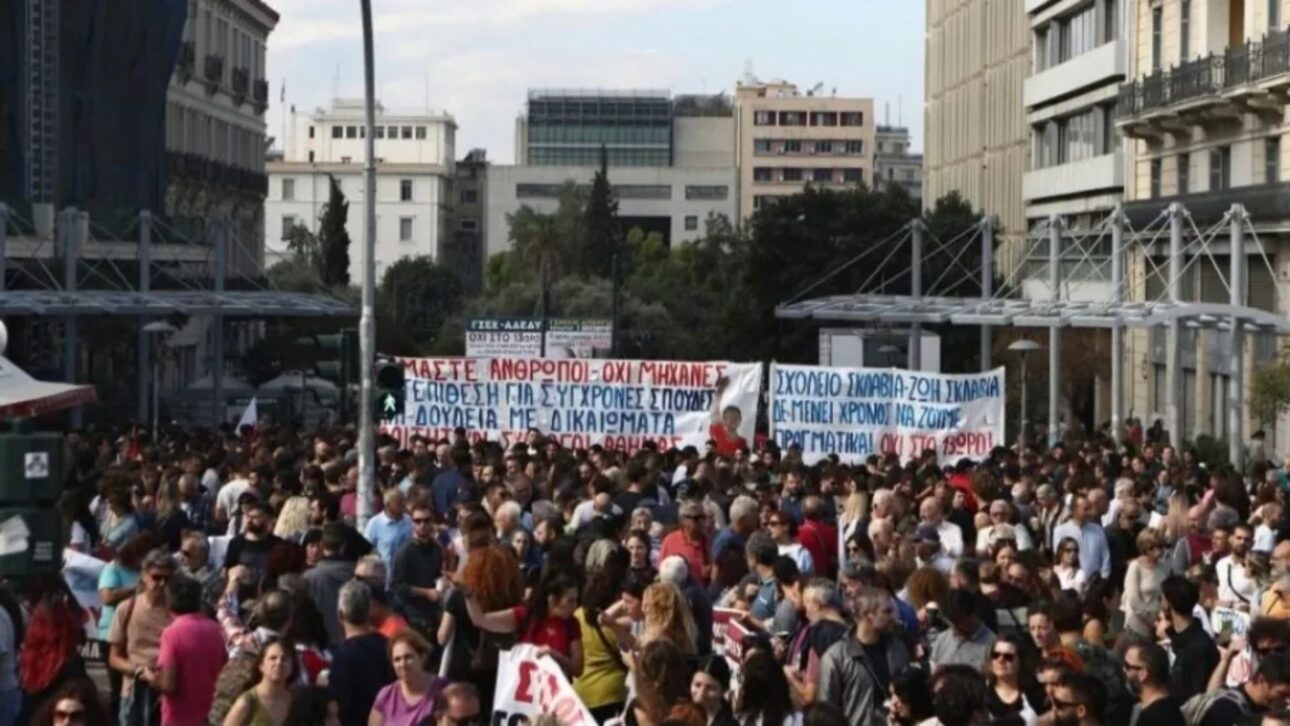
The vote was preceded by two general strikes that month, with disruptions in transportation and public services.
Thousands of people filled the streets of Athens and other cities carrying signs that linked the proposal to a return to standards before the social gains of the 20th century.
In speeches in Parliament, opposition leaders intensified their rhetoric.
Syriza boycotted the deliberation and maintained the criticism that it is a “measure worthy of the Middle Ages.”
The party’s spokesperson, Christos Giannoulis, labeled the text as a “legislative monstrosity,” emphasizing that the daily extension “erodes the right to rest and distorts the balance of power between capital and labor.”
The governing party responded that the rule offers flexibility and legal tools to curb abuses that would currently occur in informality.
What Changes for Companies and Workers
In the government narrative, the reform creates room for productive rearrangements during activity peaks and, at the same time, opens space for experiments with a four-day workweek in certain sectors, provided accompanied by compensations.
It also provides for adjustments in short-term hiring and in the fragmentation of vacations, in addition to digital tools for work hour control.
Business entities assess that legal predictability for additional hours may reduce litigation costs and support sectors with pronounced seasonality, such as tourism and services.
On the other hand, labor confederations warn of pressures on mental health, accidents, and the reconciliation of professional and family life, especially in categories with less bargaining power.
Context: Greece Works More Than the European Average
The discussion occurs in a labor market that has historically amassed work hours above the European Union standard.
Recent data shows that, in 2024, Greece recorded an average of 39.8 weekly hours, compared to 36.0 hours in the bloc’s countries.
Experts remind that, despite recovery after the financial crisis, wages remain compressed, pushing part of the population toward prolonged or multiple occupations.
Last year, the country had already authorized, in specific cases, a sixth workday for companies with continuous operation or proven overload, with additional pay.
Unions state that the combination of rules increases the risk of normalizing longer weeks, even though the government emphasizes the exceptional nature and necessity of worker agreement.
Opposition Speaks of Regression; Government Promises Safeguards
Critics argue that the extension to 13 daily hours lowers the meaning of the eight-hour limit, a cornerstone of labor protection.
Opposition considers that the asymmetry between employee and employer undermines any notion of voluntariness, especially in scenarios of high regional unemployment or precarious ties.
The government counters that the law bans dismissals motivated by refusal of extended hours and that labor audits will be intensified.
It also states that the rule does not alter due supplements, mandatory breaks, or rights already established in collective agreements.
Nonetheless, unionists call for detailed regulations, active oversight, and clarity in the criteria defining “exceptional circumstances.”
Next Steps and Application Gaps
The implementation will require complementary norms to regulate how to prove exceptionality, how employee agreement will be collected, and which digital records will be accepted as evidence.
Legal experts consulted by sector entities raise doubts about the compatibility of the new daily ceiling with European limits on rest between shifts and with the overtime allowed by law.
Meanwhile, mobilization is expected to continue.
Labor unions plan new assemblies and legal actions to contest specific sections, especially those that may, in practice, open loopholes for indirect pressure.
In response, the Ministry of Labor signals that any abuses will be punished and that the experience will be monitored throughout the next seasonal cycle.
What Is at Stake
At the heart of the clash is the definition of what is “exceptional” and the degree of actual consent power of the worker.
Supporters of the law see modernization, the formalization of peaks, and the possibility of more flexible arrangements, including alternative distributions of days.
Opponents see a shift of risk to the workforce, in a country already pressured by long hours and relatively low wages.
The debate, therefore, transcends the accounting of hours: it touches on development models, productivity, social protection, and demographics.
In a scenario where European countries are testing shorter weeks, Greece’s bet on longer days raises a question that will continue to resonate in factories, offices, and streets: what balance will Greek society accept between economic flexibility and labor rights?


