






 Portuguese
  Spanish


Construction of the New Bridge Between Tocantins and Maranhão Advances After the Tragedy in 2024, Revealing Surprising Details About Modern Engineering, Millions Invested, Environmental Impact, and Permanent Changes in the Oversight of Public Structures Across the Country.
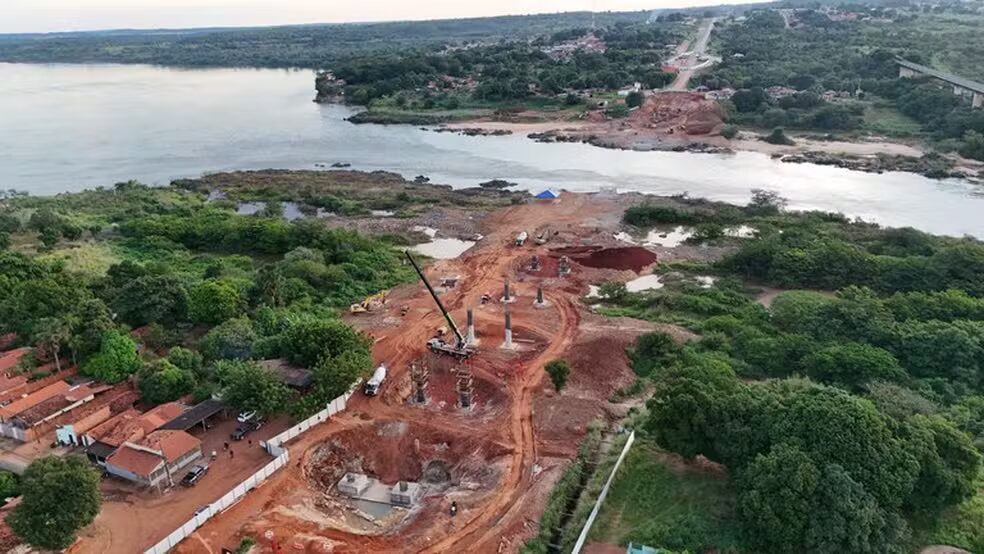
The construction of the new bridge that will connect the states of Tocantins and Maranhão, replacing the structure that collapsed in late 2024, has already reached 20% physical execution, as reported by the National Department of Transport Infrastructure (Dnit).
The construction, estimated at over R$ 170 million, is being built over the Tocantins River, on BR-226, between the municipalities of Aguiarnópolis (TO) and Estreito (MA).
The official forecast is that the work will be completed by December 2025.
-
Brazilian Retail Giant Americanas Faces $10 Billion Asset Freeze Amid Investigation into Hidden Debts

-
Does Your State Rank Highest? Brazil’s IBGE Reveals Salary Rankings and Worker Disparities

-
World’s Largest Women’s Coffee Collective Emerges in Southern Brazil with 2,179 Female Farmers, Generating $21.7 Million in Four Years, Led by a 103-Year-Old Farmer Ambassador

-
How Recycling is Becoming a Billion-Dollar Industry and Boosting the Circular Economy in Brazil


The new crossing was designed after the collapse of the old Juscelino Kubitschek de Oliveira Bridge, which gave way in December of last year, resulting in 17 casualties, including dead and missing individuals.
The tragic episode mobilized local authorities and the Federal Government, which authorized emergency funds for the construction of a modern and secure structure at the same location.
Structure Will Be 630 Meters Long and Will Include Modern Features
According to Dnit, the new bridge will be 630 meters long, which is 100 meters longer than the previous one.
In addition, it will feature a clear span of 154 meters — an element that facilitates river navigation and improves structural safety.
The construction includes two traffic lanes of 3.6 meters each, two shoulders of three meters, safety barriers, sidewalks for pedestrians, and guardrails on both sides of the deck.
The expectation is that, in the end, heavy and light vehicle traffic will safely resume between the North and Northeast regions of the country.
To ensure greater agility in the process, construction is being carried out using precast technology.
A total of 2,088 precast slabs and 45 precast beams will be installed, elements that optimize time and reduce the environmental impact of the construction.

Progress of the Construction: Foundations and Pillars Already Underway
So far, 16 of the 26 planned foundations have been completed, in addition to 12 of the 26 planned pillars.
According to Dnit, another six columns and one foundation are currently under construction.
The expectation is that this first structural phase will be completed by the end of June 2025.
The second phase of the construction awaits approval and will include the assembly of cross beams and superstructure, in addition to the foundations and pillars that are part of the cantilever section — a technique used in constructions that need to span large distances without directly supporting the ground.
The use of this construction methodology allows for greater stability and is suitable for long-span bridges like the one being built.
Tragedy of 2024 Exposed Failures in the Old Structure
The old bridge collapsed on December 22, 2024, around 2:50 PM, while vehicles were normally crossing the roadway.
The collapse was recorded by a city councilor from Aguiarnópolis, who had been denouncing the precarious conditions of the structure.
The video circulated on social media and caused a nationwide outcry.
At the time of the tragedy, two pick-up trucks, one passenger car, three motorcycles, and four trucks were crossing the bridge.
Three of those trucks were transporting hazardous substances, such as sulfuric acid and pesticides.
The fall caused an environmental and human disaster: 14 people died, three are missing, and only one survived.
The national outcry led the Federal Government to intervene quickly, releasing emergency funds and authorizing the total demolition of the remnants of the previous structure.
Controlled Demolition Marked the Beginning of the New Project
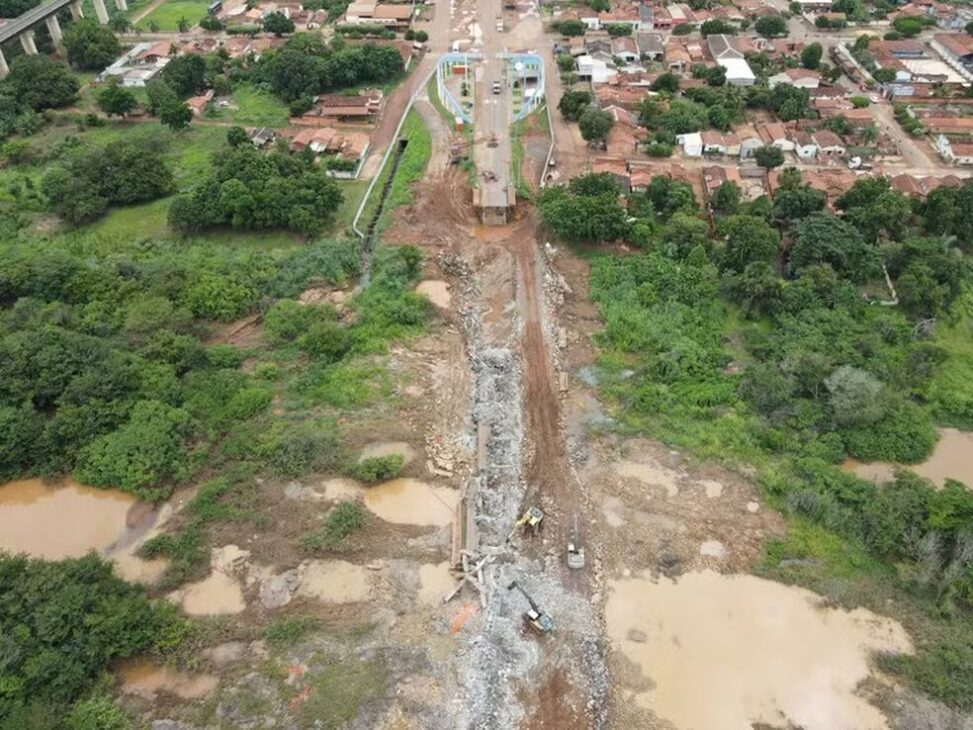
What remained of the Juscelino Kubitschek de Oliveira Bridge needed to be completely demolished before construction could begin.
On February 2, 2025, a controlled demolition was carried out, using 250 kilograms of explosives.
The action, carefully planned, lasted about 15 seconds and removed the last structures that posed a risk to navigation and the progress of construction.
The total destruction of the old bridge was essential for the start of the new structure’s works, as it ensured safety in the surroundings and allowed engineers to proceed with the first stages of the project, such as the installation of the foundations on the riverbed.
Economic and Social Impacts of the New Bridge
In addition to ensuring a safe crossing between Tocantins and Maranhão, the new bridge plays a strategic role in the flow of agricultural production and the transport of goods between the North and Northeast.
BR-226 is one of the most important logistical corridors in the region, and its safe interconnection directly impacts local supply and commerce.
The investment of R$ 171.9 million is financed by the Federal Government and is the responsibility of Dnit, which has been closely monitoring each phase of the construction.
The expectation is that the bridge will be completed by December 22, 2025, exactly one year after the tragedy that halted the crossing.
The reconstruction of the bridge also stimulates the local economy by generating direct and indirect jobs.
Companies from the region have been contracted to provide labor, food, accommodations, and materials.
Lesson from a Tragedy: Strengthening Oversight of Public Works
After the collapse of the previous bridge, the inspection of bridges and viaducts across Brazil came to the authorities’ attention.
Several structures underwent emergency inspections, and some old projects were suspended or reformed to meet more stringent safety standards.
Experts point out that the incident served as a national alert about the aging of public infrastructure in the country, especially in areas with heavy truck traffic.
The expectation is that the new bridge will serve as a model of efficiency and safety, combining modern engineering with greater resistance to extreme loads.
Do you believe that Brazil should urgently review all its bridges and viaducts before new tragedies occur?


