






 Portuguese
  Spanish


Recycling Plant in Arapiraca Transforms Construction Waste into Sustainable Inputs, Boosting Circular Economy and Combating Irregular Disposal.
With an innovative proposal that combines circular economy and environmental preservation, Arapiraca, in the Agreste region of Alagoas, inaugurated this year its first recycling plant for construction waste, removing around 136 tons of waste from the environment each month.
The project, designed by Urban Ambiental with support from Banco do Nordeste (BNB), transforms discarded waste into reusable raw material for construction, reducing costs and generating new business opportunities in the region.
Circular Economy in Practice: From Waste to Smart Reuse
The new recycling plant for construction waste is an important milestone for local sustainability, promoting the reuse of construction waste in the production of blocks, tiles, benches, concrete pipes, inspection boxes, and other artifacts for construction.
-
MIT Scientists Develop Method to Transform CO₂ into a Construction Ally, Boosting Cement Strength by 13% in 24 Hours for More Sustainable Infrastructure

-
Canadian City Builds 8 Tiny Homes in 72 Hours for Homeless Youth, Plans 40 Affordable Houses for Female-Led Families Amid Housing Crisis

-
45-year-old Brazilian mother of 9 and grandmother of 12 receives 27 m² house made from recycled plastic, built in 15 hours with interlocking blocks and a recycled roof.
-
Ireland Installs 654 Modular Homes to Shelter 2,640 Ukrainian War Refugees, Offering a 60-Year Guarantee and a Model for Future Housing Crises


The process begins with the collection of waste, done by containers rented directly by clients. After sorting and processing, the recycled material returns to the market with added value.
The initiative also strengthens the concept of circular economy by transforming what would be discarded into useful inputs for new constructions.
“The idea is to cut costs with transportation and disposal of waste while simultaneously offering the market quality recycled products,” highlights Mayk Melo, partner-director of Urban Ambiental.
The project was made possible with funds from a credit line aimed at commerce and services, through BNB.
With this investment, Urban Ambiental was able to structure the plant and acquire new equipment.
The results are already measurable: in a short time, the company’s productivity increased by 40%.
For the development agent of BNB, Claudevan Silva, the plant aligns with the concept of Sustainable Cities and represents a model of positive impact that can be replicated in other locations.
Recently, representatives from the bank in São Miguel dos Campos visited the unit in Arapiraca to witness the results and operations firsthand.
Combating Irregular Disposal in Construction
Despite the success of the plant, irregular disposal of waste remains a challenge in the region. Mayk Melo warns of the negative impacts of this practice, such as soil contamination, disease proliferation, and devaluation of public areas.
In this context, the plant emerges as an effective alternative, offering an environmentally correct destination for waste and more accessible products for the construction sector.
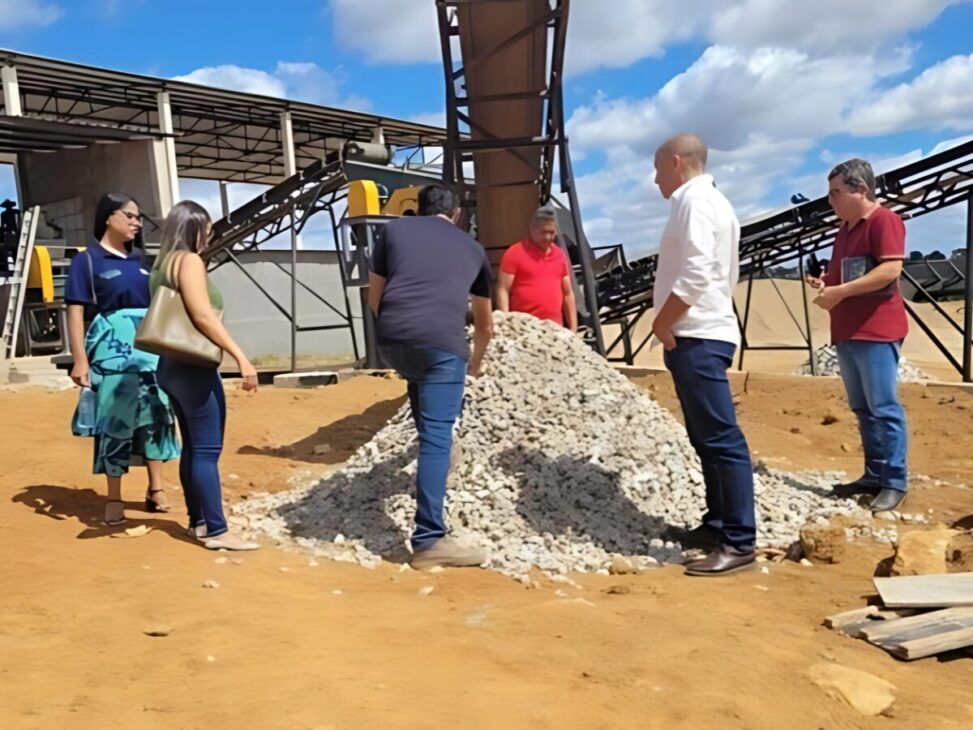
Excited about the results, Urban Ambiental is already planning to expand its activities.
One of the next steps is to utilize urban solid waste in the production of natural fertilizer aimed at agriculture, promoting soil recovery and helping to reduce the volume of waste in landfills.
The recycling plant installed in Arapiraca not only addresses a chronic environmental problem but also fosters local economic development.
The initiative demonstrates how simple solutions, when well executed, can transform challenges into opportunities, creating a positive impact on a large scale for the construction industry and the environment.
With information from Agência do Sertão






Be the first to react!