






 Portuguese
  Spanish


Ireland’s program completed 654 modular houses in 11 locations, using rapid construction to accommodate 2,640 people from the war in Ukraine, with units made off-site, a minimum structural guarantee of 60 years, and potential for future use in housing crises, according to official information from the Irish government.
The modular houses installed in Ireland were used as part of the State’s humanitarian response to accommodate people who fled the war in Ukraine. According to an official publication from the Irish government, the rapid construction program resulted in 654 units distributed across 11 locations in the country.
The initiative was originally published on November 4, 2022, and updated on February 4, 2026. In total, the temporary housing was planned to shelter 2,640 people who were initially in commercial accommodations, as part of a strategy aimed at expanding the available lodging capacity.
Program provided temporary housing to 2,640 people
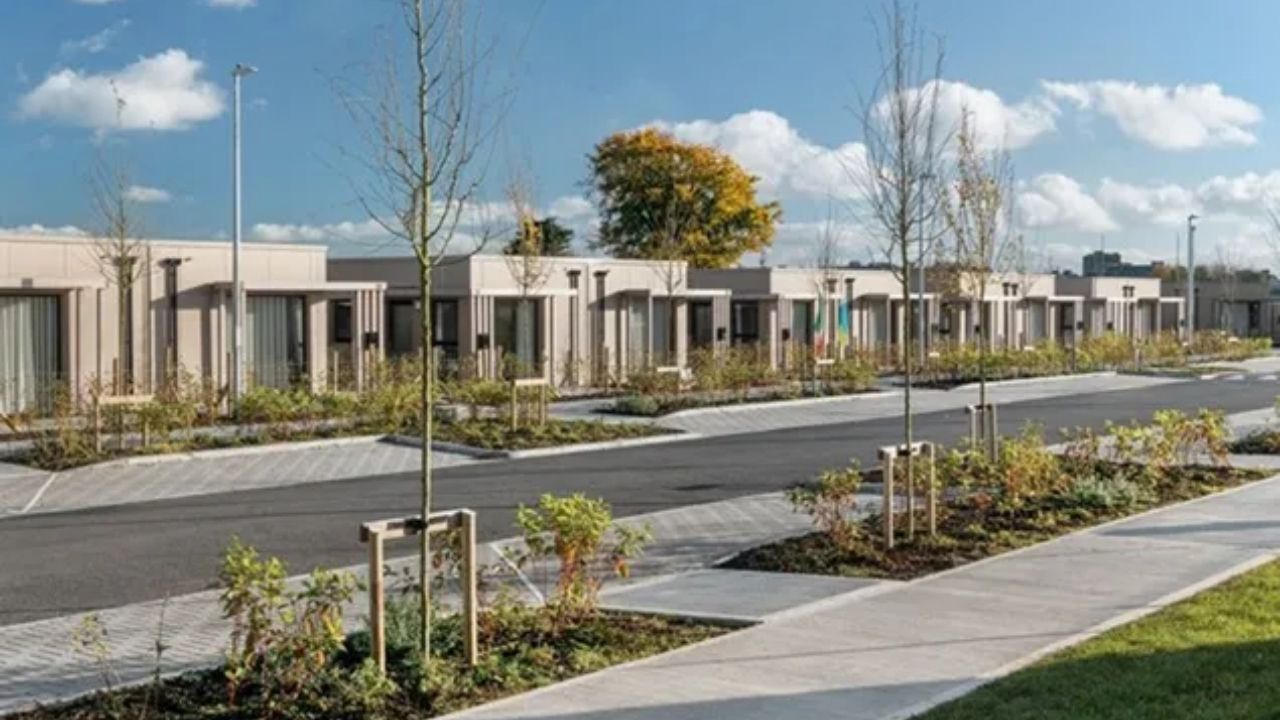
Ireland adopted the rapid construction model amid the humanitarian crisis caused by the war in Ukraine. Since the beginning of the conflict, the country has received about 120,000 displaced Ukrainians, according to official information from the Irish government.
-
Sagrada Família Becomes World’s Tallest Church at 172.5 Meters, Surpassing German Church with Gaudí’s Design

-
Inspired by São Paulo’s Vila Reencontro, Rio Grande do Sul invests $8 million to provide 18 m² micro-homes for homeless families in four cities, offering amenities and up to two years of housing.

-
Brazil’s Piauí State Invests Over $2 Million in Road Restoration and Urban Asphalt Projects
-
Affordable Rainwater Harvesting: Simple PVC System Collects Up to 5,000 Liters for Under $100, Offering a Cost-Effective Alternative to Expensive Installations




In light of this demand, the State began to seek alternatives to reduce dependence on hotels and other commercial accommodations. The modular houses entered this scenario as a way to create temporary shelter with more speed and structure.
The program was completed with 654 units in 11 different locations. The proposal was not only to erect emergency structures but to offer temporary housing with urban planning, community access, and minimum conditions for permanence.
The measure was also linked to Ireland’s obligation, under European Union legislation, to provide adequate accommodation for people protected by the Temporary Protection Directive. Thus, the project became part of a legal, humanitarian, and housing response.
Houses are made off-site and finished on location
The Irish government defines this type of housing as rapid-build homes. In practice, the unit is primarily manufactured off-site where it will be installed and then taken to the location for finishing and completion.
This method reduces construction time compared to conventional buildings. By producing much of the structure off-site, the government also aims to reduce disruptions for the local community, such as prolonged noise, intense construction traffic, and lengthy occupation of space.
Modular homes, therefore, act as an intermediate solution between emergency shelter and traditional construction. They do not depend on the same pace as a regular construction project, but they are also not just tents or makeshift structures.
Another point highlighted by the government is durability. The units come with a minimum structural guarantee of 60 years, information that changes the perception of the project: although used as temporary accommodation, they were made to last.
Locations were chosen in State areas
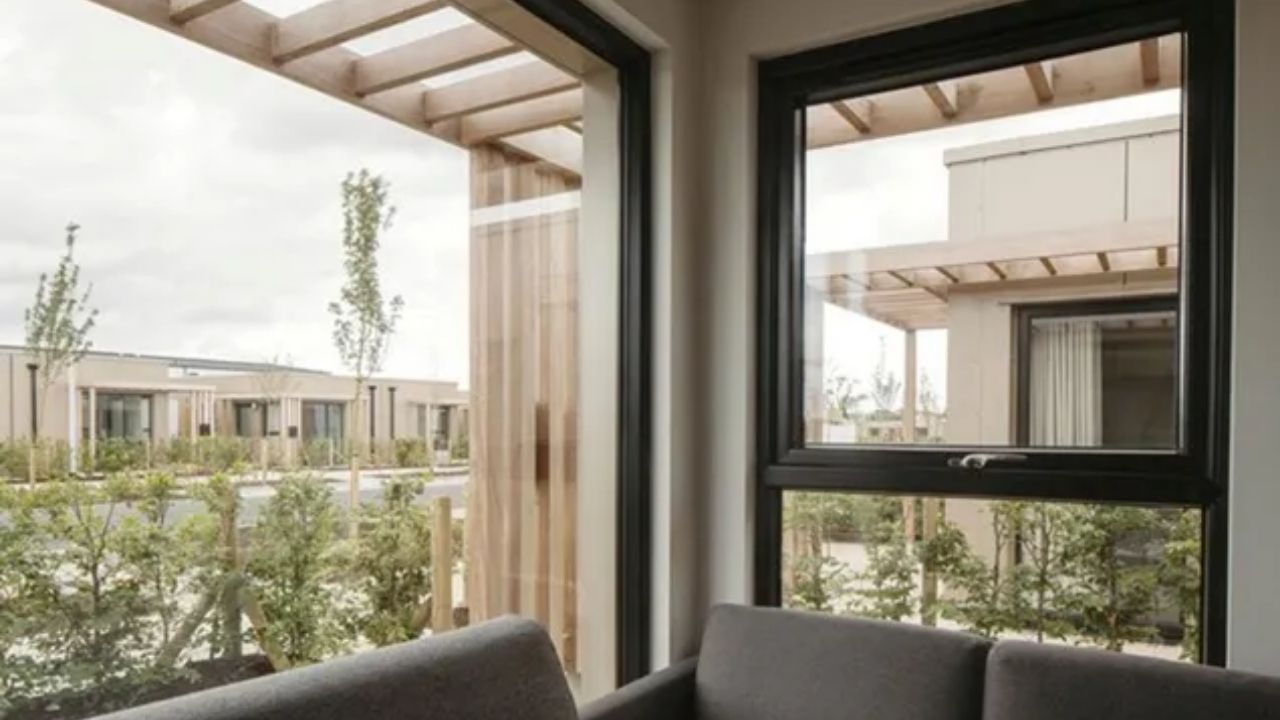
The lands used in the program were identified in State-owned areas in different regions of Ireland. The selection involved the Department of Housing, Local Government and Heritage, local authorities, the OPW, and departments related to children, integration, justice, and migration.
The official list includes locations such as Cavan, Cork, Tipperary, Sligo, Mayo, Laois, Offaly, Dublin, and Galway. Among the largest planned complexes are Backweston, in Lucan, County Dublin, with 132 houses, and Heywood, in Clonmel, County Tipperary, with 82.
The distribution across 11 points shows that the response was not concentrated in a single city. The idea was to spread the accommodation capacity across urban areas or near urban centers, facilitating access to services and infrastructure.
Each development was designed with streets, sidewalks, public lighting, and community facilities. Leisure areas in open green spaces were also planned, in accordance with local authorities’ planning guidelines.
Structure includes energy efficiency and community life
The modular homes were presented by the government as durable and energy-efficient units. This point is relevant because the response to the crisis was not limited to the number of homes, but also to the minimum quality expected for prolonged use.
The developments were planned to enhance the local area after completion, according to the Irish government. This concern indicates that the units were not treated merely as an emergency solution, but as part of a temporary urban design with community impact.
In addition to the houses, the complexes include living structures. The presence of community spaces helps reduce the isolation of displaced families and creates conditions for a less fragmented routine.
The management and maintenance of the houses and developments were the responsibility of the department linked to justice, equality, internal affairs, and migration. This reinforces that the project does not rely solely on physical installation but also on continuous operation.
Women and children are among the main occupants
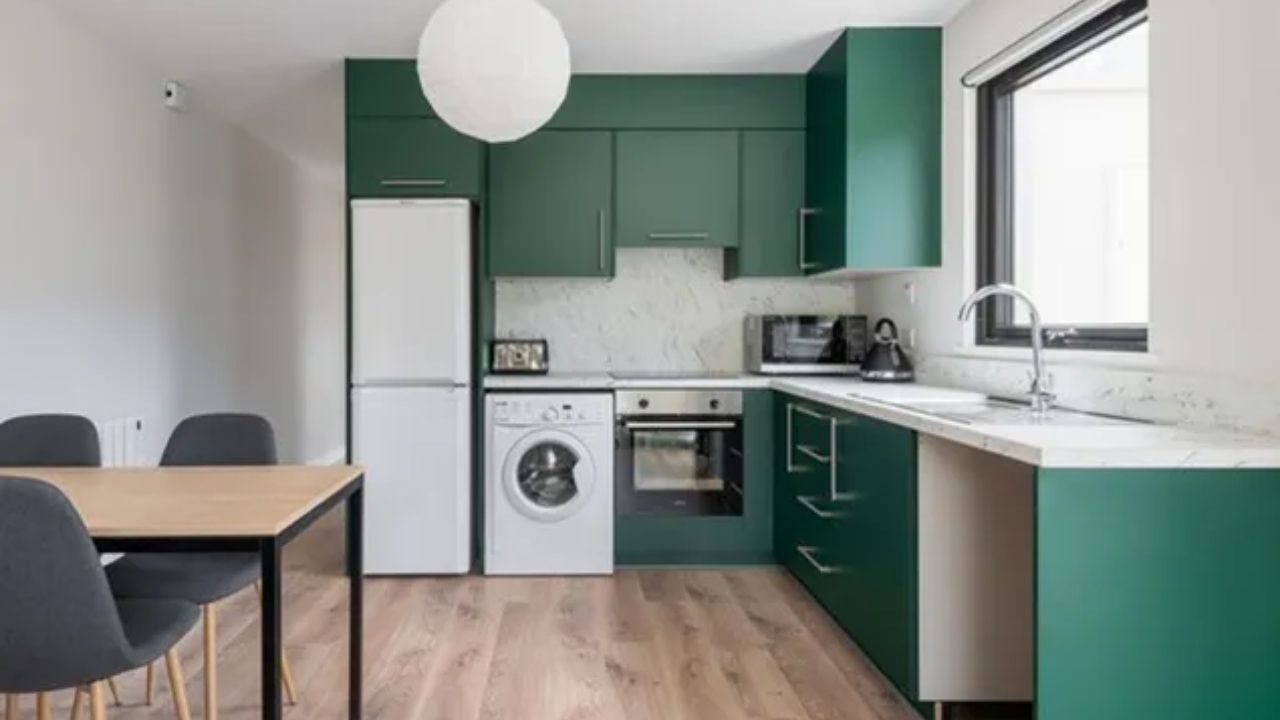
According to official information, the occupants of the rapid construction homes are predominantly women and children who fled the war in Ukraine. This data helps explain why the housing response needed to consider schools, health, and local integration.
The Department of Education was consulted to organize needs with local schools and additional resources when necessary. The Department of Health and the HSE were also consulted on possible extra demands for health services.
Temporary housing, in this case, does not just mean shelter. For a displaced family, the structure needs to be connected to school, care, transport, community, and public support.
Therefore, the impact on local communities was also part of the planning. The government states that there was interaction with local representatives and authorities about the sites, as well as the provision of information before the completion of the works.
Model can be used in other housing crises
One of the most important aspects of the official source is the possibility of future use of the units. Although modular homes are currently being used to accommodate people who fled Ukraine, the government recognizes that they can help address other accommodation challenges in local areas.
This possibility transforms the program into something larger than a response to a specific crisis. After the initial humanitarian use, the units can enter the debate on homelessness, housing pressure, and the need for quick solutions in different regions.
Discussions about future use continue with local authorities and departments responsible for housing and public management. This shows that the destination of the houses after the current phase still depends on administrative decision and planning.
The topic is sensitive because it involves two urgencies: accommodating people displaced by war and, at the same time, dealing with existing housing demands in the country. The reuse of the units can be a practical response, provided it is done with planning and transparency.
Rapid construction does not eliminate long-term challenges
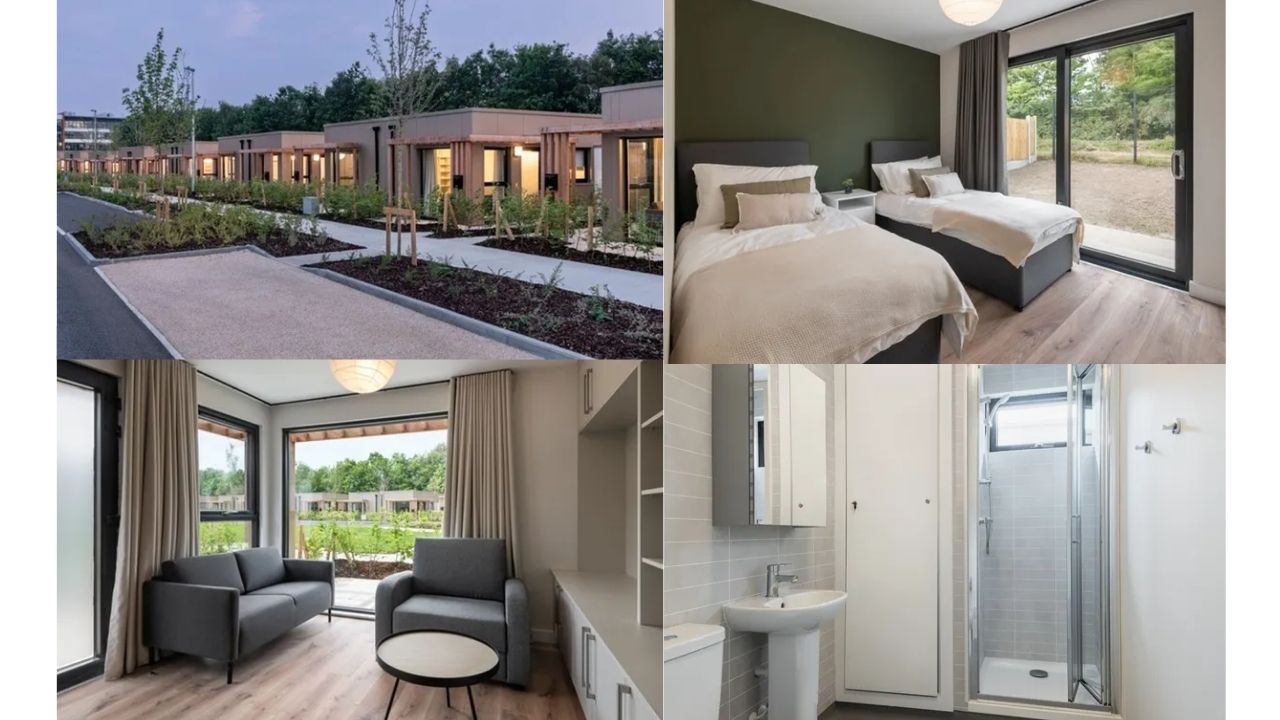
Modular homes offer speed, durability, and flexibility, but they do not solve all housing problems on their own. They work best as part of a broader strategy that includes permanent housing, public services, and community integration.
In the Irish case, the program shows how the state can mobilize land, off-site manufacturing, and coordination between departments to create accommodation at scale. The speed of construction, however, needs to go hand in hand with maintenance, management, and dialogue with communities.
There are also environmental and legal issues. The government mentions assessments related to the European Union’s Environmental Impact Assessment Directive and the European Habitats Directive, as well as specific rules related to the temporary protection of displaced people from Ukraine.
These steps show that even an emergency response needs to go through technical analysis. Urgency does not eliminate the need to assess impacts, infrastructure, and the suitability of the chosen locations.
Rapid housing can become a housing legacy
Ireland’s experience with modular homes shows how a humanitarian crisis led the country to create 654 units in 11 locations to accommodate 2,640 people who fled the war in Ukraine. With construction mainly done off-site and a minimum structural guarantee of 60 years, the program went beyond improvisation.
The challenge now is to understand how these homes will be used in the future and if this model can help other housing crises without replacing permanent solutions. Do you think modular homes should also be adopted by other countries in emergency situations, or should this type of response be used with great caution? Leave your opinion in the comments.




Be the first to react!