






 Portuguese
  Spanish


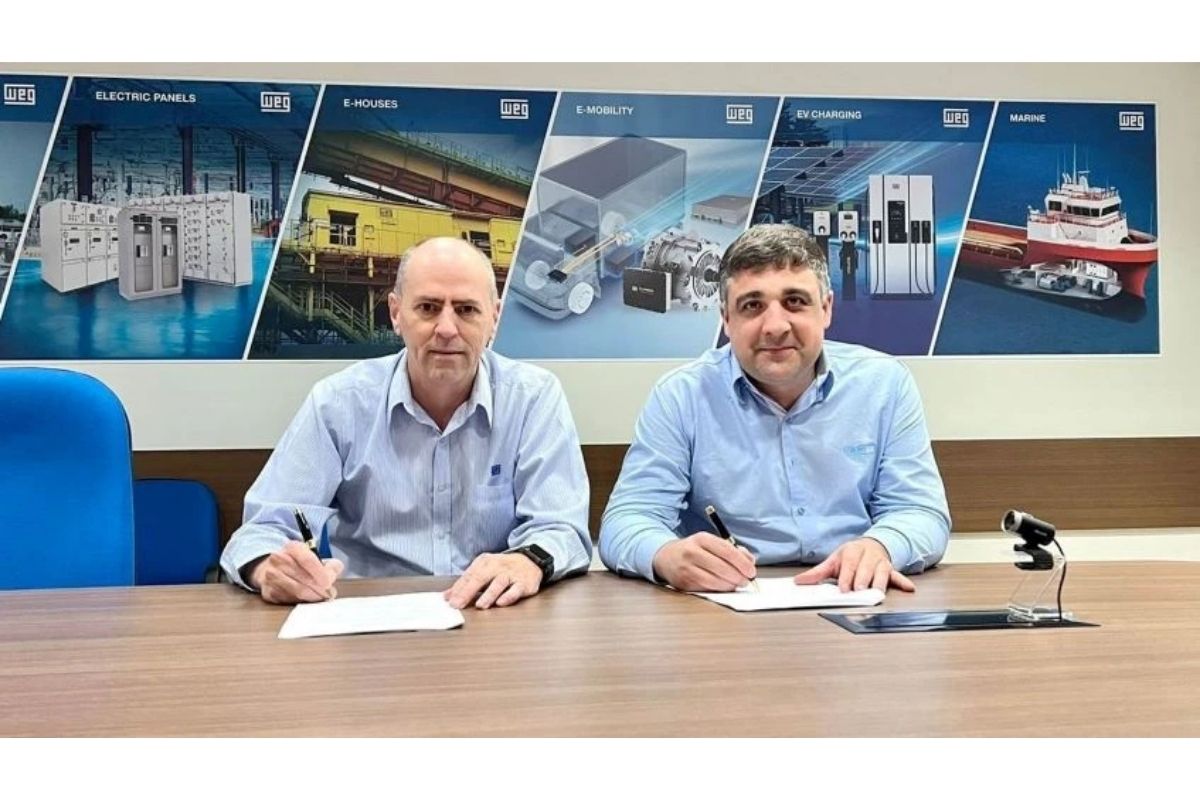

Technological Cooperation Between Major Companies WEG S.A. and Grupo AIZ Seeks the Development of Projects Directly Linked to Electric Vehicles
Ten days ago, WEG S.A. announced its latest agreement with Grupo AIZ to seek new solutions that contribute to the seamless operation of electric vehicles and trucks powered by clean energy. Grupo AIZ is known for having a wide production in various segments of machinery and equipment, ranging from agricultural applications to road parts, among others.
This new agreement is very interesting because it combines knowledge from different but complementary sectors. Thus, WEG and Grupo AIZ will unite their strengths in favor of greater sustainability, focusing on the ecosystem of off-road electric vehicles used by industry and commerce. The partnership is revolutionary because it paves the way for off-road electric mobility in Brazil, a new avenue focused on avoiding harm to the environment.
However, the companies’ thinking is based on supplying the entire production chain, meaning there is a strategic planning very much focused on the logistics of electric vehicles and trucks.
-
At 14 years old, she worked in a factory in Hong Kong, studied economics abroad, and then entered the Chinese real estate market, which helped change the landscape of Beijing.

-
Fired during apartheid and with a little borrowed money, an electrician started with a borrowed truck and transformed electrical services into a group connected to energy, real estate, and infrastructure in South Africa.
-
Wood has ceased to be just a construction material in Yale research and has become insulation for electrical transformers that face intense heat, aging, and increasing pressure from the renewable energy-powered grid.
-
More than 1,000 residents of a remote island in Kiribati now have clean water and electricity with solar systems operated by the community itself.


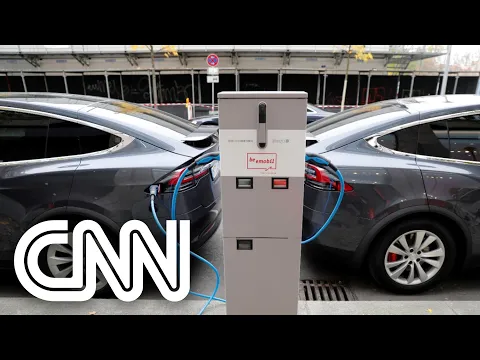
The Constant Rise in Fuel Prices Stimulated the Sales of Electric Vehicles in Brazil. Check the Video Below.

Sustainability and Charging Points for Electric Vehicles and Trucks are the Focus of Actions in the Partnership Between WEG and Grupo AIZ
As we have seen, the process is based on sustainability. Therefore, it seeks to improve the national territory for the proper functioning of electric vehicles and trucks. To this end, the companies aim to install new charging stations for these vehicles, as well as locations for harnessing, supplying, and storing renewable and sustainable energy. However, the main objective of WEG and Grupo AIZ is to make customers self-sufficient in obtaining energy for their vehicles.
In this sense, the companies contribute to a new national perspective regarding the use of renewable and clean energy in mobility, increasingly seeking to use less fossil fuels that harm the environment. Moreover, the movement brings greater independence for the national industry concerning energy matrices, serving as a great example of sustainability.
Electric Vehicles Need an Adequate Environment to Operate Efficiently, and Various Companies Unite for This Purpose
In the first quarter of 2022, electric vehicle sales in Brazil increased by 115%, according to Data from the Brazilian Electric Vehicle Association (ABVE), following the global trend of seeking this new product. Given this scenario, nine companies operating nationally decided to partner to promote electric mobility in Brazil. They are: 99, Movida, Raízen, Ipiranga, CAOA Chery, Tupinambá Energia, and Unidas.
This union of companies became known as the Alliance for Sustainable Mobility and has optimistic long-term goals. First, the Alliance aims to install 10,000 new charging stations for electric vehicles across the country to support operations. Second, it aims to launch 10,000 automobiles in the market, including trucks, by 2025.
Finally, they aim to raise the percentage of electric vehicles sold in Brazil to 10%, which is currently at 2% of the total automobiles sold. This way, this union will make the technology more accessible and promote greater circulation of these vehicles in the country.
Thus, the private initiative, both from WEG and AIZ, as well as from the Alliance, will bring many benefits to Brazil, including strengthening a renewable energy matrix, reducing fossil fuel consumption, decreasing greenhouse gas emissions, and increasing technology in territorial mobility.







