






 Portuguese
  Spanish
  3 min of reading


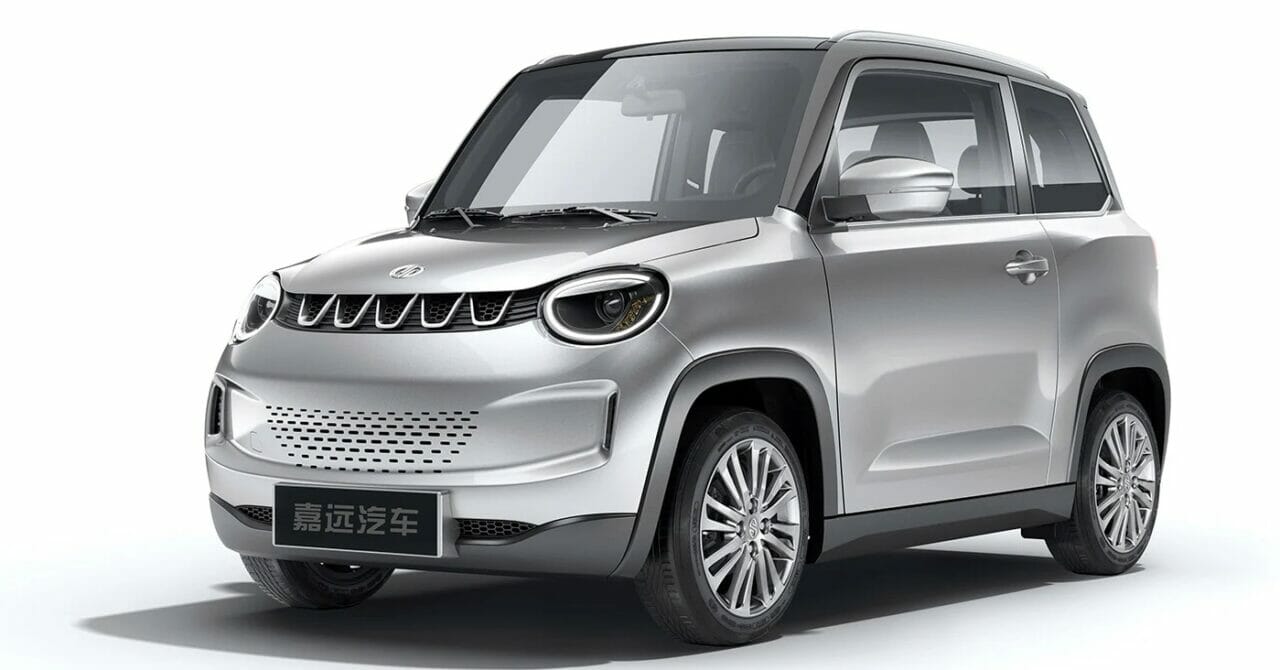
New “Cheap” Electric Car from China Is About to Arrive in the European Market. The Popular Electric Car Delivers 380 km of Range and Reaches 100 km/h.
Among the various electric vehicles from China that are preparing to enter the European market, one stands out at the moment. It is the Jiayuan Komi, a “popular electric car” and ultracompact vehicle focused on urban environments, measuring 3 meters long and capable of transporting up to four passengers.
New Popular Electric Car from China Delivers Over 300 km of Range
Manufactured in China, the cheap electric car is being officially showcased at the Munich Auto Show (IAA 2023) as it aims to secure a good position in major European markets. The vehicle’s debut is scheduled for October, with prices reduced to a minimum.
Indeed, they start at €10,000, which is a very low price in the automotive sector, even for Europeans. Unlike the Citroën Ami, Fiat Topolino, or XEV YoYo, the small two-door Chinese electric car is truly a cheap electric vehicle and can reach up to 100 km/h.
-
Uber Faces Shareholder Scrutiny as Board Accused of Ignoring Safety, Compliance, and Harassment Warnings Amid Over 3,500 U.S. Lawsuits

-
Ferrari’s First Electric Car Divides Fans, Priced at $630,000, Amid Concerns Over Limited Editions; Brand Clarifies It’s Not Just for Future Perks
-
BYD Dolphin Mini: The Electric Car That Defies Depreciation, Losing Only 3.58% in a Year and Becoming the Best-Selling Retail Model Under $22,000

-
Electric Car JAC E-JS4 Loses $19,000 in Value in One Year, Leading Record Depreciation of Used Cars in Brazil Due to Expensive Battery and New Models


Measuring 3 meters in length, 1.52 meters in width, and 1.56 meters in height, the vehicle has a wheelbase of approximately 2 meters and claims to feature a suspension layout that is nothing short of refined, with a MacPherson setup in front and a multilink setup in the rear.
Fully electric, the Chinese vehicle is available in two battery sizes. Consumers can choose a 17 kWh battery, which ensures 160 km of range (NEDC), or a 35 kWh battery, which reaches 320 km. Both power a 46-horsepower motor with 11.2 kgfm of torque. The Jiayuan Komi charges in about 7 hours; however, the manufacturer does not provide information on the maximum charging power in AC or DC.
Chinese Popular Electric Car Features State-of-the-Art Technology and Infotainment System
The higher-priced version in China offers buyers a very pleasant cabin, with features like a multifunction steering wheel, a rotary gear selector in the center console, a digital instrument panel, plush upholstery, and shiny finishes, as well as ambient lighting.
Its infotainment system with a seven-inch touchscreen also provides CarLife, which is Baidu’s alternative to Apple CarPlay.
The equipment available for the cheap electric car from China includes two airbags, rear sensors, a rearview camera, keyless entry and ignition, manual air conditioning, heated side mirrors, ESC, hill start assist, electronic parking brake, tire pressure monitoring system, halogen headlights, cruise control, and LED taillights.
Brazilian Electric Market Gains New Models
The BYD, a Chinese automaker, is bringing several new products to the national market, leading to a significant drop in prices. The multinational already has several models for sale in Brazil and is actively launching its cheap electric car Seagull here, which is expected to happen in the first half of 2024.
The subcompact is a novelty even for the Chinese market and will arrive in Brazil costing less than the Dolphin, listed at R$ 150,000.
It is estimated that this will be the cheapest electric car in the country, priced between R$ 110,000 and R$ 130,000, below rivals Caoa Chery iCar and JAC E-JS1.
In China, the version of the model with a larger battery can go up to 405 km considering the cycle of the Asian giant, with a maximum speed of 130 km/h. In Brazil, this range, within the cycle established by Inmetro, should be around 350 km; however, this is just an estimate.





Be the first to react!