






 Portuguese
  Spanish
  2 min of reading
  0 comments


The Algae-Inspired Concrete That Uses 68% Less Material, Is 3D Printed, and Absorbs Up to 146% More CO₂ Than Conventional Concrete.
A group of scientists from the University of Pennsylvania in the United States revealed the development of a new concrete that promises to transform the construction sector.
The material is innovative for being lighter, stronger, and, most importantly, for its ability to absorb up to 146% more carbon dioxide (CO₂) than conventional concrete.
New Concrete Draws Inspiration From Nature and Surprises With Its Strength
Created from advanced 3D printing techniques and inspired by natural microstructures, the new concrete was tested in the lab and published in the journal Advanced Functional Materials.
-
In the USA, thousands of people are being paid to wash dishes and clean the house with body cameras, every movement turning into data to train robots to imitate humans, in a new “digital gig” that could redefine the future of domestic work.

-
At 22 years old, a young person from Recife creates an artificial intelligence startup with a team barely over 25, serves giants like Bayer and Ipiranga, earns millions without taking a cent from investors, and transforms a young company into a national AI phenomenon.
-
The invisible danger inside the house: plugging too many devices into the same outlet and spreading extensions throughout the rooms can overload the electrical network, silently heat wires, and turn a common habit into one of the leading causes of house fires.

-
Goodbye traditional laundry: Roborock launches washer and dryer with super hydrolysis, microbubbles, 99.99% sterilization, low-temperature drying, automatic detergent, app control, and cycles to remove stains, odors, mites, and bacteria from clothes.





The researchers aim to provide a viable and sustainable alternative for construction projects worldwide, significantly reducing the environmental impact of the industry.
The base of the new concrete comes from diatomaceous earth, a substance made up of fossilized algae known as diatoms.
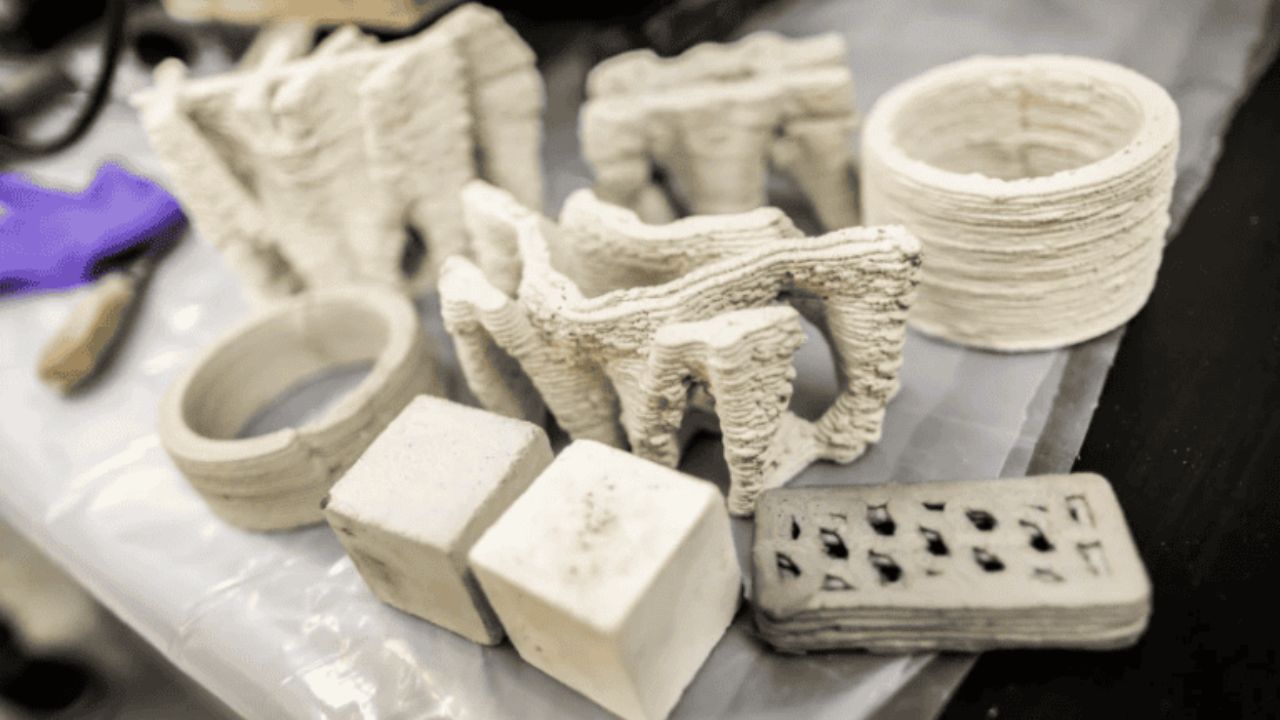
These algae have naturally porous and symmetrical structures, allowing scientists to reproduce complex and highly efficient forms.
According to Shu Yang, head of the Materials Science Department at UPenn, the combination of porosity and strength was unprecedented.
“Normally, if you increase porosity, you lose strength. But here the opposite happened,” he said.
3D Printing and Geometric Shapes Reduce Material Usage
The new concrete was molded with the help of 3D printers, using a special cement paste to form what are called TPMS — complex surfaces inspired by bones and shells.
This innovative design increases the area for CO₂ absorption and maintains stability, even with 68% less material used.
For Masoud Akbarzadeh, co-author of the study, the project is a milestone: “We managed to do much more with much less.”
Ability to Absorb CO₂ Increases Strength Over Time
During the curing process of the new concrete, a reaction occurs that transforms the absorbed CO₂ into calcium carbonate, further reinforcing the structure.
This effect makes the concrete stronger over time, something rare among traditional materials.
The researchers are already studying the application of the new concrete in elements such as facades, floors, and structural columns.
The team also intends to develop versions without cement or using industrial waste, further reducing the ecological footprint.
As Shu Yang states: “When we start to see concrete as a dynamic material, new possibilities arise.”





Be the first to react!