






 Portuguese
  Spanish


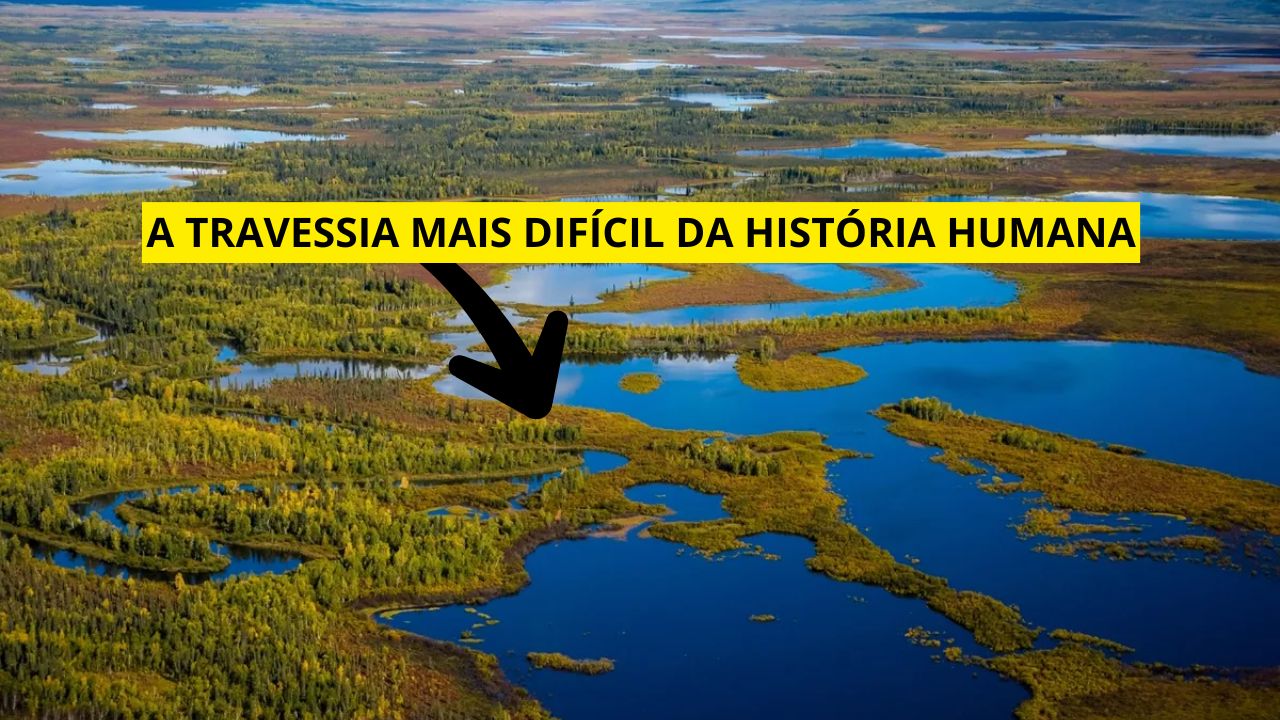


New Study Reveals That the Crossing of the Bering Strait, Between Siberia and Alaska, Was Dominated by Swamps, Rivers, and Channels – Not by Dry Plains as Previously Thought.
During the last Ice Age, approximately 36,000 to 11,000 years ago, the area now corresponding to the Bering Strait — connecting Siberia to North America — was occupied by a vast “land bridge” called Beringia; however, according to the research led by Sarah Fowell from the University of Alaska in Fairbanks, this crossing was not made up of grasslands or dry tundra, but rather a swampy environment filled with small lakes, river channels, and varied vegetation.
The research team presented their findings at the American Geophysical Union (AGU) meeting in the U.S., where they explained how sediment samples taken from the seabed showed flooded floors in locations that were exposed during that period.
The discovery significantly alters the understanding of how animals and humans migrated between the continents through the Bering Strait — and indicates more severe natural obstacles than previously assumed.
-
Pennsylvania Mine Creates Ice in Summer Heat and Melts in Winter, Turning a Mountain Crevice into a Reverse Natural Refrigerator

-
China Accelerates Global Expansion of Robotics: From Smart Vacuums to Industrial and Humanoid Machines, Millions Exported to Over 150 Markets
-
Polar Air Mass to Hit Brazil: Temperatures to Plummet in Nine States, Near Freezing in the South with Frost Risk Until Monday
-
Chinese “dark factories” produce electric cars 24/7 with minimal human intervention, as Zeekr assembles 800 units daily, raising concerns in Brazil.





A Land Bridge… But Not as Imagined
Although it has long been considered that the land passage of the Bering Strait consisted of dry plains, similar to the steppes of Siberia or the fields of Alaska, the new study shows that the reality was different: “We were looking for several large lakes — but what we found was evidence of many small lakes and river channels,” says Sarah Fowell.
This means that the region of the ancient land bridge was dominated by freshwater, moss and tree vegetation, and elevated terrain dotted with dry areas — which makes it a much more complex landscape than previously thought.
When and Where This Crossing Occurred
During the last major glaciation, sea levels were about 120 meters lower than today, exposing the platform that connected Siberia (the Asian part of Russia) to what is now Alaska, making the emergence of the land bridge in the Bering Strait possible.
This crossing zone (Beringia) was located between the Chukchi Sea and the Bering Sea, and served as a terrestrial migration corridor for animals and possibly for humans.
How the New Discovery Was Made
The team led by Fowell collected sediment cores from the seabed of the Bering Sea in locations that were emerged during the period between 36,000 and 11,000 years ago.
These sediments contained pollen, ancient DNA, fossils, and organic matter. The analysis showed that the landscape was swampy with river channels, small ponds, and freshwater vegetation.
Additionally, the presence of mammoths and bison in drier pathways was identified, suggesting that these species managed to take advantage of the region’s high points to cross.
Why This New Perspective Matters
The reconstruction of the environment of the Bering Strait has direct implications for understanding human and animal migrations between Asia and America.
Until now, it was assumed that the terrain was relatively easy to traverse — dry steppes — which influenced migration models.
However, the fact that the corridor was swampy implies that only some species or more adaptable human groups managed to cross it, facing adverse conditions.
For example: “The wet and watery landscape may have been a barrier for some species, or possibly a route for species that travel by water,” comments geologist Jenna Hill, co-author of the study.
This new perspective allows for rethinking routes, timing, and the adaptation of early humans in the Americas — including the hypothesis that they did not simply arrive by “crossing an easy bridge,” but rather managing severe natural obstacles.
Impacts on the Study of the Settlement of the Americas
Considering the revised scenario of the crossing of the Bering Strait, scientists are re-evaluating when and how humans arrived in the Americas.
The crossing of Beringia could have been restricted to specific time intervals, with some favorable ecological windows.
Therefore, traditional models that considered the land bridge as a vast dry plain become insufficient.
Now it is known that the region was heterogeneous — with dry areas allowing passage, but also many flooded or inundated stretches. This implies greater selectivity for those who crossed and more complex migration patterns.
Challenges and Questions That Remain
Despite the advances, some challenges remain.
For example, what was exactly the route used by humans and animals across the Bering Strait land bridge? Under what climatic or geological conditions was the crossing viable? Also, what kind of adaptations allowed for this migration in a swampy environment?
Additionally, there are indications that humans reached America through alternative routes — maritime or coastal — which broadens the scope of investigation into the settlement of the Americas.
The rediscovery of the true landscape of the crossing of the Bering Strait reveals that the land bridge — ancient Beringia — was dominated by a swampy environment interconnected by rivers and channels.
This more challenging scenario than previously thought changes how we understand the migration of animals and humans between the continents.
As a result, the Bering Strait takes on an even more intriguing role in the study of human and natural history.






