Portuguese
  Spanish


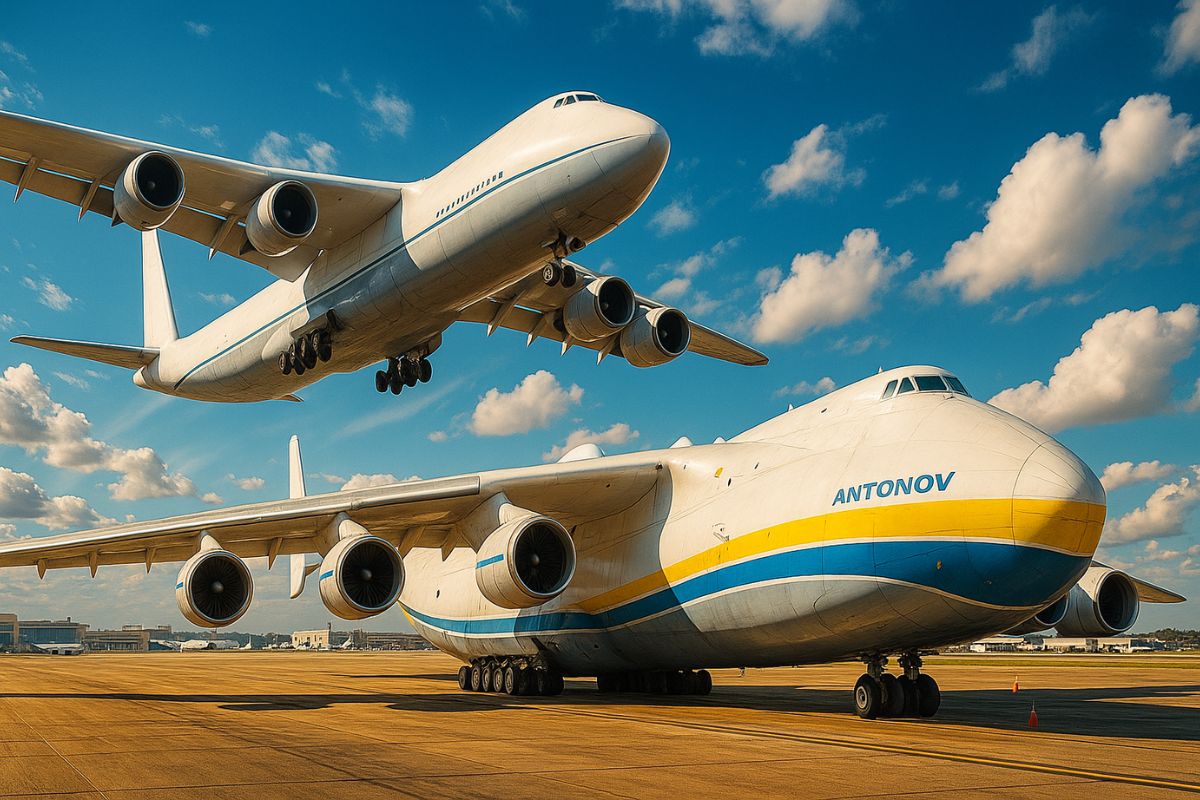


WindRunner Promises to Revolutionize Giant Cargo Transportation and Expand Onshore Wind Energy
The largest airplane in the world may be about to become a reality, and it will not be manufactured by Boeing, Airbus, or Lockheed. The proposal comes from Radia, a startup founded in 2016 by aerospace engineer and serial entrepreneur Mark Lundstrom, who has never built an aircraft before. The project, named WindRunner, was designed to address a critical bottleneck in onshore wind energy: the transportation of turbine blades that are much larger than current ones.
Today, turbines installed offshore can have blades longer than 100 meters, while those used on land rarely exceed 70 meters due to logistical limitations. Lundstrom believes that by overcoming this barrier, it will be possible to double or even triple the economically viable area for wind farms in various countries, increasing generation and reducing costs.
Why WindRunner Is Different from Everything Ever Built
Radia has raised over US$ 150 million and assembled industry experts to create an air freighter with 108 meters in length and 80 meters in wingspan. The cargo compartment will be six times larger than that of the legendary Antonov An-225 Mriya, destroyed in 2022, and will allow for the transport of up to three 80-meter turbine blades or one 105-meter blade.
-
AI Security System in Brazil Aims to Cut False Alarms by Differentiating Pets from Intruders, Enhancing 24/7 Monitoring for Homes and Businesses

-
Archaeologists Discover 1,500-Year-Old Byzantine Mosaic with Greek Biblical Inscription in Israel, Uncover Ruins of 10 Buildings Near Kiryat Gat
-
Ohio Carpenter Finds 308-Gram Meteorite the Size of a Baseball After Dreaming of Its Location

-
Chinese Student Builds Humanoid Robot for $2,100 at Age 20, Now Leads Robotics Startup in China



The differentiator lies in its ability to operate on short and semi-prepared runways, built next to wind farms, without requiring extensive infrastructure works. Even with its monumental size, WindRunner is expected to lift 74 tons and fly up to 2,000 km—enough range for operations within North America, Europe, and South America.
The Legacy and the Challenge After the End of the An-225
The destruction of the An-225 left a gap in the transportation of oversized cargo, such as locomotives or wind blades. Other strategic freighters, such as the Boeing C-17, Lockheed C-5 Galaxy, and Antonov An-124, are out of production and becoming increasingly unavailable.
For Lundstrom, WindRunner fills this gap with a viable proposal, leveraging existing aerospace components and avoiding innovations that could delay certifications. The fuselage will be manufactured by the Italian company Leonardo, the wings by the Spanish company Aernnova, and safety integration will be handled by the American company AFuzion.
Possible Military Uses and Competitive Pressure
Although the primary mission is transportation for the wind sector, the U.S. Department of Defense has already shown interest in WindRunner for heavy military cargo. This increases the pressure, especially after news that Boeing may resume production of the C-17.
Critics, such as analyst Chris Pocock, point out that the limitation in range and the absence of a defined engine could compromise success. Radia claims to have already chosen a certified model and promises to announce the supplier soon.
Next Steps Until Takeoff
So far, the project has only been validated in a wind tunnel with scaled models. The company plans to skip the traditional prototype phase and go straight to building full-size test aircraft, with the first flight scheduled for the end of the decade.
Experts warn that aircraft certification is a long and costly process, especially for first-time manufacturers. However, Radia bets on the simplicity of the design and the use of already certified parts to mitigate risks.
Do you believe that WindRunner can really change giant cargo transportation, or will it be just another ambitious project that remains on paper? Leave your opinion in the comments.