Portuguese
  Spanish


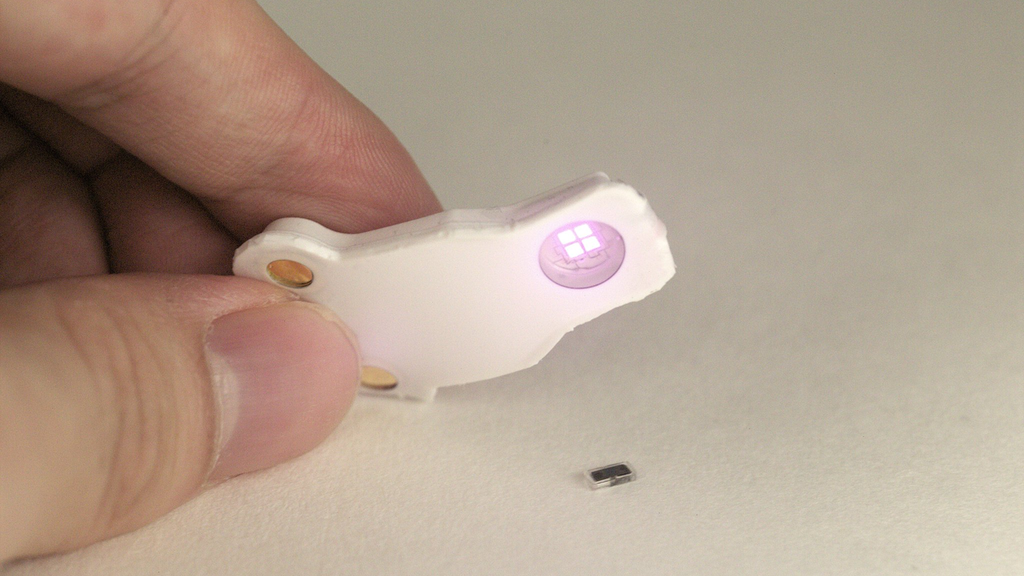


New Biodegradable Pacemaker Can Be Implanted in Seconds, Replacing Traditional Surgical Procedures
One of the most promising advances in cardiovascular medicine has just been revealed: a new pacemaker with microscopic dimensions that can be injected with a syringe, without the need for invasive surgical procedures. The achievement was published last Wednesday (2) in the prestigious journal Nature, and promises to revolutionize care for patients requiring temporary cardiac stimulation.
The rice-sized pacemaker, measuring just 1 millimeter thick and 3.5 millimeters long, is so small that it can be inserted directly into the body with a simple injection, eliminating the need for wires, cuts, or anesthesia. This innovation is particularly important for newborns, patients recovering from cardiac surgeries, and other delicate cases where temporary cardiac stimulation is essential.
Syringe-Injectable Pacemaker Is Bioabsorbable and Eliminates Risks Associated with Surgical Removal
Unlike conventional models that require implants with wires connected to external batteries, this syringe-injectable pacemaker operates without any physical connection to the outside. Furthermore, it is biodegradable, meaning it dissolves naturally in the body after fulfilling its function, eliminating the need for a second intervention for removal.
-
USP Plant Demonstrates Hidden Value in Daily Organic Waste Disposal

-
Brazil Unveils Innovative Monitoring System to Prevent Abandonment of Public Works, Boosting Efficiency and Reducing Waste in Infrastructure Projects
-
AI Video Generator Automatically Creates Subtitles and Animated Captions

-
São Paulo Unveils Latin America’s Largest Underground Reservoir, Holding 900 Million Liters, in the Greater São Paulo Area





This feature drastically reduces clinical risks, such as hospital infections, damage to cardiac tissue, and adverse reactions to metallic materials. According to researcher John A. Rogers, co-author of the study and professor at Northwestern University, “the new pacemaker is fully integrated, self-sufficient, controlled by light, and completely bioabsorbable. It can be delivered by a syringe, without the need for invasive surgeries.”
Surgery-Free Pacemaker Operates via Light Control and Smart Adhesive on the Skin Surface
The way the surgery-free pacemaker works is as innovative as its structure. The device is paired with an electronic adhesive placed on the skin that continuously monitors heartbeats. In case of irregularity, the adhesive sends light signals that penetrate the skin and activate the pacemaker, correcting the heart rhythm with precision.
This approach completely eliminates the use of batteries, electrodes, and internal wires, which are common in traditional devices. Power and commands are transmitted via optical technology, making the process safer, faster, and with a lower chance of postoperative complications.
Additionally, tests conducted on animal models and human tissues showed that the rice-sized pacemaker is effective and reliable, consistently maintaining heart stimulation without causing inflammation or rejection.
New Pacemaker Represents Historic Advancement in Medicine for Newborns and Fragile Patients
The development of the new pacemaker has particularly relevant implications for newborns with cardiac issues, who often undergo delicate and high-risk procedures. With the possibility of performing an implant without surgery, doctors could offer a safer, less traumatic treatment with much faster recovery.
Older patients, those with clinical fragility, or in recovery from cardiac surgeries are also among the major beneficiaries. As the device is temporary and bioabsorbable, it fulfills its function without the need for later removal, which represents less time in the hospital and lower healthcare costs.
Researcher Rogers emphasizes that this may just be the beginning: “This technological foundation can be adapted for a wide range of electromechanical therapies beyond cardiac stimulation.” This includes everything from nerve stimulation to regenerative and neurological therapies.
Potential to Transform Electromedicine and Expand Clinical Applications Across Specialties
According to the study, the technology used in the surgery-free pacemaker could, in the future, be applied to other treatments requiring precise and controlled electrical stimulation. One example would be the use in neuromuscular stimulation for patients with spinal cord injuries or even in the regeneration of damaged tissues.
The miniaturization and the ability for injection through a syringe make this syringe-injectable pacemaker a model for future innovations in nanomedicine and smart implants, where minimal intervention is the preferred route to maintain patient health with maximum efficiency.
Additionally, being biodegradable and temporary, the device is also proving to be more environmentally viable, reducing the amount of medical waste and disposable equipment used in short-term treatments.
Start of Human Trials Is Expected in the Coming Years, According to Project Researchers
The team of researchers involved in the development of the new pacemaker is optimistic about the next steps. Preparation has already begun for clinical trials in humans, which could occur in the coming years, depending on the approval of health regulatory bodies.
If the results are as promising as those obtained in preclinical tests, the rice-sized pacemaker could be launched on the market in the near future, profoundly transforming treatment protocols in intensive care units, emergency rooms, and surgical centers.
The development was led by scientists from Northwestern University in partnership with researchers from other institutions in the United States, combining knowledge in biomedical engineering, nanotechnology, and cardiology.
As researchers prepare for clinical trials in humans, the world of medicine is already watching with enthusiasm the possibilities opened by this surgery-free pacemaker — a true gem of modern biotechnology that fits on the tip of a needle.
Source: Canaltech