Portuguese
  Spanish




Bill 3728/21 Changes Urban Mobility Rules and Authorizes New Revenue Sources to Mitigate Fare Increases
A structural reform in urban collective public transport is advancing in the National Congress and simultaneously creating direct impacts in the energy and industrial sectors.
The Bill No. 3728/21, presented in 2021 by then-senator Antonio Anastasia (PSD/MG), was approved by the Senate and is now awaiting urgent voting in the Chamber of Deputies.
Although the main focus is on fare financing, the text also reorganizes the investment model in fleet, infrastructure, and energy transition, which increases its industrial relevance.
-
Latin America’s Largest Port Invests $400 Million in Rail System with Trains Up to 2.4 Kilometers Long
-
New Smart Radar Begins Issuing Fines to Solo Drivers in Carpool Lanes, Uses Cameras to Count Occupants, Changing Traffic Enforcement Rules on Busy European Roads

-
Why can the crane operator only obey the correct signalman on the construction site: among dozens of workers, a hand raised by the wrong person can confuse the maneuver and turn a load of tons into an immediate risk.
-
What changes with the new public transportation rules that can reduce pressure on fares and pave the way for zero fare in Brazil?


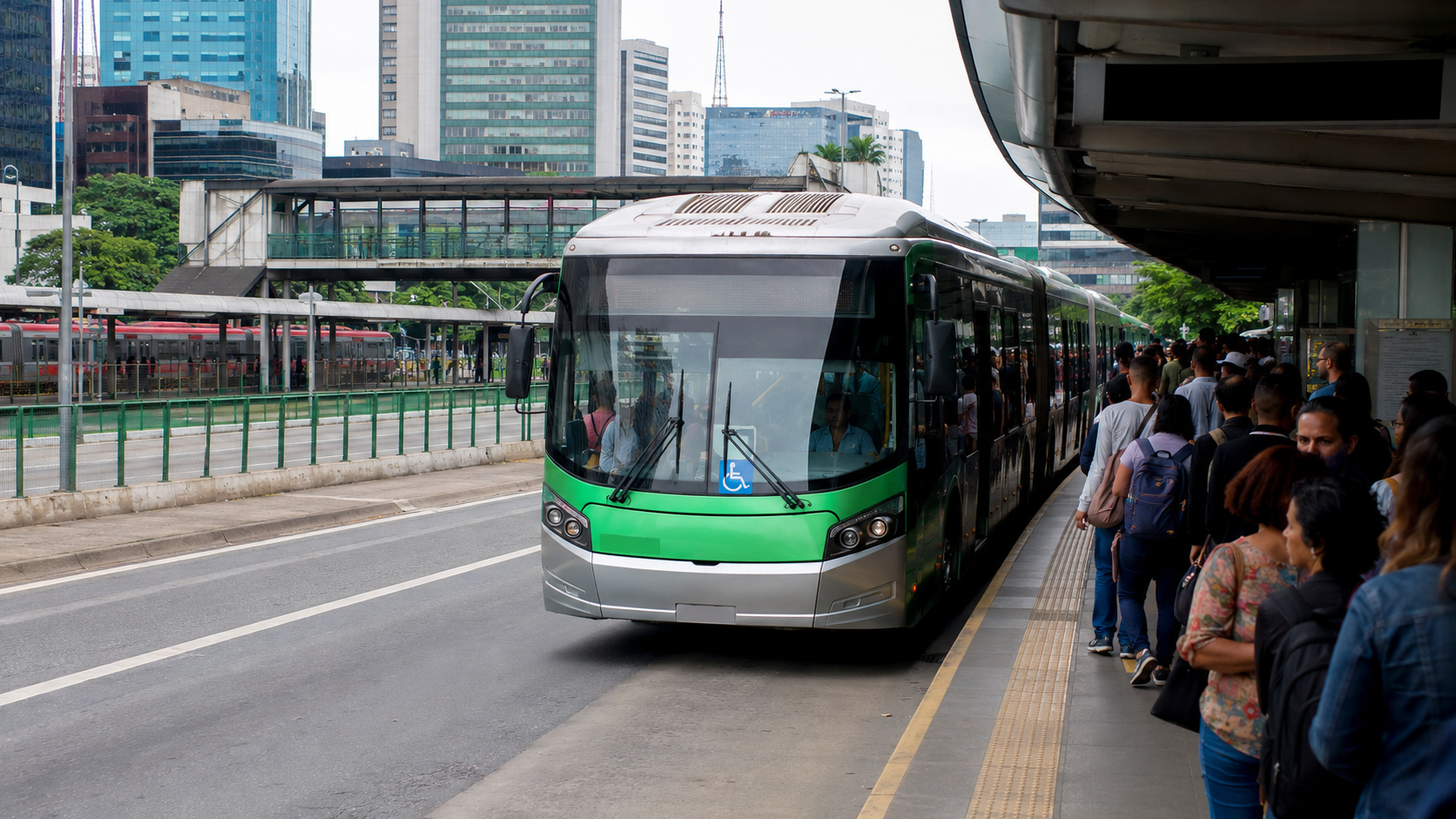
In light of fares that have accumulated increases, such as in Florianópolis, where the fare reaches R$ 7.70, the project aims to diversify revenues while simultaneously strengthening the economic sustainability of the system.
Financial Restructuring with Impact on the Industrial Chain
The new legal framework establishes that the costs of buses, trains, and subways do not depend solely on the fare paid by the user.
Thus, the public authority will be able to complement the difference between operational costs and fare revenue, which increases financial predictability for operators and suppliers.
With greater revenue stability, the industrial sector linked to urban mobility will have a safer environment for fleet renewal investments.
Additionally, states and municipalities will be able to structure subsidies and extra-fare mechanisms, creating a more robust financial base for long-term contracts.
Energy Transition and Fleet Modernization
The project explicitly encourages fleet renewal focused on sustainable vehicles, connecting the legal framework to the decarbonization agenda.
In this context, revenues from carbon credits may be directed toward covering infrastructure and operational costs.
In this way, the model favors investments in lower emission technologies, aligning urban transport with environmental goals.
At the same time, this guideline stimulates industrial sectors related to the manufacturing of vehicles, electrical systems, and energy efficiency solutions.
Revenue Sources and Reorganization of the Urban Model
Initially, Article 30 provided for instruments such as congestion charges, urban tolls, charges on parking lots, and the use of CIDE to subsidize fares.
However, on September 16, the rapporteur José Priante (MDB-PA) removed the article from the proposal.
Still, the text maintains authorization for states and municipalities to establish taxes linked to the use of the road system and emissions of pollutants.
Consequently, no tax will be created automatically, but the legal structure will allow new sources of financing as per local decision.
Transparency, Performance, and Energy Planning
In addition to the financial changes, the project imposes greater operational transparency.
Governments and operators must disclose detailed costs, fare data, number of passengers, and subsidy calculations.
At the same time, concessions will no longer be automatically renewed and will require mandatory bidding with performance criteria.
Contracts must also provide for planning for energy transition of the fleet, reinforcing the integration between urban mobility and energy policy.
Institutional Support and Adjustment Period
Nine sector entities, including NTU (National Association of Urban Transport Companies) and ANPTrilhos (National Association of Rail Passenger Transporters), expressed support for the project.
According to the text approved in the Senate, the norm will come into effect one year after its official publication.
Thus, states and municipalities will have time to adapt legislation and structure new contractual models.
Given this scenario, the new legal framework is no longer just a legal change and comes to represent a restructuring with direct effects on the mobility industry and the energy agenda. Is the productive sector ready to accompany this transformation?