Portuguese
  Spanish


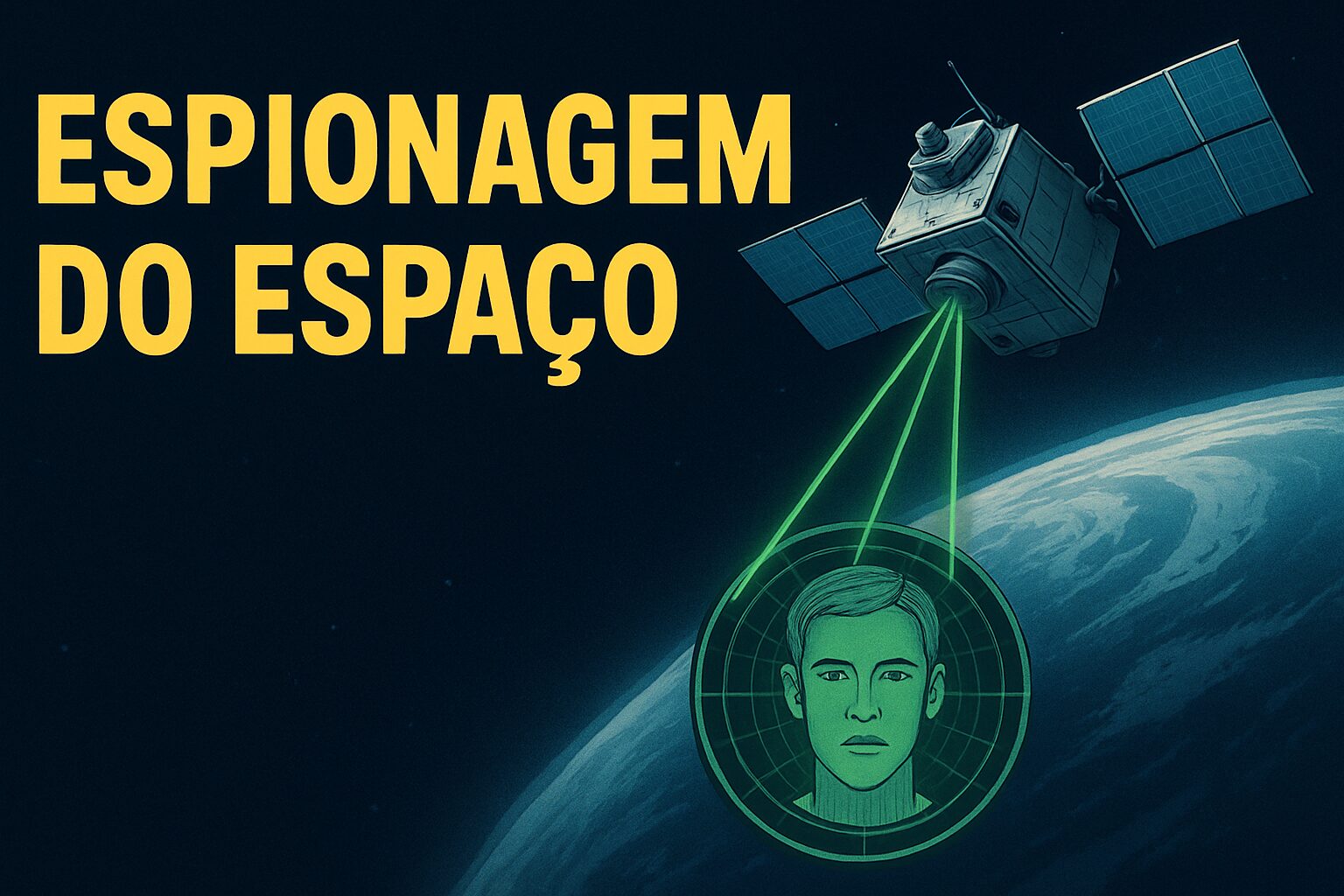

Surveillance Equipment Combines Optical Sensors and Radar Waves for Facial Recognition in Wide and Remote Areas
A new technological advancement from China has caught the world’s attention: scientists in the country have developed a spy satellite system capable of identifying details with millimeter precision from Earth’s orbit.
A group of scientists from China has created a surveillance camera with impressive precision. The new system, based on LIDAR technology, has managed to capture images with millimeter resolution at a distance of 100 kilometers.
The feat was recorded during tests at Qinghai Lake, located in the remote northwest of China.
-
15-Year-Old American Builds Ocean Generator with PVC Pipe and 3D-Printed Propeller for $12, Wins National Prize, Presents at White House, and Makes Forbes 30 Under 30 List

-
$12 Billion Invested in AI Data Centers in Semi-Desert Mexican State, But 17 of 18 Municipalities Now Face Water Shortages, Residents Receive Water Only 3 Days a Week
-
How Much Does Starlink Satellite Internet Cost for Cars, Trucks, and RVs? Prices for Antenna, Accessories, and Plans

-
Scientists Convert Food Waste into Aviation Fuel, Successfully Test 50% Blend with Conventional Kerosene to Cut Emissions and Promote Sustainable Flights



Images with Details of Up to 1.7 Millimeters
The equipment was able to identify details as small as 1.7 millimeters at an exact distance of 101.8 kilometers.
During the test, it was also possible to measure the distance to objects with a margin of error of only 15.6 millimeters.
The performance, according to the newspaper South China Morning Post, is up to a hundred times better than that of conventional spy cameras and telescopes with lenses.
Enhanced Military Technology
LIDAR technology works by launching a laser beam towards an object and measuring the time it takes for the reflected light to return to the sensor.
Although this type of system has already been used for military surveillance and high-resolution mapping, previous results were limited.
In 2011, the American company Lockheed Martin achieved a resolution of two centimeters at a distance of 1.6 kilometers. In another test, Chinese scientists reached a five-centimeter resolution at 6.9 kilometers.
Advancement Depends on Powerful Laser and Adaptive Algorithms
The leap in performance of the technology was made possible with a 103-watt laser, a wide optical aperture, real-time data processing, and algorithms capable of reducing the noise generated by the laser light. These factors together allowed for the technical advancement of the camera.
Despite the success, the technology still faces limitations. The test was conducted under perfect weather conditions, as the presence of clouds or atmospheric instability can hinder the results. Moreover, the current system cannot track moving targets.
According to a researcher quoted by the SCMP, the level of detail achieved would even allow for identifying damage on solar panels or reading serial numbers on satellites.
The technical milestone is also impressive for having been achieved at a distance of 100 kilometers—the same measure up to the Kármán Line, which marks the boundary between Earth’s atmosphere and space.
The researchers describe their work in more detail in a new study published in
Chinese Journal of Lasers.