






 Portuguese
  Spanish




Company Decided to Innovate in the Solar Energy Sector by Developing a New Solar Panel That Does Not Need Sunlight to Generate Energy
The idea of solar panels that do not require sunlight may seem crazy, but it is not completely impossible. As a cornerstone of the revolution to bring more clean energy to people, solar panels have become one of the best options available. However, these energy conductors have a fatal flaw. They require direct sunlight to create energy. What if we could eliminate this flaw, though? That was the idea behind AuREUS, a new solar panel that does not depend on direct sunlight to generate energy.
Read Other Related News
- Combining Solar Energy and Hydrogel, Scientists Developed New Technology Capable of Producing Electricity and Water in the Desert
- Neoenergia and Banco do Nordeste Form Partnership to Facilitate Access to Solar Energy for Residential Customers
- Huawei and Ecori Form New Partnership for Distribution of Solar Energy Inverters in Brazil
- Due to ‘Sun Tax,’ Brazilians Who Want to Save Up to 90% on Their Electricity Bill Have Less Than a Year to Adopt Solar Energy Use Without Being Taxed
- Women in the Photovoltaic Solar Energy Sector: Female Presence Has Gained Prominence in Jobs Historically Occupied Predominantly by Men
- IFPB Will Offer 290 Spots for Vocational Course on Renewable Energies for Electricians Working in the Installation of Photovoltaic Solar Energy
Solar Panels from a Student in the Philippines Do Not Need Sunlight to Generate Electricity
Carvey Ehren Maigue is a student at Mapua University in the Philippines. To create the panels, Maigue used luminescent particles from fruit and vegetable waste. These are the same particles that absorb ultraviolet rays from the Sun and transform them into visible light.
By using such particles, Maigue created a solar film capable of capturing ultraviolet rays. The film then converts the rays into visible light that is used to generate energy. The idea is ingenious and helps further reduce waste around the world. Additionally, as it does not depend on direct sunlight, it can continue to generate energy even in cloudy times.
-
Brazilian scientists are simultaneously advancing two research projects on clean hydrogen and driving solutions that could transform the energy matrix, enhance industrial competitiveness, and accelerate large-scale emission reduction targets.

-
Advancement in renewable energy: A R$ 150 million project launched by Petrobras and Finep aims to create state-of-the-art electrolyzers for green hydrogen, strengthening national research and preparing Brazil to compete in a billion-dollar energy market.
-
Solar energy can increase property value by up to 10% and become a selling point.
-
Illiterate or semi-literate grandmothers were trained to repair solar systems, open rural workshops, and light up homes that still depended on kerosene.



The current prototype is just one panel installed in a window of Maigue’s apartment. However, it is capable of generating enough electricity to charge two phones per day. When scaled, Maigue believes it could allow buildings to operate completely on their own electricity.
Understand How Solar Panels Made from Agricultural Waste Work
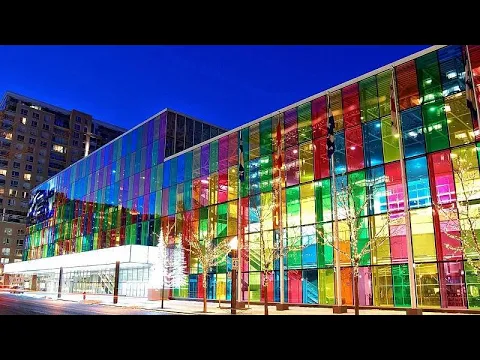

When placed between the glass of a double-glazed window, the different colored panels push sunlight to the edges of the window panel, where photovoltaic cells convert it into electricity – enough to charge two smartphones, but if used to cover an entire building, it could power major systems while also delighting viewers with its use of bright colors.
Made from recycled plant waste, the innovation earned its creator, Carvey Ehren Maigue, 29, the 2020 Dyson Foundation Sustainability Award.
Maigue named it AuREUS because its multicolored nature resembles the Northern Lights. Unlike the bulky solar panels we all think of, AuREUS is a sheet of plant polymer and can be bent, molded, and attached to virtually any shape. Additionally, they do not need UV light to be powered directly; the panels end up harvesting like plants do through the clouds. If placed on a roof that is entirely in the shade, they can still generate energy if UV light is reflecting, say, off a nearby skyscraper or field.
Designed to have the least possible impact, Maigue sought not only plant waste but also crops destroyed by storms and typhoons. The panels come in red, orange, yellow, green, and blue, with a natural blue coloring agent remaining unknown.
Renewable Energy Market Expansion
Part of what is really exciting about solar panels that do not need sunlight, however, is their scalability. The film-type panel that Maigue created is flexible. It is made from resin and can even be applied to clothing.
The idea was so good it won the James Dyson Foundation Sustainability Award in 2020. Being so flexible, the solar film leaves a lot of room for more innovators to advance and find new applications.
Even the basic design that Maigue used can be useful, as it would only require you to apply the film to your window to collect electricity. This means less worry about expensive solar panels on your roof or having to install them in other ways.







