






 Portuguese
  Spanish


The country that used to buy fiber from abroad became a global leader and surpassed the United States six years earlier than the producers themselves predicted
Brazil has become, for the first time in history, the world’s largest exporter of cotton, surpassing the United States. The turnaround is impressive because, just over two decades ago, the country was the second-largest importer of the fiber, dependent on what came from abroad to clothe its own population.
The leap to the position of the largest cotton exporter came earlier than expected: the goal was to achieve leadership only in 2030. In the 2023/2024 harvest, Brazil produced about 3.7 million tons of lint and exported around 2.6 million, consolidating a transformation that changed the global map of the fiber.
From second-largest importer to world leader
The phrase that best summarizes the turnaround came from the sector itself. According to Abrapa, the association that brings together producers, its president Alexandre Schenkel recalled that, just over two decades ago, Brazil was the second-largest cotton importer in the world.
-
Brazilian Official Proposes Plan to Revive 223 km Railway, Connecting 13 Cities and Transporting 32,000 Passengers and 600 Containers Daily, Plus a Tourist Train in Just 2 Hours 20 Minutes.

-
Water Tunnel to Cut Through Andes: 14 km Underground Passage at Over 4,000 Meters Could Transform Atlantic-Pacific Trade Routes

-
Brazil’s Oldest Company, with 192 Years of History, Embraces Modern Tech with 4×3 Work Scale, Underground Wi-Fi, and Remote Operations
-
Chinese Company Enters Brazil to Compete with Mercado Pago, Stone, PagBank, Promising Local Manufacturing and Innovative Payment Solutions




Moving from that position to the top of exports in such a short time is rare in any commodity. Going from buyer to the largest seller on the planet is a turnaround that few countries have achieved in any agricultural product, and shows the speed with which Brazilian agribusiness advanced in the country’s interior in recent decades.
3.7 million tons and six years ahead of schedule
The numbers explain the magnitude of the achievement. According to CNN Brasil, in the harvest from July 2023 to June 2024, the country harvested about 3.7 million tons of lint and exported close to 2.6 million, enough to surpass the United States.
The most surprising aspect is the timeline. The sector’s own projection indicated 2030 as the year when Brazil would take the lead. Reaching there six years ahead of schedule shows that cotton production grew faster than the market itself imagined, driven by productivity gains and expansion of planted area.
The Cerrado that became a cotton powerhouse
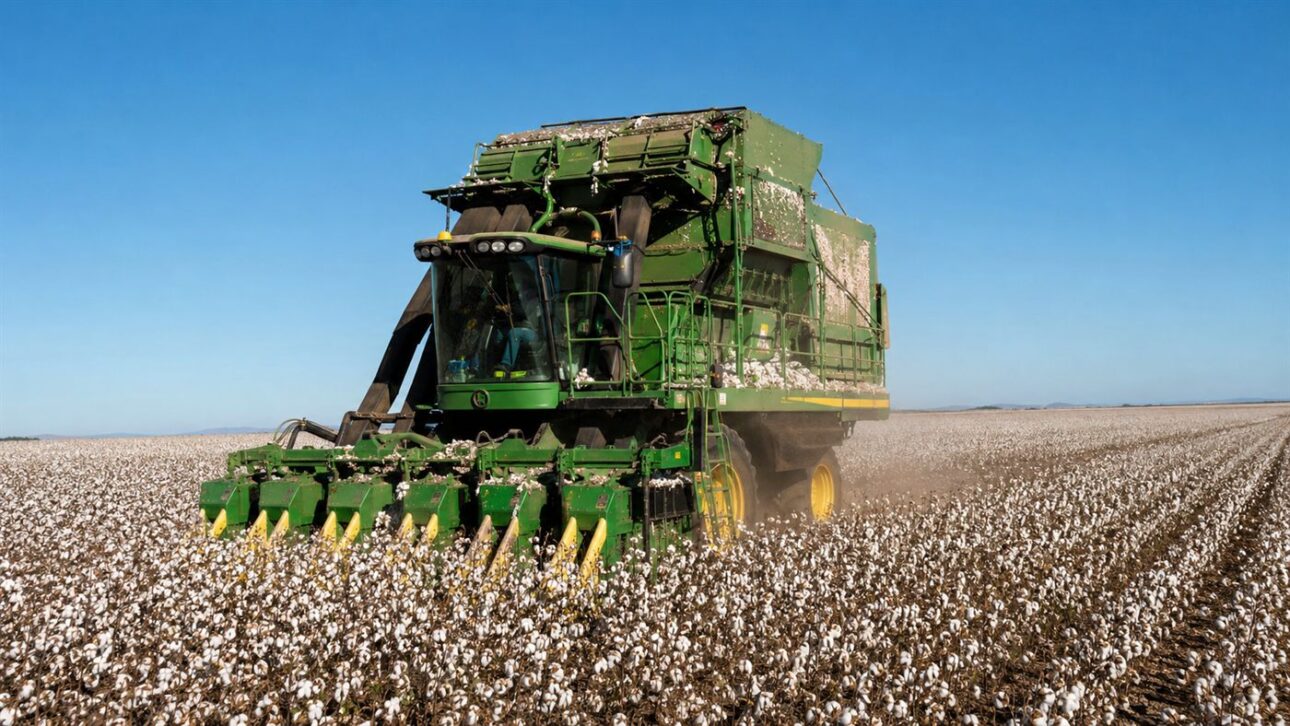
The heart of this production is in the Cerrado, especially in Mato Grosso and Bahia, where large mechanized farms have transformed the biome into one of the most productive regions in the world for fiber. It was there that Brazilian cotton gained scale and competitiveness.
The combination of climate, technology, and large properties allowed for harvests that few people imagined decades ago. The same biome that was already a hub for soy and corn also became the engine for cotton, in a model of technology-intensive agriculture that the country learned to master and export as knowledge.
Where Brazilian cotton goes
The fiber that leaves Brazil clothes much of Asia. According to Abrapa, the main destinations for national production are China, Vietnam, Bangladesh, Turkey, and Pakistan, precisely the major hubs of the global textile industry, which transform cotton into clothing for the entire planet.
This Asian dependency is both a strength and a risk. As long as the demand from these countries remains strong, Brazilian producers have guaranteed buyers. Being a supplier to the largest fabric factories in the world has given Brazil a massive market, but it also leaves it exposed to economic fluctuations in Asia.
84% of production with socio-environmental certification
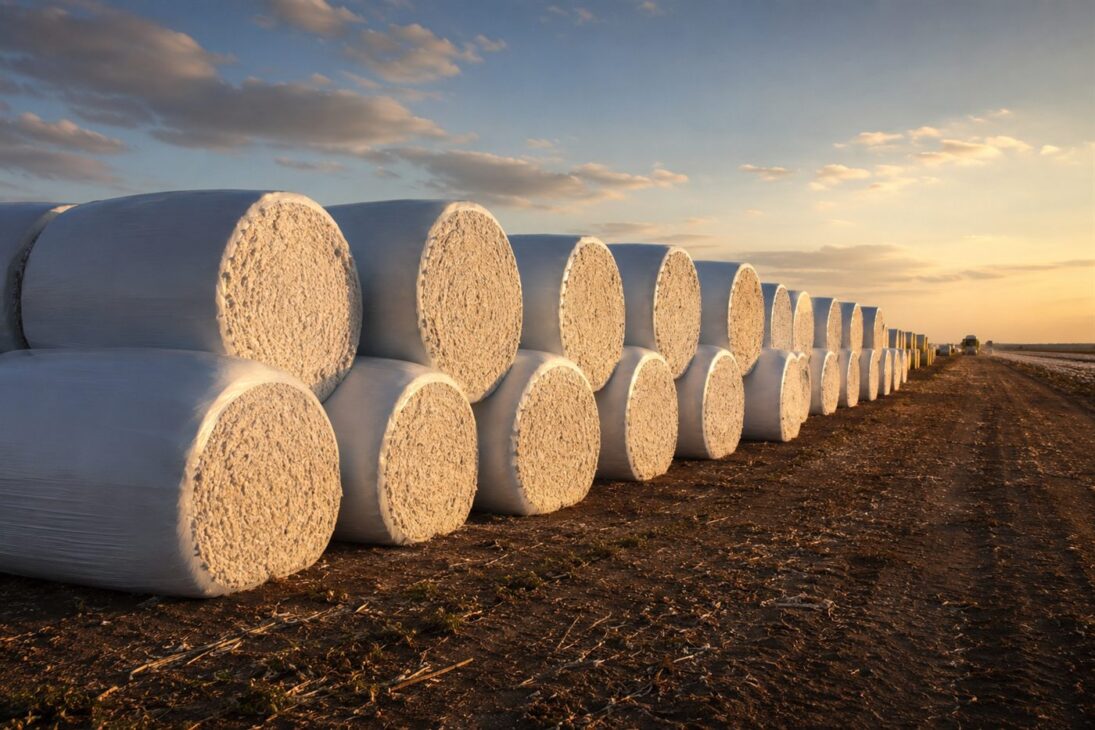
An important differentiator appears in the origin of the fiber. According to Abrapa, 84% of the cotton produced in Brazil has some type of socio-environmental certification, a seal increasingly demanded by clothing brands that want to prove the raw material is responsible.
This data carries weight in the external market. European and Asian buyers pressured by consumers demand traceability, and having most of the production certified becomes a selling point. Producing a lot is no longer enough, it’s necessary to produce with a seal, and in this regard, Brazilian cotton has taken the lead over many competitors.
Why Brazil became the largest cotton exporter
The overtaking was not luck. While the cotton area in the United States faces competition from other crops and climate variations, Brazil has expanded its fields and consistently increased productivity per hectare. The result was production growth even with fluctuating prices.
The scale of Brazilian farms and the intensive use of machinery and inputs have lowered the cost per kilo of fiber. When you produce more cheaply and in greater volume, there is fiber left to export, and it was this surplus that pushed the country ahead of the traditional market leader, in an achievement that seemed distant.
The bottleneck of the textile industry at home
There is, however, a little-discussed counterpoint. CNN Brazil points out that the Brazilian textile industry consumes only about 700 to 750 thousand tons of cotton per year, a stagnant volume, while the country harvests millions of tons. In other words, Brazil exports raw fiber and imports a large part of the finished clothing.
This mismatch is the paradox of success. Agribusiness became a powerhouse, but the manufacturing industry did not keep pace. Selling cheap fiber and buying expensive t-shirts is the kind of equation the country still needs to balance, adding value to cotton before it leaves national territory.
A leadership that will still be contested
The top of the ranking is not a guaranteed place. Abrapa itself considers that the leadership will not necessarily be maintained in all cycles, and that Brazil and the United States should alternate or closely contest the first position in the coming years. The lead is now Brazilian, but the fight continues.
The question that remains is whether Brazil will manage not only to maintain the crown of the largest cotton exporter but also to industrialize this fiber at home. Did you know that the country that now dresses half the world with its cotton, twenty years ago, relied on buying the fiber from abroad?


