Portuguese
  Spanish


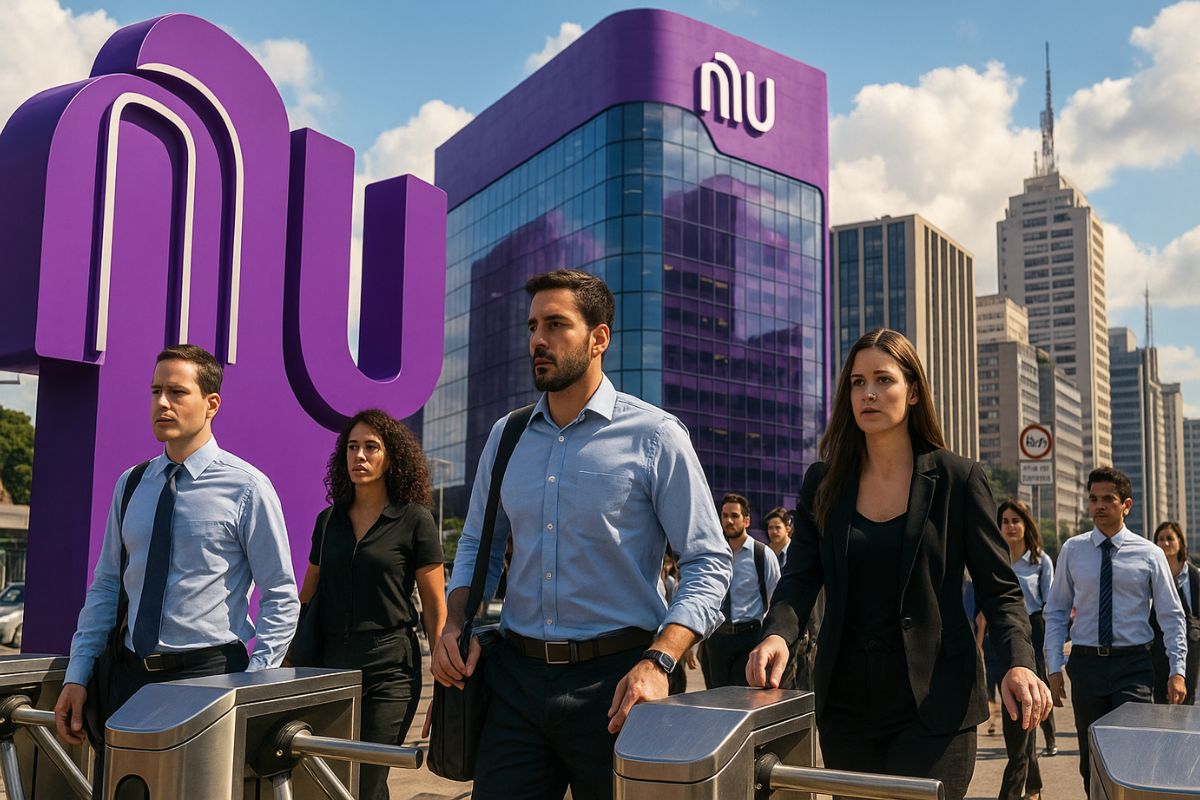


Fintech Changes Internal Policy and Ends Remote Model; CEO Claims There Are “Invisible Costs” to Distance and Bets on In-Person Interaction to Strengthen Corporate Culture.
Nubank has decided to end remote work and adopt a stricter hybrid model. Starting in 2026, employees will be required to be present two days a week, a number that will rise to three in 2027. This measure marks the end of one of the most flexible policies in the financial sector and reflects a new view on productivity and collaboration.
According to the CEO and founder, David Vélez, the decision was made after internal research indicated that remote work brings “invisible costs” to the organizational culture. The executive argues that physical interaction is essential to maintain the energy, trust, and habits that sustain the spirit of the company.
Gradual Transition Until 2027
The return schedule begins on July 1, 2026, with two days of in-person work per week. The complete model will take effect on January 1, 2027, when attendance will be required three days per week.
-
Brazil’s Federal Revenue Auction: iPhone 13 for $95, PlayStation 4 for $80, and Volkswagen Jetta for $2,600 Among 232 Lots Available

-
Tech Giant Oracle Lays Off 21,000 Employees and Invests $70 Billion in Artificial Intelligence

-
Chilean Giant Acquires St. Marche, Expanding from Discount to Premium Supermarkets in São Paulo’s High-End Retail Market
-
After 60 Years of Selling Cheap Milk, Brazilian Family Invests in $4,000 Equipment to Transform Farm’s Milk into Premium Sweets, Producing 2 Tons Daily and Aiming for $6.4 Million


Vélez acknowledged that the change will require adaptations, especially for employees who moved far from the headquarters during the remote period. Therefore, the fintech has established a transition period of eight months.
To facilitate commuting, Nubank plans to open new regional offices and expand its units in São Paulo, Mexico City, and Bogotá.
The company also announced investments in spaces in Campinas, Belo Horizonte, Rio de Janeiro, Buenos Aires, Miami, and Palo Alto, in addition to reinforcements in the talent hubs of Berlin, Montevideo, and Durham.
Organizational Culture at the Center of the Decision
Vélez’s justification goes beyond productivity. He emphasized that company culture relies on daily human interaction, something difficult to reproduce in a remote environment. For the CEO, collective energy and spontaneous exchanges such as hallway conversations and unplanned collaborations are essential for innovation.
The executive noted that “video calls reduce people to squares,” and that the absence of these informal moments weakens the sense of belonging.
The partial return to offices, he said, seeks to restore this dynamic and strengthen ties between teams.
Impact and Context of the Change
Nubank has grown strongly even in a remote environment. Today, the institution has 122 million customers in Brazil, Mexico, and Colombia, and reported a net profit of US$ 637 million in the second quarter of 2025.
Despite the impressive performance, the company’s leadership understands that sustainable growth depends on stronger bonds between teams.
The decision brings Nubank closer to a trend observed in other large technology and finance companies, which have also revised their remote work policies after the pandemic. For Vélez, flexibility will continue to exist, but in-person interaction will return to being a central part of corporate identity.
Nubank’s change ends a cycle and reignites the debate about the balance between flexibility and team culture. While some professionals value remote work, others see the return to in-person as an opportunity for reconnection.
Do you believe that the end of remote work can really strengthen the culture of companies or is it a setback in the evolution of flexible work?