Portuguese
  Spanish


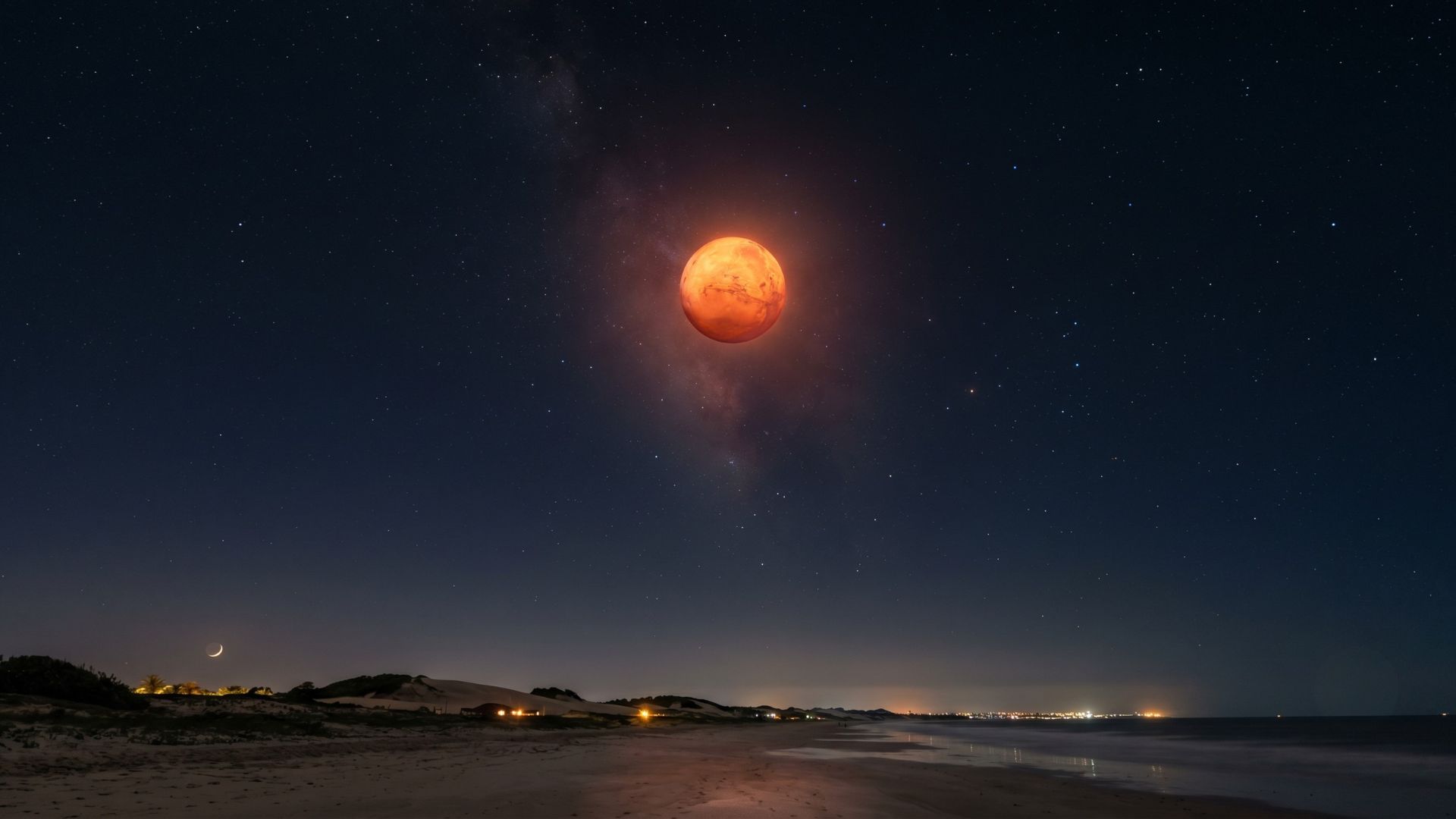

Mars will have a perihelic opposition in 2035, becoming larger and brighter in the sky, and returning to the center of human exploration plans.
In 2003, Mars was the focus of one of the most remarkable approaches in modern astronomy. NASA recorded that the planet was about 34.6 million miles from Earth, approximately equivalent to 55.7 million kilometers, the closest distance in nearly 60,000 years, in a type of approach that is not expected to repeat before 2287.
Now, the red planet is approaching another rare moment. The Association of Lunar and Planetary Observers, or ALPO, projects a new perihelic opposition for September 15, 2035, with Mars reaching 24.5 arcseconds of apparent diameter, a condition that returns the star to a brightness and visual size far above the standard of common oppositions.
What is Mars’ perihelic opposition and why will 2035 be so important
Opposition occurs when Earth is between the Sun and Mars. In this configuration, the planet rises at dusk, remains visible for much of the night, and enters a phase especially favorable for astronomical observation. NASA explains that Earth and Mars enter opposition at intervals of about two years.
-
Robots Descend Four Kilometers to Operate in the World’s Deepest Mine, Unbearable for Humans

-
Brazilian Students Develop Membrane to Clean Contaminated Water for Just $0.01 Per Use, Removing Oil, Dye, Turbidity, and Microorganisms, Reusable 20 Times, Offering Affordable Treatment to Communities Without Potable Water
-
Brazilian Students Turn Manganese Mining Waste into Functional Battery, Present at Major Science Fair

-
NASA Issues Warning: 20-Year-Old Telescope That Detected Over 2,000 Explosions More Energetic Than the Sun Is Rapidly Losing Altitude; Unprecedented Mission Aims to Prevent Its Fall and Extend Operation by 5 Years.




The event becomes even more relevant when it occurs near Mars’ perihelion, the point where the planet is closest to the Sun in its orbit. According to NASA, it is precisely in this type of combination that the most spectacular approaches occur, capable of transforming Mars into one of the most striking objects in the night sky.
Therefore, the perihelic opposition of 2035 is not just another orbital passage. It brings together a rare geometry, enlarges the apparent size of the planet, and places Mars back at the center of attention both in astronomical observation and in the debate about human exploration of the Solar System.
Why Mars changes so much in brightness and size in the sky over the years
The significant difference between a common opposition and a perihelic opposition lies in the distance. Since the orbits of Earth and Mars are elliptical, not every approach between the two planets occurs under the same conditions. This causes the brightness and apparent size of Mars to vary greatly from one cycle to another.
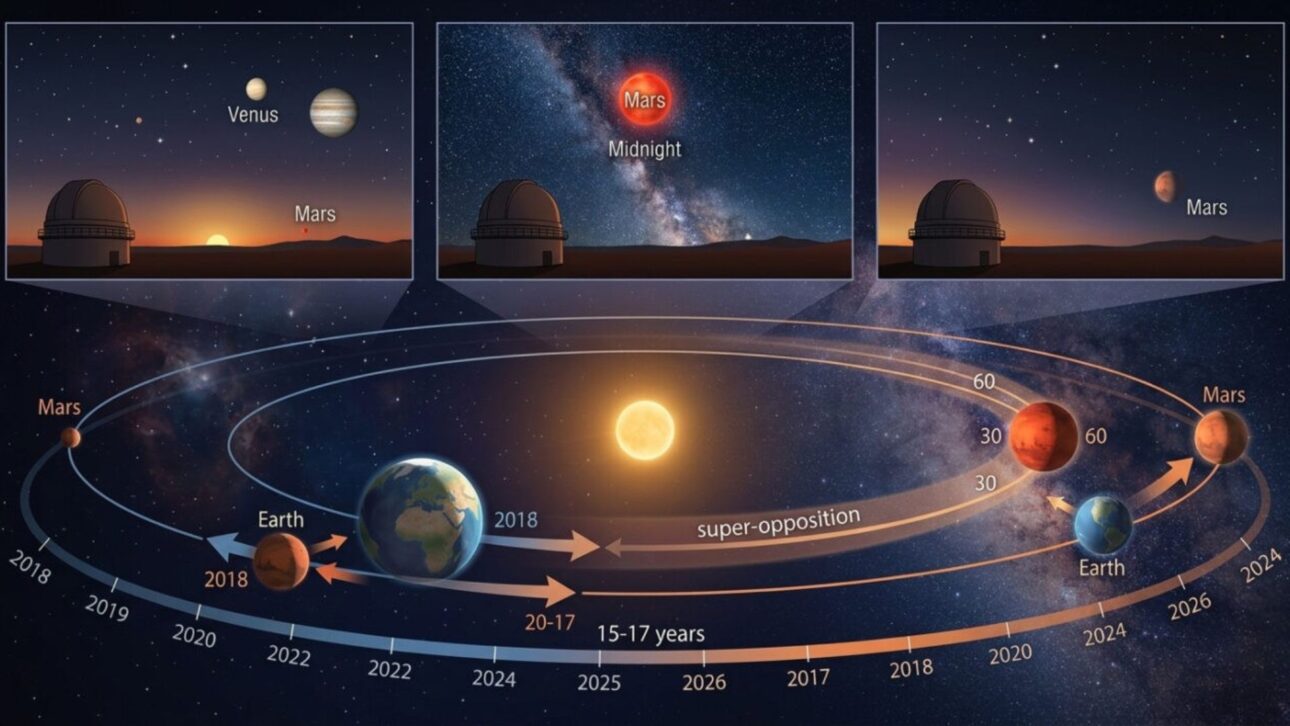
In practice, in some years Mars appears as a relatively discreet reddish point. In others, it becomes a much brighter star and much more rewarding for observation with telescopes, precisely because the distance significantly decreases compared to less favorable oppositions.
This orbital behavior explains why certain approaches go down in history. NASA states that the best observation conditions for Mars opposition usually occur in cycles of about 15 to 17 years, and this is what gives the 2035 event such high astronomical significance.
Mars’ Approach in 2035 Should Repeat One of the Greatest Astronomical Spectacles of the Century
According to ALPO, the opposition on September 15, 2035 will make Mars reach 24.5 arcseconds of apparent diameter. This value places the planet in a much higher visual range than common oppositions and helps explain why the event is already considered one of the major dates on the astronomical agenda of the coming decades.
Although 2035 is not expected to surpass the historical record of 2003, the difference between the two events is small enough to keep the new alignment among the most impressive of the modern period.
The most solid data here is that the 2003 record remains preserved, while 2035 appears as the next major highlight perihelic opposition.
In practice, this means a much more striking Mars in the sky, easier to identify with the naked eye and much more interesting for observation with optical instruments. For the public, it will be a rare spectacle. For amateur astronomy, it will be a privileged window.
Mars Orbital Window Returns to the Center of Human Exploration Plans
The relevance of 2035 is not limited to the brightness in the sky. The very logic of interplanetary missions depends on these more favorable orbital windows, as the alignment between Earth and Mars influences the planning of trips, mission profiles, and the energy efficiency of trajectories between the two planets.
NASA notes that this orbital cycle is one of the reasons why many missions to the red planet are separated by intervals of about two years.

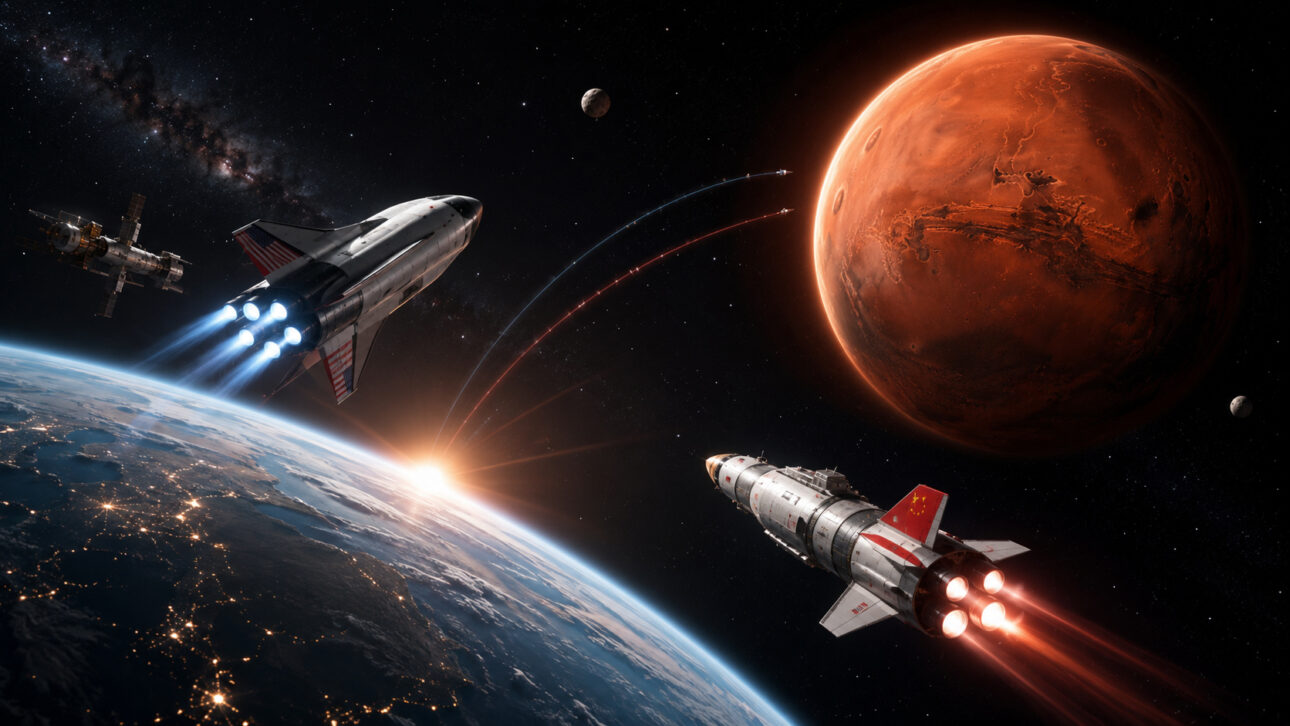
In 2021, Reuters reported that China presented a schedule with manned launches to Mars in 2033, 2035, 2037, and 2041, as part of a long-term plan to establish a permanent human presence on the planet. In the same report, the agency also noted that NASA is developing technologies to send astronauts to Mars and bring them back at some point in the 2030s.
This does not mean that there is currently a confirmed manned mission to land on Mars exactly in 2035. I cannot confirm this. What is supported by available sources is that the 2030s remain the main strategic horizon for both NASA and China when it comes to human presence on Mars.
Missions to Mars in 2035 gain scientific, political, and symbolic weight
In 2003, the historic approach of Mars had a huge scientific and cultural impact because it showed the planet in rare observation conditions. The focus at that time was on the orbital record, the unusual brightness, and the chance to observe the red planet in one of its most impressive appearances in thousands of years.
In 2035, the scenario tends to be different. Mars will continue to be an astronomical spectacle, but now surrounded by a much more ambitious context, in which major space programs already treat human presence on the planet as a real medium-term strategic goal.
This is what makes the next perihelic opposition so symbolic. It does not represent just another great approach of Mars to Earth, but an event that may occur at the same time the planet ceases to be just a destination for probes and robots to become the next frontier of human exploration.