






 Portuguese
  Spanish


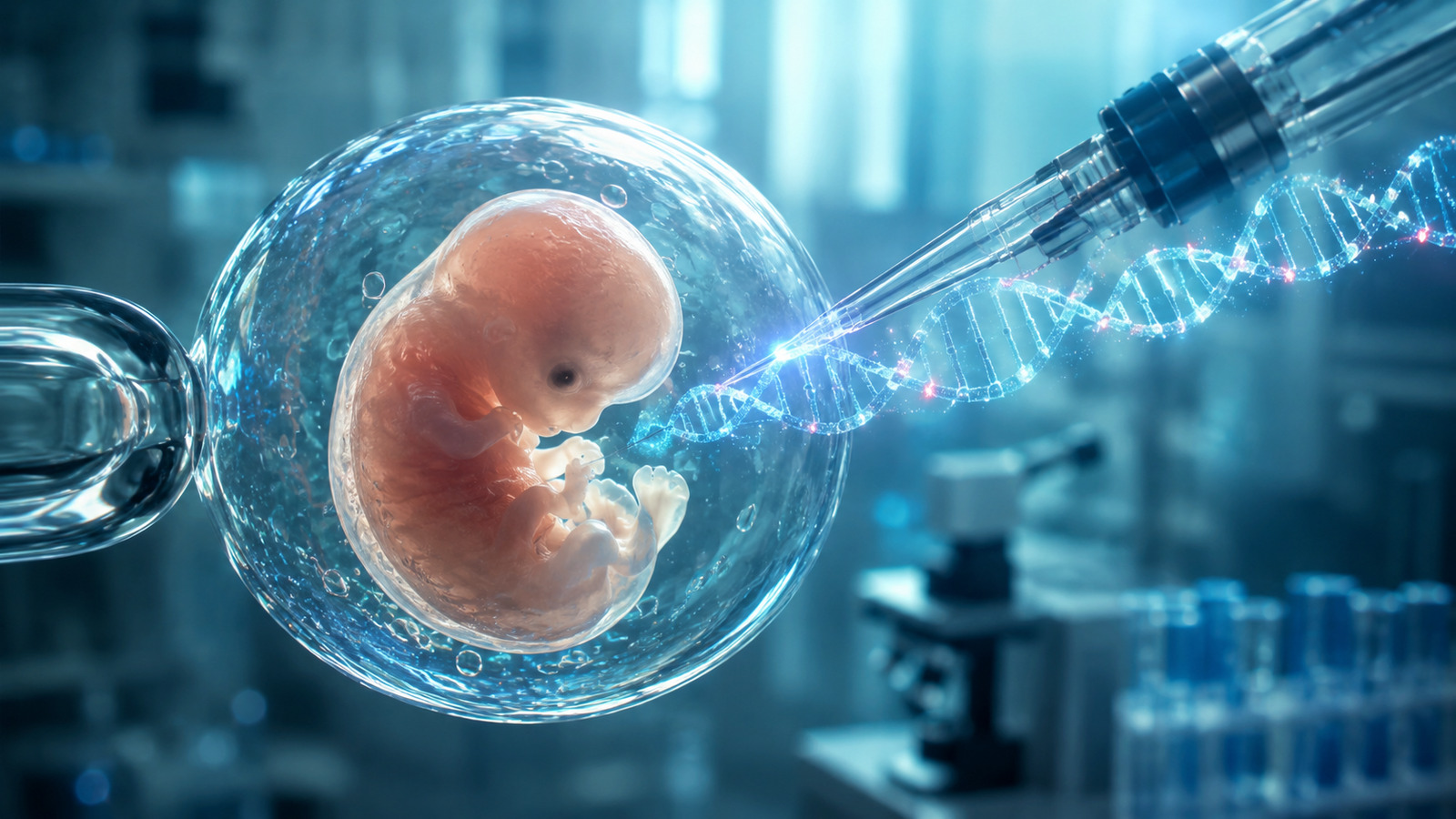

Two studies managed to alter specific letters of embryonic DNA with fewer chromosomal damages, but off-target errors, mosaicism, legal limitations, and ethical concerns keep the technology far from applications in human pregnancies
Genetic editing of human embryos has achieved unprecedented precision in two new studies with material donated by in vitro fertilization patients. The technique managed to modify specific letters of DNA with fewer chromosomal damages, but unwanted alterations and unedited cells still prevent any safe clinical application.
Genetic editing treatments are already used to combat severe hereditary diseases. These therapies can alleviate symptoms and save lives, but they generally modify only the cells of the treated patient.
This means that the mutation responsible for the disease can still be passed on to children. To prevent this inheritance, it would be necessary to alter the DNA of eggs, sperm, or embryos, a process known as human germline editing.
-
Japan has officially entered the SpaceX race: for the first time, the country’s space agency launched, maneuvered in the air, and landed upright its reusable rocket, the RV-X, in a flight of less than a minute that promises to significantly reduce the cost of space missions.

-
An excavator operator at a mine in Canada hit something strange in 2011 and, after years of preparation, revealed an armored dinosaur with intact skin and armor, 110 million years old and nearly 1,300 kg, now the best preserved in the world.
-
Most powerful land crane on the planet: Mammoet SK6000 lifts 6,000 tons, raises 3,000-ton parts to 220 meters, and carries 4,200 tons of counterweight to unlock mega projects in the offshore wind, nuclear, and oil and gas industries.

-
Two students from SENAI-RS developed AI to help identify rare ocular cancer in children. They were the only Brazilian project in the world finals of Infomatrix in Romania and secured 2nd place with neural networks that promise more accuracy in early diagnosis.




The practice is considered dangerous by scientific consensus and is subject to legal restrictions in 70 countries.
Even so, the new results indicate that some of the technical limitations may be being reduced.
Amander Clark, professor of molecular, cell, and developmental biology at the University of California, Los Angeles, stated that he previously considered it unfeasible to genetically edit human embryos.
According to Clark, who did not participate in the studies, the new work revives the possibility that therapeutic genetic editing could be used in the future in embryos produced by in vitro fertilization.
The researchers themselves, however, emphasize that there are still significant obstacles. Among them are mosaicism, when only part of the cells receives the planned alteration, and off-target modifications, which affect undesired regions of the DNA.
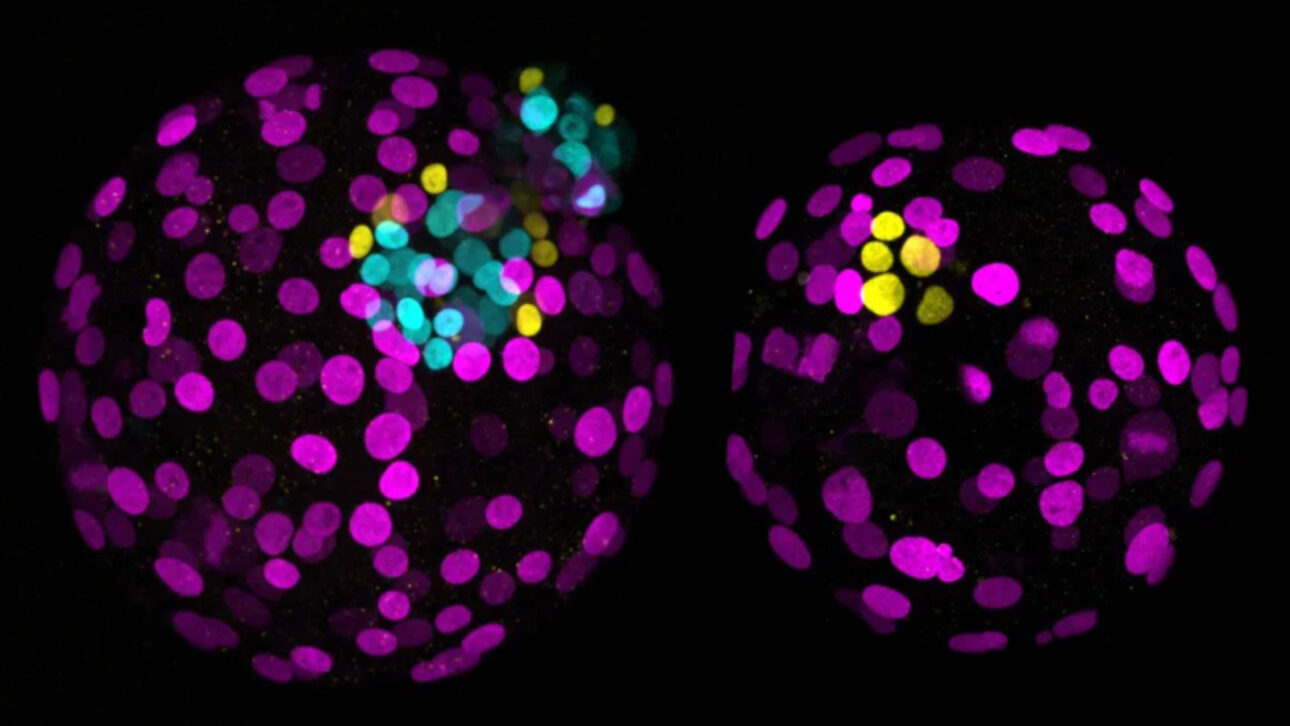
Genetic editing of human embryos uses a more precise technique than traditional CRISPR
The CRISPR-Cas9 tool transformed scientific research by allowing researchers to alter genes of living organisms.
In 2020, two of the scientists involved in the development of the technology received the Nobel Prize in Chemistry.
In 2023, the United States Food and Drug Administration approved the first two genetic therapies aimed at treating sickle cell anemia, a severe hereditary disease that reduces life expectancy.
Despite the advances, conventional CRISPR-Cas9 presents limitations when applied to embryos. To edit DNA, the tool produces a break in both strands of the molecule at the chosen point.
Previous studies have shown that this cut can cause extensive and unplanned alterations. Among the possible results is even the complete loss of a chromosome.
This risk was one of the reasons for the international condemnation of the work of Chinese researcher He Jiankui.
In 2018, he announced the birth of two girls from embryos modified with CRISPR-Cas9.
He claimed he had altered the embryos so that the children would be resistant to HIV. In 2019, he was sentenced to three years in prison. Subsequently, he was released.
The new studies used a more recent version of the technology, called base editing. Instead of cutting both strands of DNA, the technique can replace a single letter, also called a base or nucleotide.
The human genome has approximately 3 billion base pairs. Altering only the desired point reduces the possibility of major chromosomal damage, although it does not completely eliminate other types of errors.
Base editing had already been applied in experimental treatments. In 2022, the technique was used to modify immune cells of a British teenager with a type of leukemia for which other options had been exhausted.
Another eight children and two adults also received the treatment. Last year, doctors used base editing to treat a baby born with severe CPS1 deficiency, a rare and dangerous genetic disease.


Study investigates decisive gene for the formation of the fetus and placenta
One of the studies was conducted by Kathy Niakan, professor of reproductive physiology and director of the Loke Center for Trophoblast Research at the University of Cambridge.
The team used human embryos in the early stages of development. The material had been donated for research by people undergoing in vitro fertilization treatments.
The goal was to study NANOG, a gene fundamental to embryonic development. Its name refers to Tír na nÓg, a place in Celtic mythology known as the land of eternal youth.
The researchers discovered that NANOG plays an essential role in the formation of the first embryonic cells that will later give rise to the fetus and placenta.
The study was published on June 25 in the scientific journal Nature. Niakan stated that base editing represents a significant advancement compared to conventional CRISPR-Cas9.
According to the researcher, precisely replacing a single pair of nucleotides within a genome composed of approximately 3 billion base pairs represents an extraordinary technical capability.
The application also allowed for the investigation of very early stages of human life. This type of research can help identify why certain embryos produced by in vitro fertilization fail to develop.
Helen O’Neill, associate professor of reproductive and molecular genetics at the Institute for Women’s Health at University College London, highlighted the scientific value of these analyses.
According to her, genomic editing can help understand why seemingly suitable embryos fail to implant, cease their development, or do not progress after the initial stages.
O’Neill did not participate in the studies. For the researcher, the debate should not only consider the possibility of the birth of genetically modified children, as the technology also has scientific and clinical utility.
Second experiment modified genes linked to cholesterol and hemoglobin
Another study was conducted by Dietrich Egli, associate professor of developmental cell biology at Columbia University. The team inserted one of two genetic mutations into newly fertilized eggs.
One of the alterations targeted the PCSK9 gene, responsible for regulating cholesterol. The other targeted HBG, which encodes the fetal form of hemoglobin, a protein involved in oxygen transport.
Egli chose these genes because both are well-studied targets in non-hereditary genetic editing procedures.
The researcher reported that the study was conditionally accepted by a peer-reviewed scientific journal.
In both works, base editing reduced the occurrence of large chromosomal anomalies observed in previous experiments with traditional CRISPR-Cas9.
Even so, the results do not mean that the technique is ready for use in pregnancies. Scientists found issues capable of producing consequences in all cells formed from the embryo.
The first of these was mosaicism. In some cases, the planned modification appeared in certain cells, but not in all, creating embryos with different genetic versions.
The second problem was off-target effects. In these cases, the tool altered genes that should not have been modified.
This risk is especially relevant in genetic editing of human embryos, because embryonic cells give rise to different tissues and organs of the body.
Egli compared the advancement to a long staircase, made up of many steps and possible intervals. For him, the works represent only a few initial steps in a path still far from clinical application.
The researcher stated that the progress can be analyzed to discuss the advantages and disadvantages of continuing to develop the technology.
Safety, legislation, and ethics still limit any clinical application
Research with human embryos remains strictly controlled in most countries. In general, development in the laboratory is only allowed up to 14 days after the creation of the embryo.
In addition to technical problems, the possibility of altering hereditary characteristics reignites discussions about genetically modified babies and the use of technology to select characteristics considered desirable.
Laurie Zoloth, professor of religion and ethics at the University of Chicago, stated that embryo editing should remain prohibited for reproduction as long as the risks remain unresolved.
She highlighted that mosaicism is still present, that the long-term effects are unknown, and that it would not be possible to test a pregnancy without involving a real gestation and a child.
Zoloth noted that there are already resources to reduce the transmission of genetic anomalies, such as screening before conception, tests conducted during pregnancy, and pre-implantation embryo testing in IVF.
At the same time, she acknowledged that certain severe hereditary diseases might keep the debate open. An example mentioned was Tay-Sachs disease, a fatal neurological disorder that appears in the first months of life.
The problem, according to the specialist, would be establishing a clear boundary between treatment and enhancement. The technology could cease to be used only against diseases and start serving the selection of characteristics.
Zoloth related this risk to the so-called “Gattaca problem,” a reference to the 1997 film that portrays a society organized around selection and supposed genetic perfection.
She also questioned whether unequal access to technology could widen social differences, allowing families with more resources to offer genetic advantages to their children.
A survey on public opinion in four countries showed majority support in the United Kingdom, Netherlands, and Spain for the use of genomic editing in embryos to allow a pregnancy without a serious or potentially fatal condition.
In Italy, support was at 46%. The results indicate that, beyond medical safety, any eventual change in rules would depend on public, ethical, and legal debates.
Zoloth stated that completely prohibiting scientific research also presents risks. For her, establishing clear limits can simultaneously protect research and society.
This article was prepared based on information from studies conducted by teams from the University of Cambridge and Columbia University, including data published in the journal Nature, with numbers and statements preserved as per the consulted material.


