Portuguese
  Spanish


Innovative Vessel from Nippon Yusen Kaisha, Built by Keihin Dock, Promises to Revolutionize Port Operations with Zero CO2 Emissions and Silent Operation, Reinforcing the Group’s Commitment to a Sustainable Maritime Future.
The Japanese transportation giant Nippon Yusen Kaisha (NYK) unveiled the e-Crea. This is the country’s first battery-powered workboat. Keihin Dock, a company of the NYK Group, built the vessel at its Koyasu shipyard. Measuring 9 meters long and 3 meters wide, the e-Crea was designed without a diesel generator on board. It will assist in the docking and undocking of tugboats at the Koyasu Shipyard.
Construction Details and Purpose of the New Vessel
Keihin Dock, the naval construction subsidiary of the NYK Group, was responsible for building the e-Crea. The vessel was completed at its Koyasu shipyard. Its compact dimensions, 9 meters long by 3 meters wide, are ideal for its function. This innovative vessel has no diesel generator. Its main purpose is to assist in the docking and undocking maneuvers of tugboats within the Koyasu Shipyard.
The Vision of the NYK Group for the Electric Vessel
The NYK Group has been actively exploring next-generation fuels. This pursuit includes ammonia and other advanced alternatives. The initiative responds to the growing global demand for decarbonized maritime transport. The group believes that fully electric workboats, like this new vessel, are one of the most promising options. They aim for sustainable maritime transport. Keihin Dock has led this initiative, driving innovative solutions. The company is also accelerating the implementation of new technologies.
-
North Korean Fiasco: Launch of the Largest Warship Ends in Sinking

-
While giant ships still burn heavy fuel and the maritime sector races against climate targets, Maersk and Vale are starting to bet on ethanol as a new route to reduce emissions at sea.

-
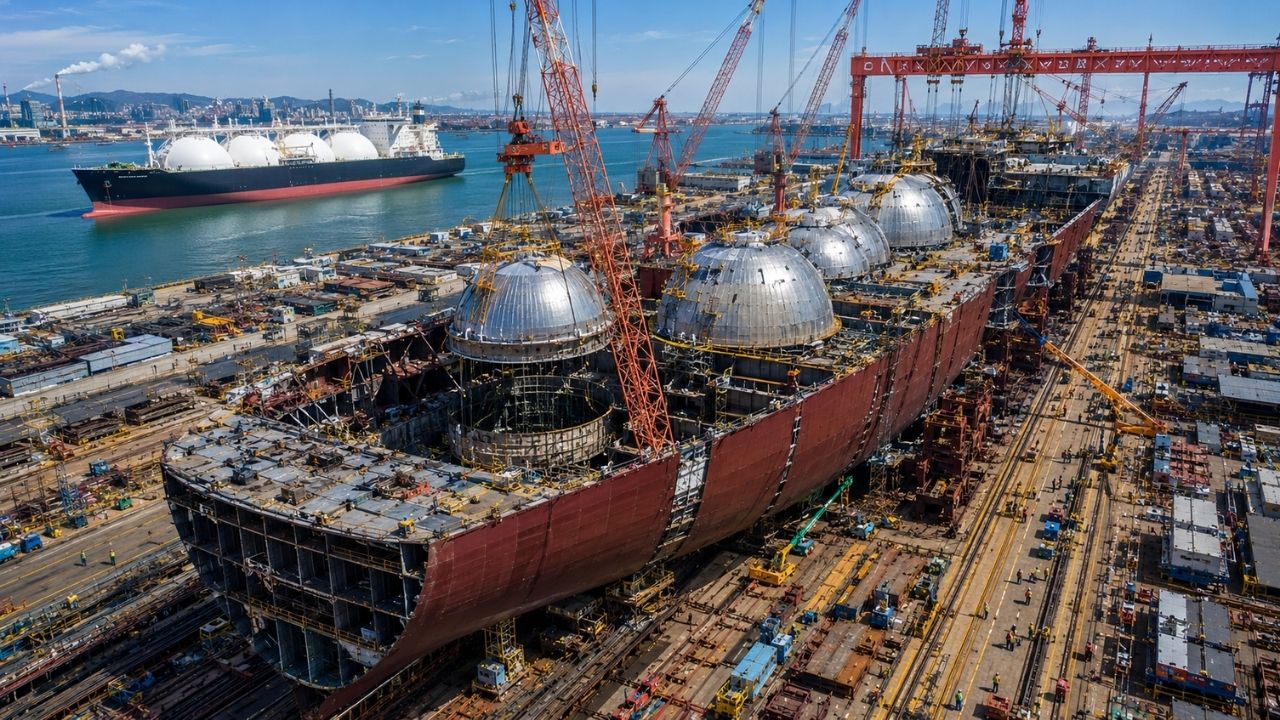
China begins construction of the world’s largest LNG ship, a 344-meter giant capable of supplying 4.7 million homes for a month, carrying 271,000 m³ of gas, and placing QatarEnergy in the largest naval order ever recorded in world history.
-
China is designing a container ship with a thorium nuclear reactor that will operate for 40 years without refueling, and the 25,000-container giant from Jiangnan Shipyard will cross oceans without emitting carbon in an industry that burns 300 million tons of fuel per year.



Benefits and Features of the e-Crea
The e-Crea operates without emitting carbon dioxide. Its energy comes exclusively from batteries. These are charged at the Koyasu Shipyard’s onshore facilities, at the Keihin Dock. In addition to the environmental benefit, the vessel is notably quieter. The reduction in operational noise is substantial compared to conventional vessels. The design of the e-Crea allows excellent maneuverability in confined spaces. This makes it suitable for assisting in the docking and moving of vessels in shipyards. The vessel has been classified by the Japan Classification Society (JCI).
Safety and Optimization in Vessel Design
After the installation of the electric propulsion system, including the battery modules, the vessel’s weight exceeded projections. To maintain proper balance, the team reconfigured the positioning of the equipment and wiring. This optimized the internal space and ensured safe navigation. High temperatures from batteries and electric motors can increase fire risks. To effectively manage heat, layered water cooling systems and integrated air ducts were implemented. The battery room received significant improvements. These included fire and hazardous gas protection measures, along with enhanced ventilation, ensuring robust safety standards.
Impact on Decarbonization and Next Steps for the Electric Vessel
The introduction of fully electric propulsion systems in tugboats and workboats is expected to accelerate decarbonization. This applies not only to this vessel but to all maritime and port services. The NYK Group stated that it remains committed to advancing and refining electrification technologies. This includes its gradual application to larger vessels. The data and insights gained from the construction and operation of the e-Crea will be reflected in the development of an electric propulsion tugboat. The completion of this future vessel is scheduled for December 2026. In related news, NYK recently completed the ammonia-powered tugboat Sakigake last year. Described as the world’s first commercial vessel powered by ammonia, it recently finished its demonstration voyage, achieving greenhouse gas emissions reductions of up to 95%.