Portuguese
  Spanish


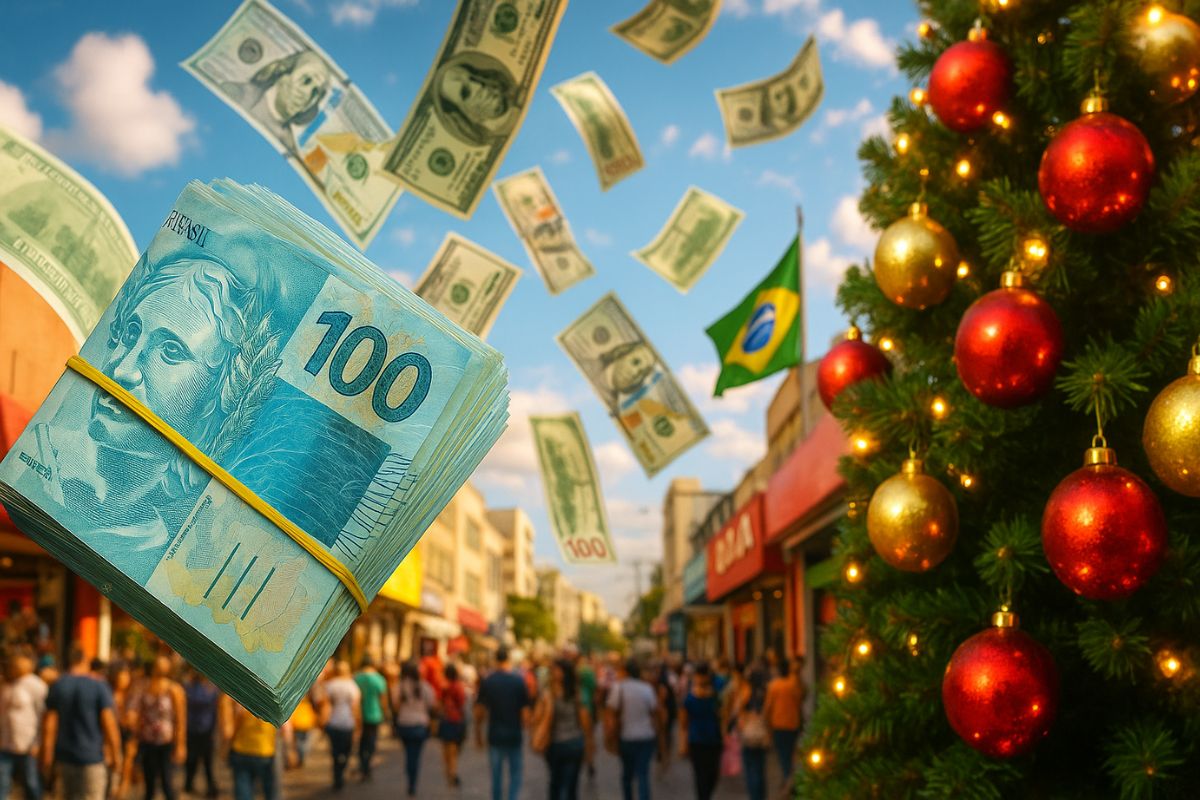


The 13th Salary, a Right Created by Law in Brazil, Injects Over R$ 200 Billion into the Economy Every Year, Sustains Christmas Commerce, Helps Millions of Families Pay Off Debts, and Has Become One of the Pillars of Year-End Consumption in the Country.
The 13th salary, officially known as the Christmas bonus, is a right created by law in Brazil that guarantees workers an extra month’s salary at the end of each year. Since its establishment, it has consolidated itself as one of the main instruments of income redistribution in the country, benefiting formal workers, retirees, and pensioners.
Every December, the payment of the 13th injects billions of reais into the economy. According to Dieese, in 2024, the amount reached R$ 321.4 billion, equivalent to 3% of Brazil’s GDP. This influx of money generates a positive cycle of consumption, employment, and revenue, with a direct impact on Christmas sales and retail revenue.
Who Is Eligible and How the Benefit Is Calculated
The 13th salary is guaranteed to formally employed workers, retirees, and INSS pensioners, as well as some beneficiaries of assistance such as maternity leave.
-
Brazilian Congress Moves to End 6-Day Workweek, Sparking Industry Concerns Over Competitiveness and Costs

-
Labor Shortage: Despite More Doctors Graduating in Brazil, Lack of Anesthesiologists Leads to Surgery Cancellations and Exposes Hidden Bottleneck in Hospitals

-
Thames Water, serving 16 million in London, faces potential nationalization amid £20 billion debt and KKR withdrawal.

-
New $42 Million Bridge Over Brazil’s São Francisco River Surpasses 50% Completion, Ending Decades of Anticipation




The calculation is simple: the worker is entitled to 1/12 of the salary for each month worked, and anyone who has worked for at least 15 days in a month already counts that period.
The payment is divided into two installments.
The first must be paid by November 30, without deductions.
The second, by December 20, with deductions for INSS and Income Tax.
This structure provides predictability for both the worker and the companies, which must plan their cash flow throughout the year to meet the legal obligation.
The Economic Impact of the 13th Salary at Year-End
Few mechanisms have such a comprehensive effect on the economy as the right created by law in Brazil that established the 13th salary.
The numbers are significant: over 92 million people benefited in 2024, and a considerable portion of the amount circulated goes directly to the consumption of goods and services.
Retail is the sector that benefits the most.
Supermarkets, clothing stores, electronics, and tourism report significant increases in sales between November and December, fueled by the influx of extra money.
The National Trade Confederation estimates that over 30% of the annual revenue of some chains depends on this period.
The 13th Salary and Family Financial Balance
For millions of Brazilians, the 13th salary is not just a bonus, but an opportunity to rebalance the budget.
Research shows that a good portion of workers uses the amount to pay off debts, settle overdue installments, or reduce credit card usage.
Others allocate the funds to savings, year-end expenses, or gift purchases.
Economists emphasize that the 13th salary plays an anti-cyclical role: in times of crisis, it sustains consumption and reduces the impact of recessions, while in periods of growth, it accelerates capital turnover and tax revenue.
International Comparisons and the Social Role of the Benefit
Although the 13th salary is a right created by law in Brazil, other nations also adopt similar practices.
In countries like Portugal, Spain, and Italy, there is a legally mandated additional Christmas payment. In Latin America, Argentina and Mexico have versions of the same benefit, known as aguinaldo.
The difference is that the Brazilian model combines mandatory character and social reach.
While in other countries the bonus may be optional or limited to certain sectors, in Brazil it is universal within the formal work regime, becoming a national income distribution policy.
The 13th Salary and the Strength of Christmas Consumption
Christmas is the peak of this economic cycle.
With the payment of the second installment concentrated in December, retail reaches its peak sales, and industry accelerates production to meet demand.
It is estimated that more than one-third of temporary hires occur during this period, directly stimulated by the effect of the 13th salary.
Additionally, the benefit supports small entrepreneurs, as the increase in consumption reaches local businesses, fairs, and local services.
This reach explains why the 13th salary is often referred to as the invisible engine of Brazilian Christmas.