Portuguese
  Spanish





Research Published on November 3 in Geophysical Research Letters Indicates That the Gulf of Suez Continues to Open at an Average Rate of 0.5 Millimeters Per Year, Contradicting the Traditional Model That Pointed to Total Interruption of Rifting About 5 Million Years Ago.
The Gulf of Suez, which partially separates Africa from Asia, may continue to widen at an average rate of 0.5 millimeters per year, even after 5 million years since it was believed that the process had ceased, according to a study published on November 3 in Geophysical Research Letters.
New Analysis Challenges Traditional Model of the Evolution of the Gulf of Suez
About 28 million years ago, the Arabian tectonic plate began to separate from the African plate, giving rise to the rift that formed the current Gulf of Suez. This type of process is associated with the formation of new oceans over geological time geological.
According to the traditional interpretation, rifting was believed to have stopped approximately 5 million years ago, preventing the evolution of the gulf into an open ocean. However, the new study indicates that the process has not ended, only slowed down.
-
Dyson Introduces WashG1: A Revolutionary Floor Cleaner with Motorized Rollers and Self-Cleaning Technology

-
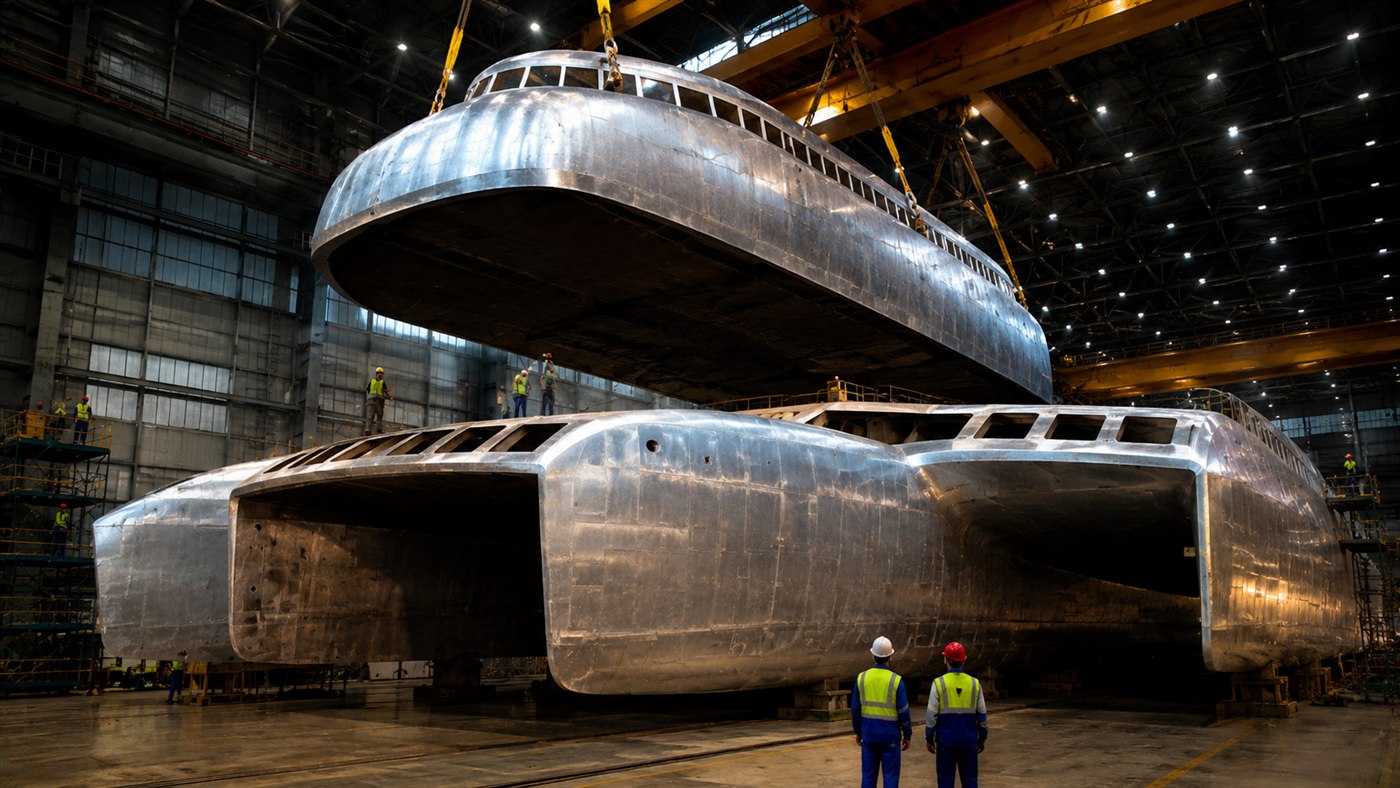
Australian Megafactory Austal Constructs 380-Foot, $74 Million High-Speed Ferry for Canary Islands Capable of Carrying 1,100 Passengers and 278 Cars at 38 Knots

-
Scientists Develop Battery Using Mineral Found in Bones and Chalk, Surviving 1,000 Charges While Retaining 75% Capacity, Paving the Way for a Lithium-Free Future
-
Super-Earth Twice the Size of Our Planet Discovered Nearby, Offering Clues About Life Beyond the Solar System



The work was led by David Fernández-Blanco, a geoscientist at the Institute of Deep Water Science and Engineering of the Chinese Academy of Sciences, and suggests an intermediate model between active and completely inactive rifts.
Geological Evidence Indicates Continued Tectonic Activity
The Gulf of Suez is generally considered a classic example of an aborted rift. However, scattered records pointed to the continuity of tectonic processes, including occasional small earthquakes and geological faults raising parts of the land.
Additionally, ancient coral reefs have been found above the current sea level at different points in the gulf. These signs contrast with the narrative of complete tectonic quiescence sustained for decades.
According to the lead author, what caught the researchers’ attention was the discrepancy between the conventional model and the observable signs of ongoing geological activity in the region, indicating that the history of rifting might be incomplete.
Study Analyzed 300 Kilometers of Rift Zone and Elevated Reefs
In the new study, scientists analyzed about 300 kilometers of the rift zone of the Gulf of Suez. Topographic data and the river courses that cut through the region’s rocks were examined, seeking profiles that could not be explained solely by erosive processes.
These river profiles exhibited features compatible with recent tectonic deformations. Researchers also investigated coral reefs formed at sea level during warm interglacial periods.
Currently, some of these reefs are found up to 18.5 meters above the level of the gulf, suggesting land elevation associated with ongoing tectonic movements, and not just changes in climate or sea level.
Change in Plate Dynamics Did Not Interrupt Fracturing
According to the study, about 5 million years ago, there was a change in the tectonic plate dynamics of the region. The main activity shifted to the Dead Sea, where a new boundary between the African and Arabian plates began to form.
Despite this, the fracturing in the Gulf of Suez was not interrupted. Rifting continued at a reduced pace, maintaining an opening rate similar to that currently observed in the western United States.
This North American region undergoes an expansion process that creates the so-called Basin and Range Province, characterized by the formation of mountain chains and elongated valleys, in a comparable geodynamic scenario.
Implications for Seismic Risks and Future Studies
The results indicate that areas considered tectonically inactive may actually maintain sufficient activity to generate significant seismic events. This suggests that the Gulf of Suez may be more susceptible to earthquakes than previously estimated.
The study also suggests that other rift zones classified as aborted may need to be reevaluated using modern geological and geomorphological analysis tools.
According to Fernández-Blanco, the tectonic systems of the Earth may be more persistent and dynamic than simplified models based solely on plate movement have indicated until now.