Portuguese
  Spanish


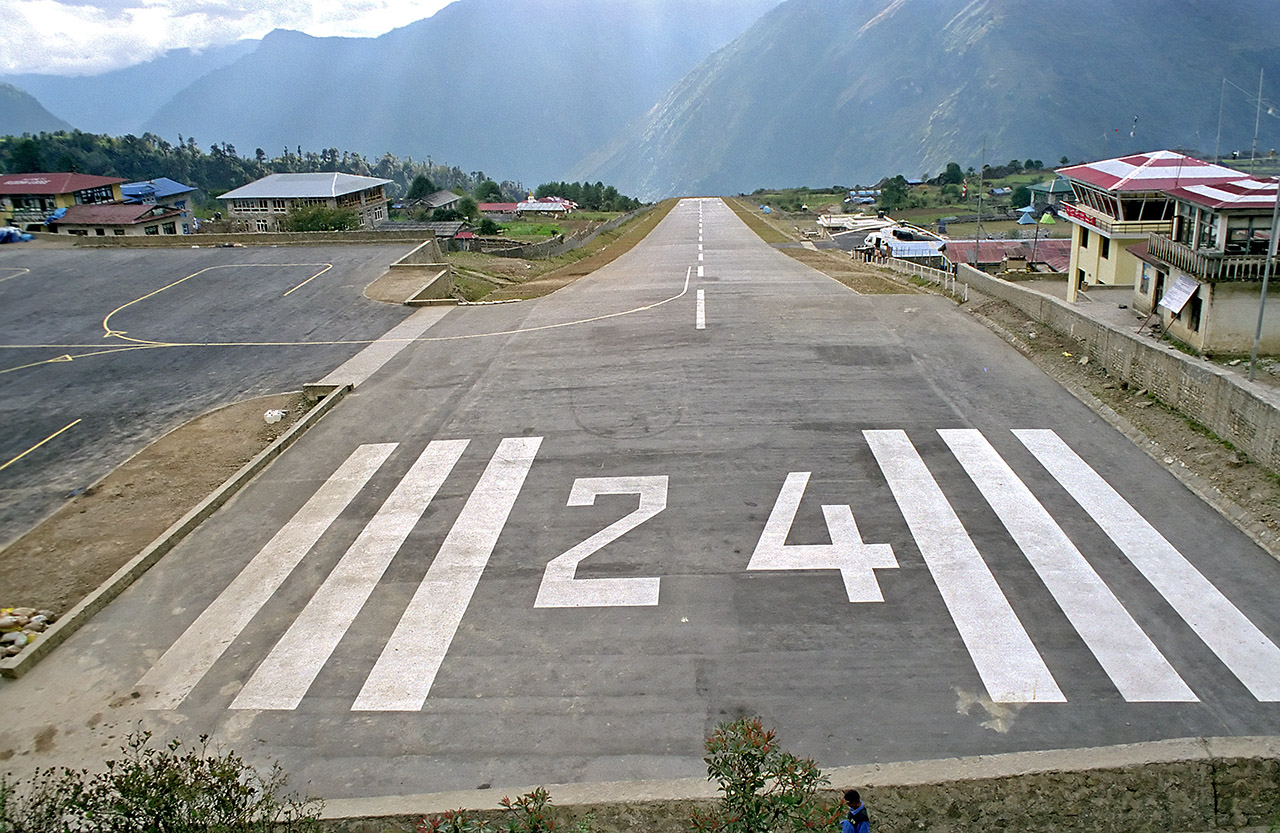


The Lukla Airport in Nepal Is Considered the Most Dangerous in the World: Its Runway Is Only 527 Meters Long, Ends in a 700-Meter Cliff, and Requires Extreme Precision Landings Heading to Mount Everest.
Few places in the world send chills down pilots’ spines like a small airport nestled in the Himalayan mountains. With only 527 meters in length, a steep incline, and a 700-meter cliff at the runway’s threshold, Lukla Airport in Nepal is considered by many to be the most dangerous in the world.
And it’s no exaggeration. Every year, thousands of adventurers pass through on their way to Everest, the tallest mountain on the planet. But before starting the trek, they must survive a landing that requires surgical precision — and nerves of steel.
The Main Access to Everest
Located at an altitude of 2,860 meters, the Tenzing-Hillary Airport, the official name of Lukla, was built in 1964 with the support of New Zealand mountaineer Sir Edmund Hillary, the first man to summit Everest alongside Sherpa Tenzing Norgay. The idea was to create a gateway for trekkers and climbers visiting the Khumbu region, home to Everest and other giant peaks.
-
Brazil Welcomes Spanish Wamos Air and Nigerian Air Peace, Potentially Transforming International Routes and Increasing Competition

-
Offshore air transport soars in Brazil, surpasses 2.5 million passengers, and reveals how oil has transformed Rio’s airports into key pieces of national logistics.

-
Latin America becomes the “global champion” of aviation taxes, tickets may become more expensive in Brazil, and IATA’s warning exposes risk for flights, tourism, and passengers.
-
Brazil has lost 85 air routes since 2019 and is still flying less than before the pandemic, leaving passengers with fewer destinations, fewer frequencies, and a more limited air network.


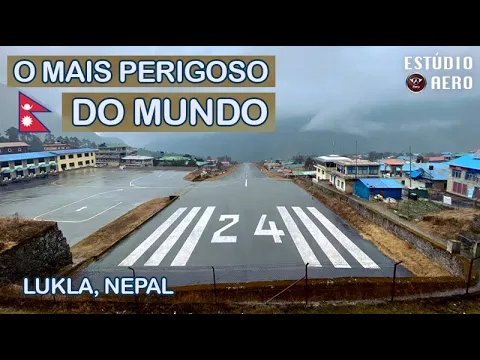

Since there are no roads connecting Lukla to Kathmandu, the only way to reach the area quickly is by plane. However, the mountainous terrain poses an almost insane challenge: the runway can only be 527 meters long, with a slope of 12%, double that of a conventional street hill.
Why Is It Considered the Most Dangerous?
There are several factors that make Lukla Airport a logistical nightmare for any pilot:
- Short and Steep Runway: 527 meters is less than half of what is needed for a typical commercial aircraft. Therefore, only small planes (like the Dornier 228 or Twin Otter) operate there. The incline was designed to assist with braking (on landings) and acceleration (on takeoffs).
- No Margin for Error: At the runway’s threshold, there is a rock face. At the other end, a cliff of 700 meters of free fall. There is no possible “go-around.” Once the landing begins, it’s all or nothing.
- Unpredictable Weather: Strong winds, sudden fog, and abrupt visibility changes are common. In minutes, a blue sky can turn into a white shroud. Pilots need to rely on quick decisions and manual flying.
- Altitude: The thin air affects engine performance, braking capacity, and the physical endurance of the crew. It’s both a technical and a human challenge.
- Absence of Control Tower: There is no radar or traditional control tower. Coordination is done by radio between pilots and local operators. Everything relies on experience and coordination among the planes.
A History Marked by Accidents
Unfortunately, Lukla Airport has a real history of fatal accidents. In the last 20 years, numerous incidents have occurred, including collisions with nearby mountains, runway overruns, maneuvering errors, and even ground explosions. Among the most serious cases:
- 2008: A Yeti Airlines flight collided with the ground during landing. 18 people died.
- 2017: A cargo plane skidded during landing and hit a parked helicopter.
- 2019: A Summit Air plane lost control during takeoff, striking two helicopters and killing 3 people.
Still, most flights are successful thanks to the high level of pilot training, many of whom accumulate thousands of hours just landing in Lukla.
What Is It Like to Fly to Lukla?
For those buying a ticket to Lukla, the experience begins in Kathmandu, the capital of Nepal. From there, small planes carrying 14 to 20 passengers take off for scenic flights lasting 30 to 40 minutes. The last minutes are the most tense.
The aircraft descends through narrow valleys, flanked by snow-capped peaks. There isn’t much room for error. When Lukla appears ahead, it’s like aiming at a target the size of a football field — but surrounded by rocks and cliffs.
The landing occurs on a uphill slope to assist with braking. The plane touches down and, seconds later, is already stopped. A miscalculation could result in crashing into the hill or tumbling off the cliff.
Passengers report the experience as “unique, intense, and frightening.” Many exit the plane in silence, with nervous smiles and sweaty hands.
Is the Infrastructure Poor?
Despite its worldwide fame, Lukla Airport is extremely simple. The runway is asphalt but narrow and lacks guidance lights. There is no radar system. There are no sophisticated navigation devices. The terminal is small, with a wooden structure and few services.
Air traffic is heavy during the peak season (March-May and September-November). About 20 to 30 flights per day operate there on clear days. But any change in weather can cause mass delays or cancellations.
When this happens, visitors may need to wait days for another chance to fly or face a more than two-day hike down the mountain to the village of Phaplu, where there is another, less risky runway.
Is Modernization Possible?
There are plans, but they are slow. The Nepalese government and NGOs have been discussing since 2015 the construction of a cable car or a partial road to reduce dependence on the airport. But the costs are extremely high, and the geographical challenges are enormous.
There is also a proposal to equip Lukla with satellite approach systems and improvements to the runway. However, the airport continues to operate essentially the same way it has for 30 years.
Despite the risks, Lukla has become an icon of international trekking. For many, arriving there is the official start of the journey to Everest. And surviving the landing is almost a trophy.
Local guides say that Lukla tests each traveler’s courage before the hike. “If you can handle the landing, the rest of the trail feels easier.”
For the local population, the airport is also a lifesaver. It shortens journeys that would take days over dangerous trails, bringing supplies, tourists, doctors, and sometimes hope.